Bob's Boutique

Blog

Josh Prior

Blog

What Makes a Great Jazz Guitar Sound Balanced

What Balance Really Means in a Jazz Guitar

Jazz musicians often describe a great guitar as balanced. The term comes up in conversations about tone, feel, and response, yet it is rarely defined. Balance is not about volume or brightness alone. It is about how evenly a guitar speaks across its range and how naturally it responds to the player’s touch.

A balanced jazz guitar delivers clarity from the lowest notes to the highest register. Chords sound full without becoming muddy. Single notes project without feeling thin or forced. This even response allows the player to shape phrases confidently, knowing the instrument will support subtle changes in dynamics and articulation.

Balance begins with the body. An archtop must distribute resonance evenly so no single frequency dominates. When the top and back work together, the guitar produces a focused low end, clear mids, and smooth highs. This is especially important in jazz, where harmony and voice leading rely on separation between notes.

Weight and construction also influence balance. A guitar that feels stable against the body encourages relaxed posture and consistent technique. When the instrument does not fight the player, timing improves and fatigue decreases. Benedetto designs aim for this equilibrium by shaping bodies and selecting materials that support both comfort and acoustic response.

Neck feel contributes as well. A balanced guitar feels consistent from the first fret to the highest position. Notes should respond with the same ease regardless of where they are played. This allows musicians to move freely across the fingerboard without adjusting pressure or touch. Models such as the Andy provide a compact feel that stays responsive throughout the neck, while hand carved instruments like the La Venezia offer a smooth, even response across the full register.

Electronics can either enhance or disrupt balance. A well matched pickup preserves the natural voice of the guitar rather than overpowering it. Laminated designs like the Bravo Deluxe maintain clarity and control in amplified settings, helping the guitar sit properly in an ensemble without excessive EQ adjustments.

Balance matters most in real playing situations. In small groups, a balanced guitar blends naturally with bass and piano. In larger ensembles, it cuts through without sounding harsh. In solo settings, it allows chords and melodies to speak with equal authority. This consistency builds confidence and lets the player focus on music rather than compensation.

At Benedetto, balance is not a specification. It is a requirement shaped through experience and refinement. Each instrument is voiced to respond evenly, feel comfortable, and support expressive playing. This philosophy runs through the Professional Series and the Flagship Series, offering players options that meet different needs while maintaining the same core principles.

A balanced jazz guitar does not call attention to itself. It supports the music quietly and reliably. When balance is right, the instrument becomes an extension of the player’s hands, allowing ideas to flow without resistance. That is what musicians mean when they say a guitar simply feels right.

What Makes a Great Jazz Guitar Sound Balanced

Blog

The Art of the Luthier: How Skilled Hands Shape the Jazz Guitar

The Art of the Luthier and the Craft Behind the Jazz Guitar

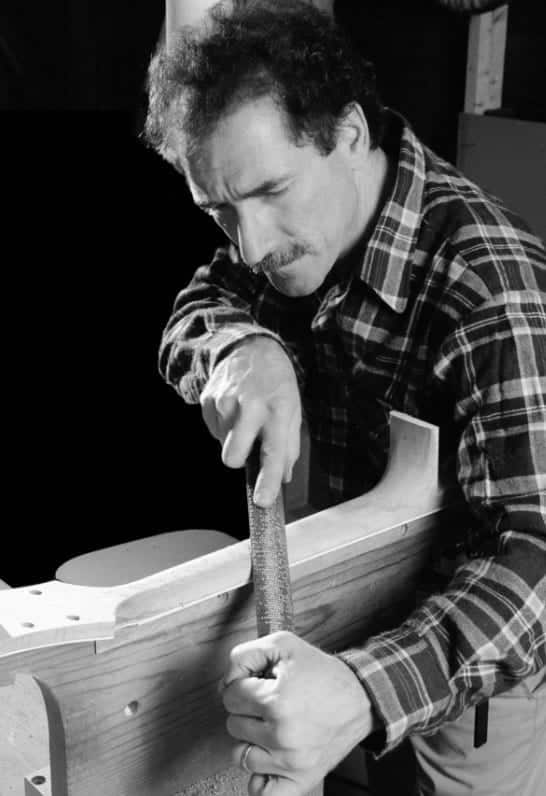
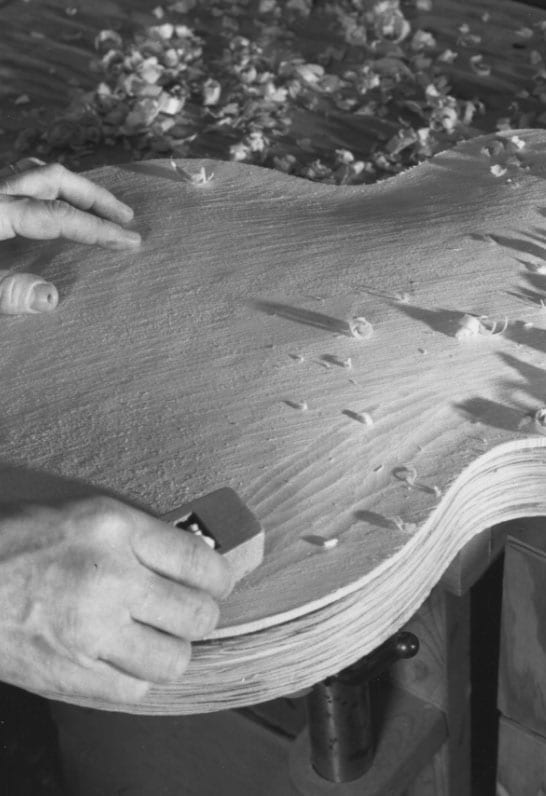
The sound of a great jazz guitar begins long before a player touches the strings. It all starts with the work of the luthier. Each step of the build process, from processing the raw materials, to tap tuning plates or making impeccable miters in multi-line binding, requires years of practice. The art of luthiery shapes how a guitar feels in your hands and how it responds to your touch, and it defines the voice that reaches the audience.

Jazz guitars rely on precision. Archtops require careful selection of spruce and maple, thoughtful carving, and an ear for resonance. A luthier learns to read wood by sight, weight, and sound. Each top is tuned until it vibrates evenly. Each back is carved to support clarity and projection. This process cannot be rushed. It depends on experience and patience, and on knowing how each piece of wood behaves.

At Benedetto, this approach has guided the brand from the beginning. Our luthiers follow the principles and techniques Bob Benedetto refined over decades. Hand tools are used where control matters most, and modern technology ensures precision and industry leading tolerances. Voicing the instruments manually allows provides a  balances an dynamic responsiveness. to support balance and dynamic response. Finishes are applied in thin, even coats to protect the guitar without restricting vibration. Every decision influences tone and feel.

Luthiery also brings together art and engineering. A guitar must project, sustain, and respond evenly across the fingerboard. Neck profile is an example. While we are able to provide custom dimensions, our standard shape and depths will be comfortable and feel natural to most guitarists. Fretwork must be consistent from the first fret to the last. Acoustic tension must be balanced. The luthier is responsible for all of these elements, and each part affects the whole.

Modern models show how tradition and innovation work together. The Manhattan pairs classic carving with updated body geometry that supports comfort and projection. The Cremona shows a master-level approach to aesthetic details. The La Venezia removes all binding and any superfluous decorations to maintain maximum acoustic resonance. give the body maximum acoustic freedom. Each guitar reflects the hands that shaped it.

Luthiers also preserve history. Their work keeps craftsmanship alive at a time when most instruments are factory built. Benedetto’s workshop trains new builders to understand not only how a guitar is made but why each step matters. This protects the methods that define the archtop and ensures that future players experience the sound and feel that shaped jazz for generations.

The art of the luthier is a blend of skill, listening, and attention to detail. It brings life to wood. It gives players the tools to express their sound. It defines the character of every Benedetto guitar, from the first carving stroke to the final setup.

The Art of the Luthier: How Skilled Hands Shape the Jazz Guitar

Blog

Bob Benedetto’s Legacy and the Story Behind His Historic Guitar Collection

The Legacy of Bob Benedetto and the Guitars That Shaped His Life

Bob Benedetto’s name is woven into the history of the archtop guitar. For more than five decades, he shaped the sound and character of modern jazz instruments. His work influenced players, builders, and collectors, and his personal collection of guitars today stands as a record of that influence. Each piece tells part of the story of his craftsmanship and the evolution of the Benedetto brand.

Bob began building guitars in 1968. He focused on clarity, balance, and acoustic response at a time when many archtops prioritized volume over nuance. His approach set a new standard. Players sought his instruments for their detailed voicing, smooth feel, and visual refinement. Over the years, Bob documented his process carefully, which allowed his methods to be preserved for future generations and for the team that now continues his work.

Several guitars in Bob’s personal collection highlight different phases of his career. Many of these instruments are featured through Bob’s Boutique, which now serves as a window into his history as a builder. Pieces move through the collection as they are restored, authenticated, or released to collectors. Examples include rare early designs, custom builds for prominent players, and one of one creations that reveal transitions in his carving and finishing techniques. Each guitar carries distinct features that reflect the period in which it was built, and each brings forward the sound that made his work internationally respected. Explore available pieces through Bob’s Boutique to see how his legacy continues to reach new owners.

Bob’s influence can also be seen in the modern Flagship Series. The Cremona and La Venezia follow principles he refined over decades. Their hand-carved tops and tuned backs reflect the same techniques found in many of the historic instruments in his collection. These guitars remain the clearest expression of his sound and building philosophy.

His legacy extends beyond instruments. Bob shared his knowledge through workshops, documentaries, and the release of his book, “Making and Archtop Guitar” in 1994. Builders study his methods. Players rely on guitars shaped by his guidance, whether carved by Bob or created by the luthiers who now carry on his approach. His focus on precision, consistency, and musicality created a foundation that continues to define Benedetto Guitars today.

The collection represents a lifetime of experimentation, refinement, and dedication. It documents early breakthroughs, mature designs, and final works that reflect his mastery. For musicians and collectors, these guitars offer more than craftsmanship. They offer a direct connection to one of the most influential luthiers in jazz history.

To learn more about Bob’s impact and the company he built, visit the Benedetto history page at About Benedetto Guitars or Cindy Benedetto’s highly curated history at benedettoguitarsarchives.com. The story of his life’s work continues through every instrument that leaves the shop and through every guitar preserved in his collection.

Bob Benedetto’s Legacy and the Story Behind His Historic Guitar Collection

Blog

Amplifying the Archtop: How to Get the Best Sound from Your Jazz Guitar Amp

How to Get the Best Sound from Your Archtop Guitar Amp

An archtop guitar delivers warmth, clarity, and resonance that define the sound of jazz. But when amplified, getting that tone right takes more than just plugging in. Every setting, pickup adjustment, and amp choice shapes how the instrument projects. Knowing how to control these elements ensures your Benedetto sounds as good on stage as it does unplugged.

Tone begins with the guitar itself. A model like the Bravo Elite produces a full-bodied sound that translates beautifully through a clean amp. Hand-carved designs such as the 16-B and Americana respond to subtle touch, so precise EQ and gain levels are key to preserving that acoustic character.

Start with a clean tone. Jazz players typically keep their EQ settings flat or almost flat (at 12 o’clock), favoring warmth and clarity over high-end brightness. Begin with bass, mid, and treble around the halfway point. Adjust gradually until the guitar’s natural voice fills the space without sounding harsh or muddy. The goal is balance—each note should sit evenly across the spectrum, allowing the natural voice of the instrument to be amplified and having addressed any errant frequencies in the room  

Volume and gain control are equally important. Too much gain introduces unwanted distortion, while too little may flatten dynamics. Let the amp work with the guitar rather than overpower it. An amplifier with a lot of head room and a mostly flat response such as the Henriksen Bud 10, or a Deluxe Reverb style amplifier for those preferring tubes, will offer a smooth response transparent and preserves the personality of each instrument., offering smooth response and transparent tone that preserves the personality of each instrument.

Amp placement also affects sound. Positioning the amp slightly off the floor and aimed toward your playing position helps you hear the full frequency range. Avoid corners or walls that can amplify low-end frequencies and make the tone sound uneven. Small adjustments to placement can transform how your guitar interacts with the room.

Pickup balance completes the equation. Floating pickups, like those found on the Manhattan

 or Fratello, retain an acoustic quality that pairs well with cleaner amp settings. Mounted humbuckers, used on the Bambino Elite or Bravo Elite, deliver higher output and a tighter, more controlled tone—perfect for larger venues or ensemble work.

Strings also play a role in amplified tone. Flatwounds provide stronger fundamental and reduced string noise, ideal for studio or small-group playing. Roundwounds offer added brightness for modern tones. Experiment with both to find a sound that complements your amp settings and performance environment.

Before any performance, take a few minutes to fine-tune your sound in the room. Each space reflects sound differently, and what works in rehearsal may not translate on stage. The right adjustments to EQ and amp placement make all the difference in preserving the natural voice of your Benedetto.

For players looking to maintain consistent tone and performance, Benedetto’s Customer Care provides helpful guidance on setup and maintenance. Proper preparation ensures that your amp, pickups, and guitar remain in harmony from one gig to the next.

When amplified correctly, an archtop guitar offers one of the most expressive sounds in music. Whether performing in a small club or large theater, the right amp setup reveals every nuance of your playing and lets the true Benedetto voice shine.

Amplifying the Archtop: How to Get the Best Sound from Your Jazz Guitar Amp

Blog

The Role of the Archtop Guitar in Modern Jazz

How the Archtop Guitar Continues to Shape Today’s Jazz Sound

Few instruments are as deeply connected to jazz as the archtop guitar. From the rhythm-heavy sound of swing to the fluid phrasing of modern jazz, its warm tone and smooth response continue to define the genre. While music and technology have evolved, the archtop guitar remains central to the voice of jazz today.

The traditional archtop was built for projection. In the big band era, guitarists needed volume to compete with horns and the rhythm section. That acoustic power became part of jazz’s foundation. Today’s players may not face the same challenge, but they still seek the resonance and feel that only an archtop can provide.

Modern jazz styles demand flexibility. The archtop has adapted through innovations in electronics, body design, and construction. Guitars like the Bravo Elite deliver the responsiveness of a classic archtop with the consistency needed for amplified settings. For artists performing in small clubs or touring on larger stages, the Bravo Deluxe offers a balance of tone, quick responsiveness, and feedback control.

Contemporary jazz players often blend tradition with technology. Many rely on compact, stage-ready guitars such as the Bambino Elite, which delivers the same Benedetto tone in a smaller body that travels easily. These guitars fit the demands of modern musicians who move between straight-ahead jazz, fusion, and studio work.

The appeal of the archtop goes beyond tone. Its response encourages a dynamic, expressive playing style that suits both harmonic complexity and melodic phrasing. Players can shape each note with clarity, creating a direct connection between hands and sound. That immediacy has made the archtop a constant in the evolving world of jazz.

At Benedetto, the focus has always been on supporting the working musician. The Professional Series provides durable, gig-ready models for players who perform nightly, while the Flagship Series continues the hand-carved tradition that shaped the modern archtop. Each guitar reflects a deep respect for the history of jazz and the needs of its future.

The Players page showcases artists who carry the archtop’s legacy forward. From traditionalists to contemporary innovators, they all rely on the same principles: balance, tone, and craftsmanship. Their work proves that while jazz keeps evolving, the archtop guitar remains essential to its sound.

Whether in a recording studio, concert hall, or late-night jam, the archtop guitar continues to define the character of modern jazz. Its voice connects generations of players, blending history with the innovation that keeps the music moving forward.

The Role of the Archtop Guitar in Modern Jazz

Blog

The Modern Jazz Guitarist’s Setup Guide for Better Tone and Playability

How to Set Up Your Jazz Guitar for the Perfect Feel and Sound

Every jazz guitarist knows how much setup affects tone and playability. Even a finely built instrument depends on small adjustments to bring out its best voice. A professional setup can transform the way a guitar feels, responds, and projects, turning a good instrument into an exceptional one.

A proper setup begins with the neck. Relief, or the slight curvature along its length, determines how the strings vibrate. Too much relief causes high action and intonation drift. Too little can lead to buzzing. Each Benedetto neck is carefully adjusted to balance comfort and precision, giving players a smooth, even feel across all registers.

String height, or action, shapes both tone and response. Lower action favors fluid runs and fast articulation. Higher action gives more headroom and dynamic control, perfect for players with a strong right-hand attack. The goal is to match setup to style. This principle applies across Benedetto’s lineup, from the compact Andy to the hand-carved Sinfonietta.

Pickup height also influences tone. On guitars like the 16-B and Bravo Elite, lowering the pickup softens output and enhances warmth. Raising it adds punch and presence. Floating pickups, featured on models such as the Manhattan, preserve acoustic resonance by eliminating contact with the top allowing it to resonate freely.

String choice completes the setup equation. Jazz players often prefer flatwound strings for their smooth feel and mellow tone, while roundwounds add brightness and sustain. String gauge affects tension. Lighter gauges favor subtle touch, while heavier ones deliver fullness and projection. Regular string changes keep tone vibrant and ensure consistent intonation.

Humidity and environment also play a role. Archtops respond to changes in air moisture, so maintaining a relative humidity between 30% and 60% keeps the neck and body stable. A quick check before every gig or rehearsal prevents long-term issues and preserves your setup’s precision.

Benedetto guitars are built to respond perfectly when set up correctly. Whether it is the rich, open resonance of the Sinfonietta or the stage-ready power of the 16-B, each guitar benefits from thoughtful adjustment. Players can find detailed guidance through Benedetto’s Customer Care, ensuring every instrument performs at the same high standard that leaves the workshop.

Fine-tuning setup is a continuous process. Small seasonal adjustments keep action, relief, and tone exactly where they belong. The payoff is consistency. A guitar that plays effortlessly and responds instantly to your touch. That level of connection defines professional instruments and separates a Benedetto from the rest.

The Modern Jazz Guitarist’s Setup Guide for Better Tone and Playability

Blog

Understanding Tonewoods: How Wood Choices Shape Jazz Guitar Tone

How Tonewoods Shape the Sound of a Jazz Guitar

Every jazz guitarist knows the importance of tone, but few elements influence that sound as much as the wood beneath your hands. From warmth and resonance to clarity and projection, tonewoods define the voice of an archtop guitar. At Benedetto, every instrument begins with a precise pairing of materials chosen for musical response and long-term stability.

Spruce and maple are the foundation of the traditional jazz archtop. Spruce, used for the top, provides balance and sensitivity. It responds instantly to a light touch, making it ideal for dynamic playing. Maple, commonly used for the back and sides, adds strength and brightness. It enhances note definition, helping lines and chords project clearly without becoming harsh. Together, they create the blend of warmth and articulation that defines the Benedetto sound.

The way these tonewoods are carved also affects the final voice. Hand-carved models like the La Venezia or Cremona allow each top and back to resonate freely, producing an open and complex tone rich in overtones. These instruments are often favored by soloists and small-group players who want depth and dynamic range in their sound.

Laminated construction brings a different kind of advantage. Guitars like the Bravo Deluxe use layered woods to create stability and control. Laminated tops resist feedback on stage and deliver a focused, punchy tone that holds up well in amplified settings. For touring musicians and those performing in larger venues, that reliability can make all the difference.

Tonewood selection also plays a role in feel. The density and stiffness of each species affect how a note blooms and sustains. A lighter spruce top emphasizes air and nuance, while dense maple adds crisp attack. Combined, they create the responsive touch Benedetto guitars are known for—clean, balanced, and expressive across every register.

Beyond sound, tonewoods bring visual character. Highly figured maple backs, like those seen on many Flagship Series models, showcase natural beauty that matches their acoustic performance. Each set of wood is chosen not only for tone but also for aesthetic harmony, making every guitar visually distinctive.

Choosing your ideal tonewood pairing depends on your playing style and environment. If you value acoustic complexity and dynamic sensitivity, a hand-carved spruce and maple archtop such as the La Venezia will deliver that timeless voice. If you spend most of your time on stage, a laminated model like the Bravo Deluxe offers feedback resistance and tonal consistency night after night.From wood selection to final setup, Benedetto guitars are built to reveal the full potential of their materials. Every tap, carve, and finish brings the instrument closer to its true sound—a sound shaped as much by the player as by the wood itself. Explore the Professional Series and Flagship Series to experience how different tonewoods come to life in Benedetto’s hands.

Understanding Tonewoods: How Wood Choices Shape Jazz Guitar Tone

Blog

Caring for Your Archtop Guitar: Maintenance Tips for Longevity

How to Care for Your Archtop Guitar and Keep It Stage-Ready

An archtop guitar is an investment in tone, craftsmanship, and artistry. Proper care ensures that it not only retains its value but also performs at its best every time you play. From humidity control to string maintenance, small habits make a big difference in protecting your instrument.

Humidity is one of the most important factors in guitar care. Archtops are built from select woods that react to changes in climate. Too much dryness can cause cracks, while excess humidity may affect playability and tone. The ideal range is between 30% and 60% humidity, which keeps the wood stable without stressing the instrument.Store your guitar in a case with a humidifier when conditions are dry, and avoid leaving it in hot cars or damp basements. Consistent climate control preserves both structure and sound.

Cleaning should be part of your regular playing routine. Wipe the body and neck after each session with a soft, dry cloth to remove sweat and oils. Skip harsh chemicals, which can damage the finish. For deeper cleaning or polish, follow guidance from Benedetto’s Customer Care.

Strings also play a critical role in tone and responsiveness. Old strings lose clarity and sustain, so replace them regularly. How often depends on how much you play—professionals may need fresh strings weekly, while casual players can stretch longer. Cleaning your strings after each session extends their life and keeps your sound consistent.

Even the best guitars need occasional adjustments. A professional setup ensures proper neck relief, string height, and intonation. These small changes make your guitar more comfortable and reliable, preserving the precision and feel Benedetto is known for.

Handling matters too. Always support the neck when moving your guitar, use a padded stand to prevent finish damage, and avoid leaning it against walls. A hard case provides the best protection when traveling or storing your instrument.

Proper care also preserves value. Well-maintained archtops not only sound better but remain more desirable on the resale market. Bob’s Boutique showcases pre-owned and consigned guitars that still carry the Benedetto name with pride thanks to professional restoration and inspection. The way you care for your guitar today ensures it will inspire players tomorrow.

Caring for Your Archtop Guitar: Maintenance Tips for Longevity

Blog

Why Professional Jazz Guitarists Choose Benedetto

Why Jazz Guitarists Trust Benedetto on Stage and in the Studio

Professional jazz guitarists demand more from their instruments than tone alone. They need reliability under stage lights, consistency from venue to venue, and the kind of craftsmanship that makes their playing feel effortless. For decades, Benedetto Guitars has built instruments that meet these exact needs, earning the trust of top players worldwide.

Every Benedetto guitar is designed to deliver clarity and responsiveness in performance. Hand-carved models like the La Venezia showcase unmatched acoustic character, built without binding or unnecessary adornment for pure resonance. For those who need a bold stage presence, the Cremona remains one of Benedetto’s most iconic concert-level instruments.

Playability is another hallmark. The neck profile, action, and setup of a Benedetto are designed with working musicians in mind. Whether comping through fast chord changes or taking extended solos, these guitars offer comfort and precision across the entire fingerboard. Maintenance and support are made simple with Benedetto’s Customer Care.

Not every gig calls for a large archtop. The Bambino models provide a compact, ergonomic body design that projects a professional jazz voice. For players balancing travel, teaching, and performance, it delivers portability without compromise.

Benedetto instruments are played by professionals across the world. The Players page highlights artists who trust these guitars night after night, reinforcing a legacy of consistency and craftsmanship. For those choosing their next instrument, the Professional Series offers reliable models for gigging musicians, while the Flagship Series represents the pinnacle of hand-carved artistry.

Benedetto guitars provide the clarity, reliability, and inspiration that serious players demand. From compact performance models like the Bambino Deluxe to timeless flagships like the Cremona, Benedetto continues to set the standard for the modern archtop.

Why Professional Jazz Guitarists Choose Benedetto

Blog

The Evolution of the Archtop Guitar: Jazz History and Modern Benedetto Designs

The Evolution of the Archtop Guitar, From Big Band to Modern Jazz

The archtop guitar is the backbone of jazz history. From smoky clubs to concert halls, its voice has shaped the music for nearly a century. What began as a rhythm instrument evolved into one of jazz’s defining melodic voices.

Early Big Band Era

In the 1930s, big bands dominated American music. Guitarists needed an instrument that could cut through horn sections and driving drums. Large archtops with carved tops, f-holes, and deep bodies provided projection and rhythmic power.

These early guitars were almost entirely acoustic, built for volume and presence. They allowed guitarists to anchor the rhythm section, even in the loudest ensembles. While early brands established the template, the design continued to evolve in search of greater balance and projection.

The Swing Years

As swing developed, the role of the archtop became firmly established. Players like Freddie Green of the Count Basie Orchestra defined the guitar as the heartbeat of the rhythm section. His four-to-the-bar style gave the band a pulse that carried the music forward.

The acoustic power and strong midrange of archtops made them perfect for this role. They delivered clarity in chord work without overwhelming the ensemble, providing a steady backbone that supported the horns and rhythm section.

The Electric Shift

By the 1940s, amplification changed everything. The introduction of magnetic pickups allowed guitarists to step into the spotlight for the first time. Charlie Christian became a pioneer of the electric guitar, using an amplified archtop to take extended solos that rivaled saxophones and trumpets.

This moment marked a shift in the guitar’s identity. No longer limited to background rhythm, the archtop could now serve as a lead instrument with a distinct voice. Jazz guitar moved from a supporting role to a melodic presence at the front of the bandstand.

Bebop and Modern Jazz

The rise of bebop in the 1940s and 1950s brought smaller ensembles and faster tempos. Guitarists needed instruments that were more responsive and adaptable. Archtops evolved with slimmer bodies, refined tonewoods, and improved electronics.

Icons like Joe Pass and Jim Hall showed how the archtop could handle both lush chord-melody textures and intricate single-note improvisation. The guitar’s versatility made it an essential voice in modern jazz, capable of shifting between rhythm and lead seamlessly.

Benedetto’s Role Today

Benedetto Guitars continues this tradition with instruments that honor history while meeting the demands of today’s players.

Hand-carved flagship models like the Manhattan represent the highest level of acoustic response and craftsmanship. Built from select spruce and maple, the Manhattan carries forward the heritage of the great archtops while giving modern professionals a clear and powerful voice.

For players who need durability and stage-ready reliability, laminated models like the Bravo Deluxe provide consistency and feedback resistance in louder environments.

Compact models including the Bambino Deluxe and Bambino Elite provide the sound of a Benedetto in a smaller body, ideal for travel, teaching, or intimate venues.

To see the full range of Benedetto artistry, check out our Flagship Series guitars, each designed to balance tradition and innovation in its own way.

The archtop guitar has traveled a remarkable path. From driving the rhythm of big bands to carrying the melodies of modern jazz, it has continually adapted to the needs of musicians. Each generation of players has redefined its role, and builders have refined its design in response.At Benedetto, that evolution continues. Every Benedetto guitar carries the legacy of the archtop while giving today’s jazz guitarists the tools they need to create, perform, and inspire. The story of the archtop is still being written—every time a player picks one up.

The Evolution of the Archtop Guitar: Jazz History and Modern Benedetto Designs
Shopping cart
There are no products in the cart!
Continue shopping