Bob's Boutique

Blog

Josh Prior

Blog

How to Evaluate a High-End Jazz Guitar Before You Buy

How to Evaluate a High-End Jazz Guitar Before You Buy

Choosing a high-end jazz guitar requires more than comparing specifications. At this level, small details define the difference between a good instrument and one that truly supports your playing. Understanding what to look for helps you make a confident decision that holds up over time.

Start with acoustic response. Even if you plan to play amplified, a great archtop should sound balanced and clear when played unplugged. Listen for note separation in chords and consistency across the fingerboard. A strong acoustic foundation usually translates into better amplified tone.

Pay attention to how the guitar feels against your body. Balance and comfort affect your ability to play for long periods. The instrument should sit naturally without forcing you to adjust your posture. Neck feel plays a major role here. A well-shaped neck allows your hand to stay relaxed while moving between positions.

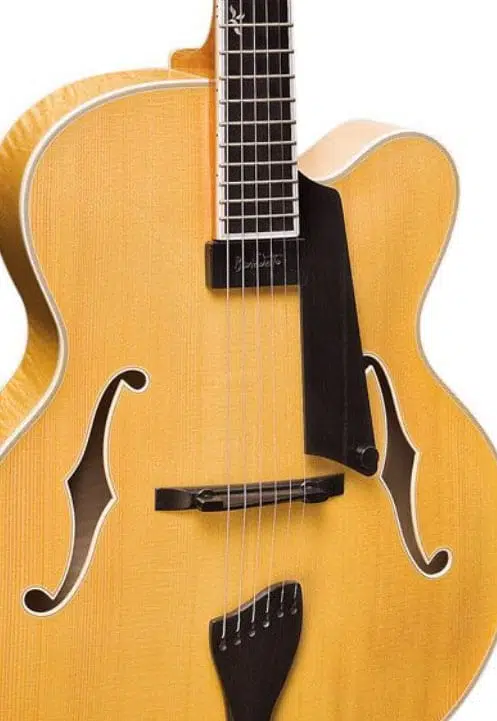
Craftsmanship becomes more visible at this level. Look closely at the top and back. A hand-carved instrument such as theCremona or La Venezia will show subtle variations in carving that reflect the luthier’s work. These details are not cosmetic. They influence how the guitar resonates and responds.

Check for consistency. Notes should feel even across all strings and frets. There should be no dead spots or uneven response. A well-built instrument maintains clarity whether you are playing softly or with more attack.

Electronics should support the natural voice of the guitar. On models with floating pickups such as the Manhattan,, the pickup should translate the acoustic tone without adding harshness or excessive coloration. The goal is to amplify what is already there, not replace it.

On models with a built-in pickup such as the Bravo Deluxe, 16-B, or Bravo Elite, the electronics should offer even greater support adding to the warmth and accentuating the natural clarity of the instrument. 

Consider how the guitar fits your playing environment. A larger carved instrument may suit solo work or small ensembles, while a more controlled design may be better for amplified settings. Understanding where and how you play helps narrow the right choice.

Long-term reliability is another factor. A high-end guitar should maintain its structure and setup over time. Benedetto supports this through Customer Care, ensuring that adjustments and maintenance keep the instrument performing as intended.

Finally, trust your response to the instrument. A well-built guitar will feel natural from the start. It should encourage you to play more and make it easier to express your ideas. That connection is often the clearest sign that you have found the right instrument.

Explore th Flagship Series and Professional Series to compare how different models reflect these qualities. Each guitar offers a distinct balance of tone, feel, and craftsmanship.

Choosing a high-end jazz guitar is a process of listening, feeling, and evaluating. When those elements align, the instrument becomes more than a purchase. It becomes a long-term partner in your playing.

How to Evaluate a High-End Jazz Guitar Before You Buy

Blog

Why Benedetto Flagship Guitars Hold Long-Term Value

Why Benedetto Flagship Guitars Are Considered Long-Term Investments

A great guitar is more than an instrument. For many players and collectors, it represents a long-term investment in craftsmanship, tone, and legacy. Benedetto Flagship guitars stand apart in this category because they are built with precision, produced in limited numbers, and rooted in a design philosophy that has shaped modern archtop construction.

Value begins with craftsmanship. Each guitar in the Flagship Series is hand carved from carefully selected spruce and maple, or exotic woods for the most unique versions. These materials are chosen for both tone and structural integrity, ensuring the instrument performs consistently over time. The carving process allows each guitar to develop a distinct voice, which adds to its individuality and long-term appeal.

Rarity also plays a role. Flagship models are not mass produced. Limited output means each instrument remains unique, which supports value in both the player and collector markets. Guitars such as the Cremona and La Venezia reflect this level of exclusivity. Their build quality and limited availability contribute to steady demand among serious musicians.

Consistency over time is another factor. A well-built archtop does not lose its voice as it ages. In many cases, it becomes more responsive as the wood settles and vibrates more freely. This gradual development enhances tone and makes older instruments even more desirable. Players value instruments that evolve without losing stability.

The reputation behind the instrument matters as well. Bob Benedetto’s influence on modern archtop design has created lasting demand for guitars built under his name. His methods continue to guide the workshop, ensuring that each new instrument reflects the same standards that defined his early work. This continuity strengthens long-term confidence in the brand.

The secondary market provides further insight into value retention. Benedetto instruments on offer through Bob’s Boutique include new, consigned, and refurbished guitars that reflect strong ongoing demand. These guitars remain desirable because their quality holds up over time, both structurally and musically.

Investment value is not only financial. It is also about reliability and long-term use. A Flagship Benedetto is built to perform for decades. Players rely on these instruments for recording, touring, and daily practice without concern for structural decline or tonal inconsistency.

Choosing a high-end archtop is a commitment. For those who value craftsmanship, tone, and lasting performance, Benedetto Flagship guitars offer a level of stability that extends beyond the initial purchase. Their value comes from how they are built, how they age, and how they continue to serve musicians over time.

Why Benedetto Flagship Guitars Hold Long-Term Value

Blog

How Hand Carving Shapes the Tone of an Archtop Guitar

How Hand Carving Shapes the Tone of an Archtop Guitar

Hand carving is one of the defining elements of a traditional archtop guitar. It shapes not only the look of the instrument but also how it sounds and responds. The process requires precision, experience, and an understanding of how wood behaves under tension.

The top and back of an archtop are carved from solid pieces of wood, usually spruce for the top and maple for the back. These pieces are shaped gradually to achieve the right thickness and contour. The goal is to create a structure that vibrates evenly across its surface. When done correctly, this produces a balanced tone with clear projection and strong sustain.

Carving affects how energy moves through the guitar. A thinner area may increase sensitivity and responsiveness, while a slightly thicker section adds support and focus. The luthier adjusts these areas carefully, listening and feeling how the wood responds. This process determines how the guitar will react to the player’s touch.

Hand carved models such as the Cremona and La Venezia show the results of this approach. Their tone is open and complex, with clear note separation and strong dynamic response. These instruments allow players to hear subtle differences in phrasing and articulation.

In contrast, laminated construction offers consistency and durability but does not provide the same level of acoustic complexity. Hand carving gives each instrument its own character, shaped by the wood and the builder’s decisions. No two carved guitars respond in exactly the same way.

The benefits of hand carving extend beyond tone. It also influences projection and balance. A properly carved top directs sound forward while maintaining clarity across all frequencies. This allows the guitar to sit naturally in both solo and ensemble settings.

Benedetto’s Flagship Series reflects this commitment to hand carving. Each instrument is shaped with attention to detail so that tone, feel, and response work together. The result is a guitar that reacts naturally to the player and supports expressive performance.

Hand carving remains a central part of archtop design because it connects craftsmanship with sound. It allows the instrument to respond fully to the player and to deliver the clarity and balance that define jazz guitar.

How Hand Carving Shapes the Tone of an Archtop Guitar

Blog

The Importance of Dynamic Range in Jazz Guitar

Why Dynamic Range Matters for Jazz Guitarists

Dynamic range defines how a guitar responds to changes in touch. In jazz, where expression relies on nuance, this range shapes the difference between a flat performance and a compelling one. The ability to move from soft, controlled phrasing to stronger, more defined attack gives the player control over tone and emotion.

Archtop guitars are known for their ability to translate these changes clearly. Their carved tops and hollow bodies respond quickly to variations in picking and finger pressure. A light touch produces warmth and openness, while a stronger attack adds clarity and presence. This responsiveness allows players to shape each note with intention.

Dynamic control also affects how the guitar interacts within an ensemble. In a small group, subtle changes in volume help the guitar blend with bass and piano. In larger settings, stronger attack allows lines to stand out without relying on excessive amplification. This balance is essential in jazz, where each instrument must support the group while maintaining its own voice.

Hand carved instruments such as the Sinfonietta highlight this sensitivity. Their acoustic response allows players to hear small changes in articulation and phrasing. Models like the Bambino Elite provide similar responsiveness in a more compact design, making them well suited for players who rely on precision and control.

Setup and maintenance also influence dynamic range. Proper string height, neck relief, and pickup balance ensure that the guitar responds evenly across all registers. Benedetto’s Customer Care resources help players maintain this consistency so the instrument continues to perform as intended.

Dynamic range is not created by equipment alone. It comes from the interaction between player and instrument. When a guitar responds naturally to touch, it allows the musician to focus on phrasing and timing rather than compensation. This connection defines the sound of jazz guitar and supports expressive performance in any setting.

Benedetto guitars are built to preserve this responsiveness. Whether in the Professional Series or the Flagship Series, each instrument is shaped to deliver consistent response and clear articulation. This allows players to explore the full range of dynamics that jazz demands.

Dynamic range gives jazz guitar its voice. When the instrument responds to every variation in touch, the music feels alive and connected.

The Importance of Dynamic Range in Jazz Guitar

Blog

Why Hollow Body Archtop Guitars Define the Jazz Sound

Why Hollow Body Archtop Guitars Define the Jazz Sound

For nearly a century, the hollow body archtop guitar has held a central place in jazz. Its voice carries warmth, clarity, and balance that blend naturally with other instruments. While guitar design has evolved in many directions, jazz musicians continue to return to the hollow body archtop for its distinctive response and musical character.

The defining feature of an archtop guitar is its carved or laminated top combined with a hollow interior. This structure allows the guitar to resonate more freely than a solid body instrument. The result is a tone that feels open and dynamic, with a strong midrange that sits comfortably in a jazz ensemble. Chords sound full and clear, while single notes maintain articulation without becoming overly sharp.

Projection also plays an important role. In early jazz settings, guitarists needed instruments that could be heard alongside horns and drums before the widespread use of amplification. Archtop guitars were designed with f holes and arched tops that pushed sound forward. Even today, that focused projection helps the guitar remain present in a group setting without dominating the mix.

The hollow body construction also contributes to the instrument’s responsiveness. When a player adjusts pick attack or finger pressure, the guitar reacts immediately. This sensitivity allows musicians to shape phrases with subtle changes in touch. In jazz performance, where dynamics and articulation carry emotional weight, that responsiveness becomes essential.

Hand carved models such as the La Venezia demonstrate the depth and complexity that hollow body construction can achieve. Their carved spruce tops and maple backs create a rich acoustic foundation that responds clearly to the player’s touch. Instruments like the 16-B build on the same tradition, offering projection and tonal balance suited for both solo and ensemble playing.

Amplified performance has introduced new design considerations, yet the hollow body remains central. Modern models such as the Bravo and Bambino combine hollow construction with electronics that deliver consistent stage performance. These guitars maintain the warmth of traditional archtops while supporting contemporary playing environments.

Hollow body guitars also encourage a particular playing style. Their natural resonance rewards controlled attack and thoughtful phrasing. Players often discover that the instrument invites a lighter touch and more deliberate articulation. This interaction between player and instrument shapes the sound of jazz guitar as much as any piece of equipment.

At Benedetto, the hollow body archtop continues to guide design philosophy. The Flagship Series preserves the hand carved tradition that defines classic jazz tone. The Professional Series brings the same tonal balance to working musicians who need reliability on stage.

The hollow body archtop has endured because it supports the core qualities of jazz performance. Warm tone, clear projection, and dynamic response allow the guitar to blend, support, and lead when needed. As jazz continues to evolve, the archtop remains one of its most expressive and recognizable voices.

Why Hollow Body Archtop Guitars Define the Jazz Sound

Blog

How Scale Length Affects Jazz Guitar Tone and Playability

Understanding Scale Length on a Jazz Guitar

Scale length is one of the most important measurements in a guitar. It refers to the distance between the nut and the bridge, and it directly affects string tension, tone, and playability. For jazz musicians, scale length can shape everything from how chords feel under the fingers to how strongly the guitar projects in an ensemble.

Many players assume that scale length is simply a matter of using a longer or shorter neck. In reality, the scale determines the entire layout of the instrument. The position of the bridge, the placement of the sound holes, the location of the pickup, the bracing pattern, and even the depth of the cutaway all relate to scale length. Changing it requires far more than replacing the neck. It means redesigning the instrument so that every element continues to function in balance.

At Benedetto, the standard scale length is 25 inches. This measurement reflects both musical inspiration and practical design experience. Bob Benedetto has often spoken about the influence of guitarist Johnny Smith, whose signature instruments used a 25 inch scale paired with a 1 3/4 inch nut width. Bob admired Johnny’s playing and approach to tone, and that scale became a natural reference point. If that balance worked for Johnny Smith, Bob believed it would work for many jazz musicians.

There is also a technical reason behind the choice. A 25 inch scale creates a strong balance between string tension and playability. The tension is firm enough to drive the carved top of an archtop guitar, which helps produce clear projection and a defined low end. At the same time, the length remains comfortable under the hand, allowing smooth movement across the fingerboard.

Too short a scale can reduce the tension needed to fully activate the top. Too long a scale increases tension and can make the guitar feel stiff or demanding to play. The 25 inch scale sits between these extremes, providing enough energy to support tone while still feeling relaxed during long sessions.

Most Benedetto models use this scale because it supports the tonal balance that defines the brand. Instruments such as the La Venezia and the Cremona rely on this proportion to achieve their characteristic clarity and response. When the bridge sits in the correct position relative to the carved top, the entire instrument resonates more evenly.

Of course, not every player has the same physical reach or preference. Some musicians feel more comfortable on a shorter scale. For those players, Benedetto offers the Andy model. This instrument uses a 23 inch scale with a smaller body and a 1 11/16 inch nut width. The shorter length reduces tension slightly and can feel easier for players with smaller hands while still delivering the depth and articulation expected from a carved archtop.

Scale length rarely appears in discussions about tone, yet it quietly influences how a guitar responds to the player. When the measurement is chosen carefully, it allows the instrument to project clearly, feel balanced, and respond naturally to touch.

That balance is the reason Benedetto continues to rely on the 25 inch scale across most of the lineup. It reflects both tradition and experience, giving players a design that supports tone, comfort, and expressive control in every performance.

How Scale Length Affects Jazz Guitar Tone and Playability

Blog

Traditional Acoustic vs Modern Archtop: What’s the Difference?

Traditional Acoustic Archtop vs Modern Archtop: Understanding the Differences

The terms jazz box and archtop guitar are often used interchangeably, but they do not always describe the same instrument. While both share roots in early jazz history, their construction, tone, and performance roles can differ. Understanding these differences helps players choose the guitar that best supports their style and setting.

The traditional jazz box refers to large hollow body archtop guitars that gained popularity during the swing era. These instruments featured deep bodies, carved tops, and f holes designed to project acoustically before widespread amplification. Their tone emphasized warmth, strong midrange presence, and clear rhythm support. In big band settings, the jazz box served as a percussive harmonic foundation.

Modern archtops evolved alongside amplification. While they maintain carved or laminated tops and hollow construction, many incorporate refined electronics, slimmer body profiles, and improved feedback resistance. These changes allow players to move comfortably between acoustic nuance and amplified performance without sacrificing clarity.

Hand carved instruments such as the Cremona and Fratello reflect the heritage of the traditional jazz box. Their acoustic complexity and detailed carving techniques preserve the depth and resonance that defined early archtops. These guitars excel in solo performance and small ensemble settings where dynamic sensitivity matters.

Modern performance models such as the Bravo Elite  and the 16-B  represent the contemporary evolution of the archtop. Designed for reliability and consistent amplified tone, they provide control in louder environments while maintaining the warmth expected from a jazz instrument.

Another difference lies in versatility. The classic jazz box was built primarily for rhythm work and acoustic projection. Today’s archtops support a broader range of styles, from straight ahead jazz to fusion and studio recording. Electronics, body dimensions, and structural refinements allow players to adapt to modern performance demands.

At Benedetto, both tradition and innovation shape the lineup. The acoustic models in the Flagship Series preserve the hand carved approach rooted in jazz history, while the carved models with built in pickups and the Professional Series guitars deliver modern consistency for working musicians.

The distinction between a jazz box and a modern archtop reflects the evolution of jazz itself. Both share the same foundation, but today’s players benefit from designs that respond to contemporary stages, studios, and ensemble settings. Choosing between them depends on tone preference, performance environment, and personal feel.

Traditional Acoustic vs Modern Archtop: What’s the Difference?

Blog

Why the Archtop Guitar Excels in Jazz Ensembles

Why the Archtop Guitar Excels in Jazz Ensembles

Jazz is built on interaction. Each instrument must hold its place while leaving room for others. The archtop guitar remains central to this balance because of its focused tone and controlled projection. Its design allows it to blend with bass, piano, horns, and drums without overpowering the ensemble.

The carved top and hollow body of an archtop guitar create a midrange voice that sits clearly within a group setting. Unlike solid body guitars, which can dominate certain frequencies, the archtop maintains definition without excess brightness. This tonal balance allows chords to support the harmony while single note lines remain articulate.

Projection plays a major role in ensemble performance. An archtop’s sound holes  and body depth distribute sound evenly, which helps the guitar cut through the mix without excessive amplification. In smaller groups, hand carved models such as the Manhattan provide detailed response that complements acoustic instruments. In larger ensembles, models like the Bravo Elite or Bravo Deluxe  deliver controlled output that remains clear under amplification.

Feedback resistance is another advantage. Laminated designs within the Professional Series offer stability in louder environments. This consistency allows players to focus on rhythm and phrasing instead of adjusting settings throughout a performance.

Ensemble playing also demands dynamic control. Jazz guitarists often shift from subtle comping to melodic solos within a single piece. An archtop responds quickly to changes in attack and volume, which supports musical conversation between players. This responsiveness is one reason the instrument has remained essential in jazz settings for decades.

Benedetto guitars are voiced to support this role. Whether through the acoustic depth of a hand carved model or the focused consistency of a stage ready instrument, each design emphasizes clarity and balance. The result is a guitar that supports the ensemble without competing for space.

In jazz, success depends on listening and responding. The archtop guitar excels because its design encourages both. It blends, projects, and adapts in real time, making it one of the most reliable voices in any jazz ensemble.

Why the Archtop Guitar Excels in Jazz Ensembles

Blog

How Body Depth Affects Archtop Guitar Tone

How Body Depth Shapes the Voice of an Archtop Guitar

Body depth is one of the most important design elements in an archtop guitar. While players often focus on pickups or wood selection, the depth of the body directly influences projection, warmth, and overall tonal balance. In jazz performance, where clarity and nuance matter, this detail makes a measurable difference.

A deeper archtop body produces greater air movement inside the instrument. This increased internal resonance supports a fuller low end and rounder overall tone. For players who favor warm chord voicings and rich harmonic texture, a deeper body often delivers the depth they seek. The sound feels expansive and supportive in both solo and ensemble settings.

Shallower body designs create a different response. With less internal air volume, the tone tightens and becomes more focused. Notes articulate quickly and maintain clarity under amplification. This makes shallower archtops well suited for live performance where feedback control and definition are priorities.

Hand carved instruments such as the La Venezia and Cremona demonstrate how body depth and carving work together. Their acoustic complexity comes from the relationship between top thickness, arch shape, and internal air space. These guitars project with authority while maintaining balanced frequency response.

Models designed for amplified consistency, including the 16-B, Bravo, and Bambino models, often feature dimensions that support stage control. Their design ensures clarity across registers without excessive low-end bloom that can compete with bass or piano in an ensemble.

Body depth also affects feel. A deeper instrument rests differently against the player’s body, influencing posture and comfort. A slightly shallower build may feel more manageable during long sets or travel. Choosing the right depth depends on playing environment, tonal goals, and physical preference.

Benedetto guitars are designed with careful attention to these proportions. The relationship between body depth, carving, and structural support determines how the guitar breathes and responds. When these elements align, the result is a voice that feels balanced, clear, and naturally expressive.

Understanding body depth helps players choose an archtop that supports their sound rather than shaping it unintentionally. In jazz, where nuance defines performance, these structural details matter.

How Body Depth Affects Archtop Guitar Tone

Blog

Recording Jazz Guitar: How to Capture a Natural Archtop Sound

How to Capture a Natural Jazz Guitar Tone in the Studio

Recording jazz guitar requires restraint and attention to detail. The goal is not to alter the instrument’s voice but to preserve it. Archtop guitars produce warmth, articulation, and natural compression that should remain intact in the final mix.

The first decision is whether to record acoustically, amplified, or both. Hand carved instruments such as the La Venezia and Sinfonietta respond beautifully to microphones placed near the f holes or slightly above the top. A condenser microphone positioned at a moderate distance captures body resonance without emphasizing pick noise.

For amplified sessions, a clean amp setting is essential. Keep EQ balanced and avoid excessive gain. Models like the Bambino Elite or Bravo Elite deliver consistent response under amplification, while providing a robust acoustic sound worthy of recording. Pairing them with a neutral amplifier preserves clarity and articulation. Recording both the direct amp signal and a room microphone often produces a fuller and more dimensional sound.

Room acoustics play a major role. Hard surfaces create reflections that can blur articulation. A controlled room with minimal echo allows the guitar’s tone to remain focused. Small adjustments in mic placement often produce better results than heavy post processing.

String condition and setup matter before recording begins. Fresh strings offer clarity and sustain, while proper neck relief and action ensure even response across the fingerboard. Benedetto’s Customer Care resources provide guidance to help players maintain optimal setup before entering the studio.

Touch remains the most important factor. Jazz guitar tone is shaped by dynamics and articulation. Recording exposes inconsistencies in attack and timing, so controlled technique yields the most natural results. When the hands lead, microphones capture authenticity rather than excess noise.

Benedetto guitars are built to translate nuance clearly. Whether recording a solo performance or tracking within an ensemble, the instrument should sit naturally in the mix without heavy equalization. Capturing a true archtop sound requires thoughtful mic placement, clean amplification, and disciplined touch.

In the studio, simplicity often produces the most honest tone. Preserve the character of the instrument, and the recording will reflect the depth and balance that define the jazz guitar.

Recording Jazz Guitar: How to Capture a Natural Archtop Sound
Shopping cart
There are no products in the cart!
Continue shopping