Bob's Boutique

Blog

Jackson Evans

Blog

String Replacement Tips for Custom Jazz Guitars: How to Select Archtop Guitar Strings for Optimal Tone

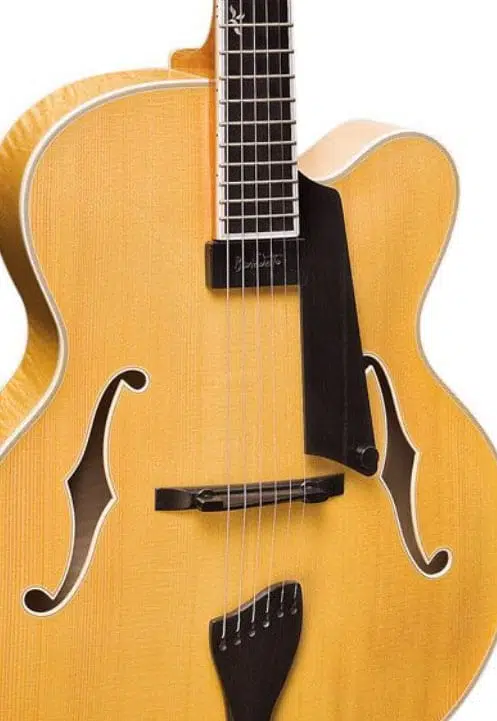
It is easy to view strings merely as replaceable accessories, but on a floating-bridge instrument, they form half of its structural voice, providing the downward pressure that anchors the ebony bridge and drives the tap-tuned spruce top beneath it. Whether you are fine-tuning a guitar you have owned for decades or exploring the rare pieces in Bob’s Boutique, matching your string set to the guitar’s physical architecture changes everything about how it speaks on stage and in the studio.

Why Archtop String Gauge Selection Is a Structural Decision

A floating ebony bridge is neither glued nor pinned. It stays in place through string pressure alone, and that pressure travels directly into a spruce soundboard carved by hand by our luthier team, who tap and listen as the graduations are refined. The strings press down, the arch pushes back, and the equilibrium between those two forces is what gives the instrument its voice.

Lighter strings reduce that downward pressure, so the top is driven less and the guitar becomes quieter acoustically, with a slightly thinner response under a heavy pick. Heavier strings ask the carved diaphragm to carry more load than it may have been graduated for. Neither direction is inherently wrong; the right choice depends on the particular guitar and on what you ask of it night after night.

Scale length plays a larger role than most players expect. Because string tension rises with the square of scale length, the same set behaves differently across our instruments: moving from our 25″ scale to 24-3/4″ lowers tension on an identical set by roughly 6 percent, and on The Andy’s 23″ scale the reduction is closer to 15 percent. This is why we remain committed to single-scale geometry, a standard rooted in half a century of traditional archtop building. Our bracing and top loading are designed around a known figure, and a fixed scale keeps that figure dependable, which is what allows each guitar to find the sweet spot of tension and tone.

Flatwound vs. Roundwound Jazz Guitar Strings (and the Half-Round Option)

The winding type shapes the attack, the sustain, and the way each string interacts with a magnetic pickup.

  • Flatwound nickel: A smooth ribbon wrap with a quick decay and the warm, rounded attack that comping players have favored for generations. Finger noise is minimal, which makes these the traditional choice for amplified chord-melody work.

  • Roundwound phosphor bronze or 80/20 bronze: Brighter, with longer sustain and a broader spread of overtones. These strings are at their best when the guitar is played acoustically or recorded with a microphone but won’t work well with a magnetic pickup.

  • Roundwound nickel: More brilliance than flatwounds while remaining fully compatible with magnetic pickups, offering a middle path for players who want added clarity through an amplifier.

  • Half-round (ground wound): Roundwound strings partially polished flat, producing less finger noise than rounds with more definition than flats, which suits players who move between acoustic and amplified settings.


Playing situation


Suggested winding


Typical high E


Tonal result


Small-combo gig, floating humbucker


Flatwound nickel


.012–.013


Warm, focused attack with little finger noise


Acoustic duo or miked in the studio


Roundwound bronze


.013


Full projection with the top driven firmly


Amplified, with more articulation


Roundwound nickel or half-round


.012–.013


Brighter attack and even pickup output


Solo chord-melody, mixed settings


Light flatwound or half-round


.012


Warmth with clearer upper voices

Players who work primarily through an amplifier, particularly those who rely on our gig-ready Professional Series for nightly performance, frequently settle on nickel flatwounds as their long-term standard.

Floating Pickup String Response: Why Bronze and Magnets Disagree

One detail surprises even experienced players. Bronze is not magnetic, so a floating mini-humbucker senses only the steel core of a bronze-wound string while largely ignoring its wrap. The result is that the wound strings sound weak through the pickup while the plain strings stand out, creating an imbalance that no amount of amplifier adjustment will fully correct.

Nickel windings, whether flat or round, keep the output consistent from string to string. In our experience, the guiding principle is straightforward: when the pickup carries most of the sound, choose nickel, and when the carved top is doing the work, bronze becomes the more rewarding option. Our acoustic Flagship models, hand-carved and tap-tuned in Savannah, GA, respond so directly to string choice that they reward thoughtful experimentation with bronze sets or heavier flatwounds.

The third string deserves attention as well. Most jazz sets include a wound G, which matches its neighbors more closely in feel and volume and distributes the pull more evenly across the bridge, whereas a plain G in the .020s can sound thin and stand apart from the rest of a chord voicing.

String Replacement Tips for Custom Guitars When You Change Gauge or Winding

Replacing strings with the same set you have always used is a routine task, but changing gauge or winding type calls for more care. These are the points we check in the workshop:

  • Change one string at a time. Keeping most of the tension in place ensures that the unpinned bridge stays on its footprint and that the top is not unloaded and reloaded all at once, which matters particularly when the overall load is already shifting.

  • Recheck intonation. Different gauges intonate differently, so compare the 12th-fret harmonic with the fretted note on both E strings and adjust the bridge base if needed.

  • Inspect the nut slots. Moving to a heavier gauge can cause wound strings to bind in slots cut for lighter ones, leading to pinging and tuning instability; this is work best left to a qualified technician.

  • Allow the neck to settle. Additional tension draws the neck forward, so give the guitar a day to stabilize before making small, measured truss rod adjustments.

  • Observe the bridge base. If the base no longer sits flush against the arch after a significant change, consult a luthier before playing further.

Matching Strings to the Guitar in Front of You

Body size also influences the choice. A 17″ lower bout moves a considerable volume of air and often benefits from a heavier set that drives the top fully, while a 14-1/2″ or 16″ body tends to speak more evenly with a slightly lighter gauge.

Playing style completes the picture. A guitarist who comps behind a horn section in a loud room has different needs from one who plays unamplified duo sets, and the same instrument can be tuned toward either role through string choice alone. If you are designing a custom Benedetto archtop, share your string preferences early in the process so that the nut and bridge can be set up around the strings you intend to play, rather than adapted to them afterward.

FAQ: Choosing Archtop Guitar Strings

What gauge strings are best for a jazz archtop?

Most players settle on .012 or .013 sets, choosing flatwounds for amplified playing and bronze roundwounds for acoustic projection.

Can I use phosphor bronze strings with a floating pickup?

You can, although the wound strings will sound noticeably weaker through a magnetic pickup, which is why nickel strings are generally preferred for amplified playing.

Will heavier strings damage my carved top?

A moderate increase in gauge is usually well tolerated by a properly built archtop, but a substantial jump can overload a top graduated for lighter tension, so it is wise to consult your luthier first.

Do I need a setup after changing string gauge?

In most cases, yes, because intonation, nut slot fit, and neck relief can all shift when the gauge changes.

Why do archtop sets use a wound G string?

A wound G balances volume and feel with the neighboring strings and spreads the load more evenly across the floating bridge.

String Replacement Tips for Custom Jazz Guitars: How to Select Archtop Guitar Strings for Optimal Tone

Blog

How Can You Ensure the Guitar You Choose Meets Your Playing Style Needs?

A Luthier’s Guide to Custom Jazz Guitar Selection

Many players choose an archtop by eye and then spend years adapting their technique to it. With over five decades at the bench building for legendary jazz artists, we have come to believe the relationship should run the other way.

To make sure a custom guitar meets your playing style needs, match four core variables to the build: your gigging volume, your touch weight, your preference for acoustic or amplified tone, and your body-size ergonomics. Quiet, acoustic chord-melody work favors a hand-carved solid spruce top with a floating pickup. Loud stages favor laminate tops with built-in humbuckers.

That framework is the starting point. What follows is the detail that turns it into an instrument you will still reach for decades from now.

Begin With the Room, Then the Guitar

A guitarist comping behind a sixteen-piece big band works in an entirely different acoustic environment from one recording solo chord-melody arrangements in a quiet studio. The first needs an instrument that remains composed when the amplifier is pushed and the brass section is at full strength. The second needs a top that responds to the lightest touch of the thumb with bloom and sustain.

In practice, the distinction looks like this:

  • High-Volume Ensemble Work: A 16″ laminate-top archtop with a built-in humbucker resists feedback, projects evenly through an amplifier, and withstands the demands of touring. Our gig-ready Professional Series was conceived specifically for this environment.

  • Solo, Duo, and Studio Acoustic Work: A 17″ hand-carved spruce top with a floating mini-humbucker allows the soundboard to move freely, so the listener hears the instrument itself rather than the pickup alone. Our Flagship Series hand-carved archtops speak most fluently to this space.

  • Mixed-Use Performance: A hand-carved top in a somewhat smaller body often offers the best of both worlds, retaining genuine acoustic character while maintaining composure on an amplified bandstand.

Body Size and Jazz Archtop Ergonomics

Lower bout width (14-1/2″, 16″, or 17″) directly dictates right-arm posture during long sets, making physical comfort just as important as acoustic output.

A 17″ body provides unmatched acoustic depth and maximum acoustic volume. However, over long sets, its width holds the picking arm higher and further from your torso. For many players, that added reach introduces shoulder tension that restricts picking dynamics. A 16″ body generally offers the ideal sweet spot, delivering full acoustic character while keeping the arm in a relaxed, natural posture. For travel or tight stage setups, a 14-1/2″ lower bout offers authentic archtop tone in a compact profile.

Hand-Carved Archtop Specs: How the Top Behaves

A hand-carved spruce soundboard functions as a living diaphragm. We carve it, flex it, and tap-tune it, listening to how its resonance changes as the graduations are refined, until the plate responds as that particular piece of wood is inclined to respond. No two tops are identical, and that is by design.

Bracing is where your pick attack dynamics directly enter the architectural conversation:

  • Parallel Bracing: Reinforces the top along its length. It favors a focused fundamental note with snappy projection and handles volume gracefully, which suits players with a firm attack or those who perform at higher amplification.

  • X-Bracing: Allows the top to vibrate in more complex patterns, rewarding a lighter touch with a broader, more open voice and longer sustain. A player with a heavy pick and a strong wrist may find an X-braced top difficult to control, whereas a player with a delicate fingerstyle touch may find parallel bracing somewhat reserved.

Combine these choices with figured maple back and sides, an ebony tailpiece, and a thin nitrocellulose finish that allows the wood to continue resonating, and the result is what many regard as the gold standard of jazz archtops. We do not use synthetic composite tops, and we never will.

Floating Pickup vs. Built-In Humbucker

Of all the technical choices involved, custom jazz guitar selection often hinges on how the signal is captured:

Feature / Metric

Floating Mini-Humbucker

Built-In Humbucker

Mounting Style

Suspended from the neck or pickguard

Routed directly into the soundboard

Effect on Top

Leaves the soundboard unhindered

Adds mass and dampens top resonance

Acoustic Tone

Fully preserved, maximum dynamic warmth

Reduced acoustic output, focused electric fundamental

Feedback Resistance

Moderate (sensitive to room volume)

High (stabilizes top at higher stage volumes)

Ideal Context

Acoustic purists, studio work, intimate venues

Big band, large stages, high-gain fusion, touring

A floating pickup captures the acoustic voice of a carved top without inhibiting it. A built-in humbucker exchanges a measure of acoustic response for absolute stage reliability at volume. Neither design is superior in absolute terms; each is superior for a specific player’s environment.

Scale Length, Top Loading, and the Benedetto Standard

Almost every guitar built in our workshop features a 25″ scale length for a crucial reason: scale length determines string tension, which directly dictates how the soundboard is loaded and driven. Altering it alters top deflection and internal bracing behavior, changing the essential Benedetto voice.

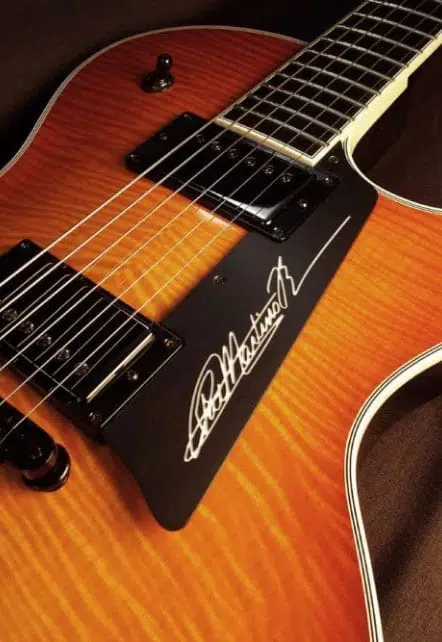
While we can accommodate a 24-3/4″ or 25-1/2″ scale length upon request, we encourage discussing why 25″ sits in the sweet spot before making a change. Apart from our Pat Martino Signature model (24-5/8″) and the compact Andy Model (23″), we do not build extra-short, extra-long, or fan-fret scales; they require redesigning the body geometry entirely, at which point it wouldn’t be a Benedetto anymore.

Neck profile remains entirely custom. When designing a custom Benedetto archtop, we recommend sharing the thickness (1st and 12th frets), nut width, and shoulder shape of your favorite instrument so we can match your fretting hand’s muscle memory.

Considerations Before Commissioning Your Archtop

To map out your ideal instrument specifications, evaluate these six parameters:

  1. Performance Volume: In which settings do you play most often, and at what decibel level?

  2. Touch Weight: Is your approach light fingerstyle, a medium flatpick, or a firm right-hand attack?

  3. Signal Path: Do you perform primarily acoustically, primarily amplified, or evenly split?

  4. Body Fit: How long are your sets, and how does a larger lower bout feel over their duration?

  5. Neck Feel: Which profile, nut width, and shoulder shape does your fretting hand already trust?

  6. Repertoire: Is your focus chord-melody, rhythm comping, fast bebop lines, or a mix of all three?

Learning From Benedetto Player Profiles

Few resources are as instructive as the example of working musicians. We encourage you to begin by exploring our roster of Benedetto guitarists, which spans bebop soloists, chord-melody specialists, studio players, and touring artists. If a particular player’s sound resembles the one you’re pursuing, mention it when you speak with our luthiers.

Each of those instruments was built in the same Savannah workshop. You can explore the history of Benedetto Guitars, a legacy extending more than half a century to Bob’s very first archtop, or meet our team of luthiers who carve and voice every instrument by hand. As Bob has long maintained, the guitar must serve the player.

Your Next Step

Take the instrument you play most often, measure its neck profile, note its body size, and consider candidly where it falls short of your performance needs. Those observations form the foundation of a meaningful conversation with our luthiers, and the beginning of a guitar built to carry your musical legacy.

Frequently Asked Questions

What size archtop body is best for jazz guitar playing?

It depends on your physical frame and performance setting. A 17″ lower bout offers maximum acoustic presence for studio and solo work, a 16″ body provides the sweet spot between shoulder comfort and acoustic projection, and a 14-1/2″ body excels for travel and tight bandstands.

Is a hand-carved solid spruce top worth it over a laminate top?

For acoustic purity, solo chord-melody, and low-volume studio work, a hand-carved spruce top is unmatched in dynamic range and touch sensitivity. On louder stages with loud drummers or horn sections, a laminate maple top is often superior because it controls cabinet resonance and resists feedback.

Does a floating pickup affect the acoustic tone of an archtop?

Only minimally. Because a floating pickup attaches to the neck extension or pickguard without routing into or contacting the soundboard, the solid spruce top remains completely unhindered to vibrate as an acoustic diaphragm.

Why are almost all Benedetto guitars built with a 25″ scale length?

The 25″ scale length provides the exact string tension required to load our hand-carved spruce tops properly, achieving optimal acoustic resonance, note separation, and projection without altering body architecture.

Can I customize the neck profile on a custom Benedetto archtop?

Yes. Every custom build allows you to specify nut width, neck thickness at the 1st and 12th frets, fret wire size, and shoulder contour to match the exact dimensions of your favorite instrument.

How Can You Ensure the Guitar You Choose Meets Your Playing Style Needs?

Blog

From Billets to Soundboards: High-Quality Materials for Custom Jazz Guitars

Every note a jazz guitarist plays starts in the wood. Because spruce, maple, and ebony each shape resonance, attack, and sustain differently, material choice matters just as much as body shape, whether the guitar is a fully hand-carved archtop or built on a laminated body for the road. This guide breaks down how those choices, across both constructions, define an instrument’s voice from the soundboard to the tailpiece.

Archtop Tonewood: Soundboards, Backs, and Acoustic Diaphragms

In our Savannah, GA workshop, selecting a tonewood billet is a careful exercise in acoustic evaluation. The top of an archtop acts as a spring-loaded diaphragm, and when a player plucks a heavy-gauge flatwound string, the bridge sends that vibrational energy directly into it. That top has to be rigid enough to withstand over 75 pounds of downward string pressure while staying pliable enough to vibrate freely across complex chord voicings, which is exactly why tonewood selection is one of the first decisions in any custom order.

Solid Carved vs. Laminated Construction

Every Benedetto starts with one of two construction methods, and it’s typically the first fork in the road for a custom build. Our Flagship Series is entirely hand-carved from solid, aged tonewoods; the top, back, and sides begin as thick blanks and are carved down by hand until each panel reaches its ideal thickness and tap-tone. Our laminated models use layered tonewood plies for the top, back, and sides, built over the same parallel-braced spruce internal structure and finished with the same ebony fingerboard, bridge, and tailpiece as our carved guitars.

Fine-Grained Spruce Tops: Sitka vs. European Master-Grade

On our fully carved Flagship archtops, the choice of top wood always comes down to two dominant spruce species:

  • Quarter-Sawn Sitka Spruce (Picea sitchensis): Renowned for its exceptional strength-to-weight ratio and dynamic headroom. Sitka yields a fundamental tone with crisp note separation, making it ideal for players who use a firm plectrum attack and demand zero acoustic distortion on loud stages.

  • European / Alpine Spruce (Picea abies): Softer than Sitka with lower density, European spruce delivers a complex overtone series, immediate light-touch response, and a rich, bell-like acoustic bloom. It is the gold standard for fingerstyle jazz purists and intimate solo chord-melody performance.

When evaluating a raw spruce billet, we inspect the grain density. Close, straight grain (15 to 25 rings per inch) ensures uniform longitudinal stiffness. During the hand-carving phase, our luthiers execute tap tuning: flexing the carved soundboard, listening to its fundamental pitch decay, and carving away minute fractions of wood until the top rings with clarity before it ever touches a rim assembly. This is the same evaluation process every custom top goes through before it’s approved for a build.


Tonewood Species


Primary Application


Acoustic Profile


Structural Density & Stiffness


Sitka Spruce


Carved Tops (Archtop Soundboards)


High headroom, punchy fundamentals, crisp projection


High longitudinal stiffness, moderate weight


European Spruce


Carved Tops (Fingerstyle / Solo)


Warm overtone bloom, subtle dynamic response, rich air


Moderate stiffness, ultra-lightweight density


Flamed / Quilted Maple


Carved or Laminated Backs, Ribs (Sides)


Bright attack decay, focused midrange, projection rim


High lateral stiffness, high density


Mahogany / Spanish Cedar


Necks, Solid Backs


Warm fundamental focus, rich low-mid bloom


Moderate stiffness, excellent dampening


Ebony


Fingerboards, Bridges, Tailpieces


Percussive, immediate, maximum clarity


Exceptional density, extreme wear resistance

Flamed Maple: Dynamic Projection and Rim Rigidity

Across both carved and laminated models, quarter-sawn flamed or quilted maple (Acer saccharum) provides the structural frame and acoustic reflector for the back and sides. The back and sides of an archtop do not drive the sound; rather, they reflect internal air pressure waves back up through the f-holes.

Highly figured maple is structurally dense. On carved backs, precise graduating contours (thinner near the recurve, thicker near the centerline) let a solid maple back act as a mirror that focuses lower-mid frequencies into clear, projecting notes that cut through a big band horn section. Figured grades also vary widely in appearance, which is part of why maple selection is often a visual as well as acoustic decision for custom clients.

Archtop Geometry and Scale Mechanics

A custom guitar’s tone is inextricably linked to its physical scale geometry. There is a common misconception in modded instrument circles that changing scale lengths mid-build is a harmless cosmetic tweak. In truth, altered scale geometry changes string tension vectors across the bridge, completely altering top loading and internal bracing deflection.

Scale and Body Size

We build almost exclusively to a 25-inch scale, with two named exceptions: the Pat Martino Signature Model™ (24-5/8″) and our compact Andy™ line (23″). Custom carved builds can also be ordered at 25-1/2″ or 24-3/4″, though we strongly recommend staying at 25″. See the full range of options when designing a custom Benedetto archtop.

Body size follows a similar logic: 17-inch lower bouts deliver maximum unamplified volume and bass, 16-inch balances punch with playability, and 14-1/2-inch bodies favor portability and feedback resistance on stage. All three are available as a starting point for a custom order.

Archtop Fingerboards and Ebony Fittings: The Touch Mechanics

The point of contact between musician and instrument is where subtle material differences become immediately apparent. While rosewood offers a softer feel, dense African Gaboon Ebony (Diospyros ebenum) remains the undisputed material choice for fingerboards, floating tailpieces, and height-adjustable bridges across our entire line, carved or laminated, and it’s rarely a component custom clients ask us to swap out.

Why Ebony Matters for Acoustic Attack

Ebony is incredibly dense and non-porous. When a string is fretted against an ebony fingerboard, virtually zero vibrational energy is absorbed by the wood underneath. The string’s energy stays in the string, yielding an immediate, percussive attack decay that allows fast-moving bebop lines to articulate clearly without getting muddy.

Furthermore, hand-carved ebony tailpieces anchored via a nylon-sheathed steel cable fastener serve a crucial acoustic role: they add minimal mass to the top soundboard, allowing the top to vibrate without the dampening effect of heavy brass or nickel hardware.

How Archtop Material Choices Come Together in the Shop

When our founder, Robert Benedetto, established his archtop building methods over fifty years ago, he proved that high-quality materials are only as good as the luthier’s hands guiding the chisel. You can take the most expensive piece of master-grade Alpine spruce, but if you carve it to uniform factory thickness without listening to its internal grain structure, the instrument will sound flat and choked.

In our Savannah, GA workshop, our team of expert luthiers approaches every build as a unique structural challenge, whether it’s a fully hand-carved instrument or a laminated model built for the road. Our craftspeople evaluate the exact weight, density, and flexibility of each wood blank, hand-carve internal parallel or X-braces on our solid-top guitars, and apply the same thin, breathable nitrocellulose lacquer finish across the entire line, protecting the wood without locking down its natural acoustic movement.

Backed by 50 years of master luthiery, it’s the same standard we hold all guitars to today.

Start Designing Your Custom Archtop

The journey toward a custom archtop begins by identifying the exact acoustic voice, neck profile, and stage response your playing demands, whether that leads you to a fully hand-carved instrument or a laminated model built for the road. Explore our Savannah workshop to discover how our master luthiers translate fine tonewoods into lifetime musical companions.

FAQs: Archtop Guitar Materials

How much does tonewood choice actually affect an archtop’s sound?

Tonewood choice affects nearly every dimension of an archtop’s voice; headroom, overtone complexity, attack, and sustain all trace back to which species is used and how it’s carved or laminated. It’s one of the few decisions in guitar building where the material itself, not just the craftsmanship applied to it, sets a hard ceiling on what the instrument can do.

Why do luthiers choose Sitka spruce over European spruce, or vice versa?

Sitka spruce’s higher strength-to-weight ratio gives it more dynamic headroom and a crisp, punchy fundamental, which suits players with a firm attack or those performing at real volume. European spruce is lighter and less dense, producing a more complex overtone series and an immediate response favored by fingerstyle and chord-melody players. The right choice comes down to touch and repertoire, not one species being categorically better than the other.

Why is ebony used for fingerboards, bridges, and tailpieces instead of a softer wood like rosewood?

Ebony’s density and closed grain absorb almost none of a string’s vibrational energy, which keeps that energy in the string and produces the crisp, percussive attack fast bebop lines need to stay distinct. Rosewood feels softer under the fingers, but that softness comes at the cost of some of that immediacy, along with more wear over decades of heavy playing.

From Billets to Soundboards: High-Quality Materials for Custom Jazz Guitars

Blog

Elevate Your Jazz Guitar Skills Today: A Guide to Archtop Playing

When Howard Paul, CEO here and a longtime fixture of Savannah Jazz, took the helm alongside Bob Benedetto in 2006, the priority was clear: keep building flagship acoustic masterpieces while expanding professional tools for gigging musicians. Every instrument leaving our Savannah bench is carved to function as an acoustic engine, reacting dynamically to every nuance of your attack.

To unlock that potential in your own jazz guitar playing, your focus must shift beyond raw speed. Elevating your guitar skills requires grounding your lines in guide-tone voice-leading, controlling your right-hand dynamics, internalizing time-feel, and letting the archtop’s soundboard breathe.

Right-Hand Touch: Driving the Acoustic Archtop Soundboard

Most players treat the instrument as a passive generator of pitch. You press a string against a nickel-silver fret, strike it with a piece of celluloid, and expect a note. But when you step into the world of traditional archtops, that static mental model breaks down entirely.

A hand-carved archtop works less like a slab of mahogany with pickups bolted on and more like an acoustic engine. The solid spruce top acts as a spring-loaded diaphragm, so when you pluck a string, its energy travels through the ebony bridge and sets the whole top in motion. If your attack is stiff or heavy-handed, you choke that motion before it can develop. High-level jazz guitar technique means learning to draw tone out of the instrument rather than slamming energy into it.

  • Rest-stroke articulation: Follow through so the pick comes to rest on the next string. That drives the string down toward the top instead of sideways across it, and a carved top responds far more to that vertical motion.

  • Variable pick angle: A slight angle on the plectrum softens the high-end click of the attack and brings the fundamental forward, which is where an archtop’s warmth lives.

  • Dynamic headroom: Keep some reserve in your right-hand motion so you can accent inner chord voices without overdriving the top or inviting feedback.

In our Savannah workshop, every top is voiced by hand to respond to the lightest touch. When you adjust your attack to match the resonance of the soundboard, your tone immediately gains depth, warmth, and acoustic carrying power.

Guide-Tone Continuity: Moving Beyond Static Scales

Endless scale runs up and down the neck rarely sound like jazz, because swing lives in the movement of chord tones, specifically the 3rds and 7ths that define each harmonic shift. Rather than treating the fretboard as a collection of disconnected boxes, let those guide tones anchor your lines and lead you from one chord to the next.


Chord Movement


Target Guide Tone (3rd)


Target Guide Tone (7th)


Resolution Path


ii7 (Dm7)


F


C


Smooth step-down motion


V7 (G7)


B


F


Half-step resolution into target


IΔ7 (CΔ7)


E


C (root) 


Solid harmonic arrival

Notice that one voice steps down a half step while the other holds, and on the next chord the roles swap. When you build your jazz guitar practice routines around that kind of motion, your lines gain direction on their own, and you stop leaping blindly across the neck in favor of small, logical finger shifts through major and minor ii–V–I progressions.

Building Guide-Tone Continuity in 3 Steps

  1. Isolate the 3rds and 7ths: Play through a 32-bar standard using only the 3rd and 7th of each chord on the G and D strings.

  2. Connect with smooth voice-leading: Move to the nearest guide tone in the next chord, keeping motion to a step or half step wherever you can.

  3. Add scalar fills: Work in short scale fragments or chromatic approach notes between guide tones, treating the guide tones as resting points.

Jazz Guitar Chord Melody: Harmonizing Without Crowding the Tone

Good chord-melody playing balances melodic clarity against harmonic support. The most common pitfall is harmonizing every single note, which clutters the arrangement and muddies the instrument’s natural voice. You don’t need six-string block chords on every beat to imply rich harmony, so harmonize selectively.

  • Prioritize shell voicings: Root–3rd–7th structures give you the full harmonic picture with only three notes, which keeps the texture open.

  • Use drop-2 voicings for the melody: Play them on the top four strings with the melody as the top voice, so every melody note carries its own harmony. Save drop-3 voicings for moments when you want a bass note underneath.

  • Keep the voices independent: Let a melody note sustain over moving inner voices to create counterpoint without extra physical effort.

Benedetto’s Flagship Series hand-carved archtops are built on the traditional techniques Bob Benedetto established, voiced to let inner harmonic movements speak without crowding the melody.

Jazz Archtop Phrasing: How to Improvise with Acoustic Authority

To improvise jazz guitar with confidence, your phrasing has to reflect how your instrument actually behaves. Solidbody electrics offer longer, flatter sustain that suits long linear passages, while an archtop’s note has a quick acoustic attack followed by a natural, woody decay. Working with that decay is the heart of good archtop jazz guitar phrasing.

  • Leave space: On an archtop, the decay is part of the note, and crowding it with the next line throws away half the sound.

  • Shade your dynamics: Accent beats two and four lightly. That’s where swing lives, and a carved top rewards small accent differences that a solidbody would flatten out.

  • Land on resonant tones: End phrases on long chord tones and let their overtones bloom in the body.

Whether you’re playing a gig-ready Professional Series laminate archtop on a loud stage or a fully carved acoustic instrument in an intimate venue, matching your phrasing to the instrument’s physical response yields cleaner, more authoritative solos.

Live Stagecraft: Taming Feedback and Optimizing Projection

Taking an archtop onto a modern stage brings its own challenges, above all low-end feedback, since a vibrating spruce top will happily pick up sound from your amplifier and start a feedback loop. Body size plays a part here as well: a 17″ lower bout moves more air, and pushes more low end back into the room, than a 16″ or 14-1/2″ body.

  • Stage placement: Keep your amp out of line with the lower bout. Setting it to your side at an angle reduces the sound hitting the top directly.

  • Targeted EQ: A low-cut alone rarely solves archtop feedback, because the howl usually sits a bit higher, in the low-mids. At gig volume, sweep a narrow EQ cut slowly until the ringing drops out, then leave it there.

  • Right-hand muting: Rest the edge of your palm lightly on unplayed low strings during loud solos to stop sympathetic vibration.

By applying these practical adjustments, you preserve your Benedetto’s warmth and depth while maintaining total control over your signal, even at higher performance volumes.

Take the Next Step in Your Jazz Journey

True musicianship develops through physical awareness and a genuine dialogue with your instrument. As you tune your touch to the natural resonance of the soundboard and let guide tones steer your lines, technical effort gives way to effortless expression. The archtop ceases to be just a tool; it becomes a direct extension of your musical voice.

When you are ready to find an instrument that matches your artistic growth, explore options for designing a custom Benedetto archtop. You can also connect directly with our workshop’s craftsman team to discover how a hand-carved instrument can help carry your musical legacy forward.

FAQs: Jazz Guitar Skills

How can I improve my jazz guitar skills faster?

Focus on deliberate, structured practice rather than endless scale repetition. Divide your time between refining right-hand touch for better tone production, practicing guide-tone voice-leading through ii-V-I progressions, and building chord-melody arrangements over standard tunes. Consistency in these foundational areas yields much faster progress than sporadic marathon sessions.

How do I stop my jazz solos from sounding like scales?

Connect your lines using guide tones, specifically the 3rds and 7ths of each chord, rather than running static scale patterns up and down the neck. Targeting these core harmonic notes creates smooth, logical voice-leading through chord changes, giving your improvisations a vocal, melodic quality.

What makes a jazz archtop guitar sound different from a solidbody?

Hand-carved archtops feature acoustic spruce soundboards that vibrate dynamically in response to string energy, producing a fast attack, rich midrange overtones, and a warm acoustic decay. Solidbody guitars rely almost entirely on magnetic pickup induction, resulting in linear sustain without the acoustic depth and dynamic touch-sensitivity of a carved soundboard.

Elevate Your Jazz Guitar Skills Today: A Guide to Archtop Playing

Blog

How Do You Care for and Maintain Your Archtop Jazz Guitar for Longevity?

An archtop jazz guitar is a living, breathing work of art. Unlike mass-produced solid bodies, it constantly interacts with its environment, shifting with the season, reacting to your hands, and reflecting every hour you put into the neck. Protecting that investment doesn’t require a luthiery degree, but it does demand respect for the instrument’s engineering. Whether you are gigging nightly with a gig-ready Professional Series laminate model or preserving a hand-carved heirloom, this guide covers the essential shop-tested practices to keep your archtop playing smoothly and sounding its best for a lifetime.

Archtop Guitar Maintenance Priorities at a Glance

Caring for an archtop jazz guitar for longevity comes down to four core practices: maintaining relative humidity between 30% and 60%, wiping down the nitrocellulose finish after every performance, conditioning the ebony fretboard annually, and monitoring floating bridge alignment. While laminate archtops offer enhanced structural stability and feedback rejection under stage lights, all fine archtops require consistent climate management to protect internal bracing, maintain accurate intonation, and preserve playability for decades to come.

Climate & Tonewoods: Laminate Tops vs. Hand-Carved Acoustics

How much environmental movement you encounter depends directly on whether your archtop features a pressed laminate soundboard or a solid, hand-carved spruce top.

Archtop Type

Soundboard Stability

Maintenance Impact

Laminate Archtop (Professional Series)

High resistance to swelling, shrinking, and top cracking

Low risk of soundboard split; primary maintenance focuses on neck relief, fretboard hydration, and hardware corrosion

Hand-Carved Solid Spruce

High sensitivity to moisture loss and humidity spikes

High risk of top contraction/sinking in dry air; requires strict relative humidity control to prevent seam splits

While laminate soundboards don’t shift as dramatically as hand-carved solid spruce tops, the surrounding components, including solid wood necks, ebony fingerboards, and internal bracing, remain fully active and vulnerable to humidity extremes.

Relative Humidity

Structural Effect

Playability & Tonal Impact

Below 30% (Dry)

Wood contracts; fingerboard shrinks

Fret ends sprout along binding, action drops, risk of finish checking

30%-60% (Ideal)

Stable top contour and neck relief

Optimal playability, pristine intonation, sweet spot of string tension

Above 60% (Humid)

Wood fibers swell; neck bow increases

Action rises, note clarity dulls, hardware accelerates oxidation

To safeguard your instrument:

  • Store in a hardshell case: Keep your guitar inside a quality case equipped with a digital hygrometer when not in use.

  • Maintain two-way humidification: Utilize two-way humidity control packets to maintain equilibrium within the case.

  • Select safe resting locations: Keep the case away from exterior walls, cold drafts, direct sunlight, and heating vents.

  • Allow the instrument to acclimate: If your guitar has been transported in cold weather, leave the case closed for several hours inside a warm room before opening it to protect the nitrocellulose finish from thermal shock.

Nitrocellulose Finish and Hardware Care

Every archtop our team of luthiers builds receives a thin layer of traditional nitrocellulose lacquer. This finish allows the instrument to vibrate freely without dampening tone, but it requires mindful upkeep.

Preserving the Lacquer

Perspiration contains acids and salts that dull lacquer over time, particularly along the lower bout where your forearm rests during long gigs.

  1. Daily Wipe-Down: Use a dry, high-density microfiber cloth after every session to remove skin oils from the top, back, neck, and hardware.

  2. Deep Cleaning: If residue accumulates, apply a small amount of non-silicone/non-wax guitar polish to your cloth, never directly onto the instrument, and buff gently.

  3. Stand Precautions: Standard rubber or foam guitar stands contain synthetic plasticizers that react chemically with nitrocellulose, marring the finish. Use leather-covered or nitro-safe stands, or cushion contact points with pure cotton cloth.

Caring for Ebony and Hardware

Unfinished ebony components, such as fingerboards, floating bridge bases, and tailpieces, require conservative care. Excess hydration softens wood grain and destabilizes the bridge footprint.

Ebony Fretboard Protocol

Recommended Practice

Technique & Warnings

Conditioning Frequency

Every 12 to 18 months

Apply 2–3 drops of high-grade fretboard oil; buff dry immediately

Cleaning Focus

During string changes

Wipe along fret wire edges to lift dirt without flooding the wood

Practices to Avoid

Daily oiling / Silicone products

Never over-saturate; avoid harsh chemical polishes near raw ebony

  • Fingerboards: Apply two or three drops of quality fretboard oil to a cloth once a year, work it into the ebony, and buff completely dry immediately.

  • Pickups & Electronics: On electric archtops featuring mounted humbuckers or floating pickups, wipe down pickup covers, pole pieces, and controls with a dry cloth to prevent sweat corrosion. Never spray metal polish near pickups, as liquid can seep into internal coil windings.

Protecting the Soundboard: Floating Bridge & Tension Management

On both laminate and carved archtops, the bridge sits on the soundboard held strictly by string tension. The wooden or tune-o-matic bridge foot is custom-fitted to match the exact contour of the top. If the bridge shifts, intonation suffers, and the finish can be scratched.

Changing Strings Safely

Removing all six strings simultaneously eliminates downward pressure on the soundboard, allowing the floating bridge to slide out of position.

  • The Single-String Method: Replace and tune strings one at a time. This maintains steady downward pressure on the top and keeps the bridge foot anchored in its calibrated position.

  • Painter’s Tape Protocol: If you must remove all strings to clean the fingerboard, outline the corners of the wooden bridge base with low-tack painter’s tape before slacking tension.

Preventing Soundboard Deformity & Bridge Post Tilt

Over time, constant string tension can cause wooden bridge bases to settle unevenly or force the threaded thumbwheel posts to tilt forward toward the neck.

  • Check the footprint annually: Ensure the full contour of the wooden bridge foot sits perfectly flush against the arch of the top. Gaps under the foot concentrate string tension onto tiny pressure points, which can dent the soundboard lacquer over time.

  • Inspect the adjustment posts: Make sure the bridge thumbwheels sit flat and the posts aren’t bending forward under string pull. Replacing worn bridge posts early prevents structural stress on the bridge base.

Archtop Guitar Storage Best Practices

Where and how your instrument rests directly impacts its structural health over time.

Storage Type

Recommended Environment

Setup & Tension Guidelines

Short-Term (Active Use)

Padded, nitro-safe floor stand away from high traffic

Keep tuned to pitch; keep out of direct sunlight and direct drafts

Long-Term (Extended Storage)

High-quality hardshell case stored flat or upright

Keep at pitch for under 6 months; drop 1 step for extended storage

  • Active Use: Between sets, use a stable, weighted floor stand positioned away from walkways, cables, and doorways. Never lean an archtop against an amplifier or furniture.

  • Extended Storage: Keep the instrument in its fitted hardshell case, stored flat on its back or vertically on its bottom edge. Avoid resting cases on their sides or stacking gear on top.

  • Tension During Storage: Maintain standard pitch during short-to-medium storage periods to keep consistent load on the bracing. If storing an instrument unmonitored for over six months, drop string pitch by one full step to ease overall tension.

If you are considering designing a custom Benedetto archtop or selecting custom options, establishing proper storage protocols from day one will protect your investment for a lifetime.

The Master Luthier’s Maintenance Checklist

Regular inspections help identify minor structural shifts before they require shop repairs.

  • [ ] Inspect Relative Humidity: Ensure room or case humidity stays within 30%-60%

  • [ ] Check Fret Ends: Feel along the neck binding; protruding fret ends indicate a dry, shrinking fingerboard.

  • [ ] Verify Bridge Alignment: Ensure the bridge foot sits flush against the top without gaps or tilting posts.

  • [ ] Examine Hardware & Controls: Check that strap buttons, tuning machine bushings, jack plates, and pickguard brackets are secure.

  • [ ] Audit the Finish: Check high-contact areas for sweat buildup and wipe clean with a microfiber cloth.

  • [ ] Listen for Electrical Buzzes: Plug into an amplifier and test volume/tone pots for scratchiness or ground hum.

If you notice minor shifts during your inspection, immediately stabilize the guitar’s humidity inside its case and address simple, non-invasive fixes like wiping down residue or snugging loose screws; for persistent issues like protruding frets, structural gaps, or electrical hum, defer to a qualified luthier.

Caring for Your Musical Legacy

Preserving an archtop jazz guitar is ultimately about stewardship. Built on a half-century tradition established by our founder, Robert Benedetto, these instruments are designed to endure decades of active performance, evolving alongside the musicians who play them. By establishing steady maintenance habits, you ensure that your instrument maintains its response, structural integrity, and acoustic projection. Treat routine care not as a chore, but as an essential part of your playing routine, safeguarding your guitar’s voice for a lifetime of music.

Have questions about caring for your archtop, or ready to find your next instrument? Reach out to our expert team to talk shop, get expert maintenance advice, or start exploring your ideal archtop today.

Archtop Maintenance Frequently Asked Questions

Do laminate archtops require less maintenance than solid carved archtops?

While laminate tops are much more resistant to feedback and cracking caused by humidity changes, the rest of the guitar, including the solid neck, ebony fingerboard, nitrocellulose finish, and electronics, requires the exact same climate care as a hand-carved acoustic archtop.

How often should I condition an ebony fretboard?

Condition an ebony fingerboard once every 12 to 18 months using a few drops of specialized fretboard oil. Ebony is a dense wood; over-oiling can soften the wood fibers, loosen fret wire, and attract dirt.

Why does my archtop bridge shift, and how do I fix it?

Archtop bridges are floating and held in place entirely by string tension. If bumped during travel or restringing, the bridge foot can slide. To correct this, match the 12th-fret harmonic pitch to the fretted 12th-fret note by adjusting the bridge position toward or away from the tailpiece until pitch alignment is restored.

How do seasonal humidity changes affect archtop action?

In dry winter conditions, wood loses moisture and contracts, lowering the bridge and causing string buzz. In humid summer months, wood swells and expands, lifting the action. Maintaining relative humidity between 30% and 60% minimizes these seasonal shifts.

How Do You Care for and Maintain Your Archtop Jazz Guitar for Longevity?

Blog

Archtop Guitar Sound Comparison: Finding the Right Instrument for How You Play

Ask what makes one archtop sound different from another, and most players jump straight to “carved or laminated.” That’s part of the story, but only part. Top construction, pickup mounting, and body size all shape an archtop’s voice — whether you’re drawn to the sensitivity of a hand-carved Flagship Series instrument or the reliability of a laminated Professional Series build. Understanding how these choices interact is what actually tells you which guitar will suit your hands.

Overview: How Do Different Archtop Guitars Compare in Sound?

The fundamental split in archtop voice lies in top construction: hand-carved solid spruce—featured in our Flagship Series —acts as a tap-tuned acoustic engine delivering rapid note bloom, rich overtones, and broad projection, while laminated maple or spruce—featured in our Professional Series —uses cross-grained layers to suppress feedback and add warm electric sustain on loud stages.

Within these categories, subtle architectural choices further refine the voice: carved spruce models shift in projection and sustain depending on bracing style (parallel vs. X) and spruce species, while laminated models vary in top resonance and attack based on ply density and pickup route configurations.

The Architecture of Archtop Sound

When you pull up a chair in our Savannah workshop, the first thing we’ll point out is how the top acts like an acoustic diaphragm. Every note you strike travels through the bridge, down into the carved soundboard, and out into the room. Once you understand how these mechanical variables shape that movement, picking the right voice for your hands gets a lot easier.

Hand-Carved Solid Spruce vs. Laminated Wood Archtops

The fundamental split in archtop voice lies in the materials and methods used to form the soundboard.

Hand-Carved Solid Spruce Tops: Featured in our Flagship Series hand-carved archtops. We begin with a solid wedge of European or Sitka spruce, carving it by hand to precise, tap-tuned tolerances. The result is an acoustic engine of incredible sensitivity. Notes bloom instantly with rich overtone complexity, pristine note separation, and broad acoustic projection. This construction shines in unamplified settings, acoustic ensemble recording, or solo chord-melody performance where dynamic touch dictates the narrative.

Laminated Maple or Spruce Tops: Featured across our gig-ready Professional Series. Laminated tops use thin layers of tone wood pressed into handmade molds. Because the cross-grained layers suppress runaway top resonance, laminated tops act as natural structural dampeners. You trade a degree of unamplified acoustic voice for superior feedback control, warmer midrange punch, and predictable electric performance when plugged into a hot amp in high-volume venues.


Soundboard Type


Primary Acoustic Characteristic


Electric Response & Amplification


Ideal Performance Setting


Hand-Carved Solid Spruce


Deep acoustic depth, wide dynamic range, fast transient response


Highly responsive; demands acoustic-style amplification or clean floating pickups


Studio recording, acoustic jazz ensembles, solo chord-melody


Laminated Maple


Warm, focused acoustic sound with quick decay


High feedback resistance, extended electric sustain, thick midrange


Club dates, loud big bands, touring fusion, high-volume stages

Floating Pickups vs. Built-In Humbuckers

How we mount an electronic pickup to an archtop fundamentally alters how the top vibrates.

Floating Pickups: Mounted directly to the pickguard or the base of the neck, a floating mini-humbucker never actually touches the spruce soundboard. The top stays free of routing holes and heavy hardware. This preserves our tap-tuning, giving you an acoustic-forward tone that simply magnifies the natural voice of the wood. If you want your amplified tone to sound like your guitar, just louder, floating is the way to go.

Built-In Humbuckers: Routing a hole into a carved or laminated top to drop a humbucker directly into the wood adds mass and dampens acoustic vibration. You give up some acoustic projection, but you gain electric warmth, midrange punch, and serious feedback resistance. Set pickups smooth out your pick attack and deliver that dark, velvety jazz sound you’ve heard on legendary records.

Body Sizes and Scale Geometry

Body dimensions directly dictate the physical space inside the guitar where low frequencies develop.

  • 17-Inch Lower Bout (e.g., The Cremona™, La Venezia™): The traditional standard for maximum acoustic volume and deep bass response. A 17-inch body moves significant air, delivering a booming chest-tone and room-filling acoustic power.

  • 16-Inch Lower Bout (e.g., The Bravo™, 16-B™): The middle ground. A 16-inch lower bout trims back heavy low-end bloom in favor of punchy midrange clarity, tighter feedback management, and improved lap comfort during long sets.

  • 14-1/2-Inch Lower Bout (e.g., The Bambino™, Benny™): Built for compact portability and extreme stage volumes. By reducing internal air volume, the guitar behaves more like a solidbody electric while retaining the airiness of a hollow archtop.

Scale Mechanics

We focus exclusively on the traditional 25-inch scale length, which serves as the cornerstone of classic archtop geometry. This scale generates the exact string tension required to drive a carved or laminated soundboard efficiently. It strikes the perfect balance, offering enough snap and string clarity to articulate dense chord extensions without making bending or left-hand execution overly taxing during long sets.

Even when players explore designing a custom Benedetto archtop for personalized appointments or unique neck shapes, we always advise sticking with our 25-inch standard to preserve the architectural integrity and response of the instrument.

Matching the Voice to Your Playing Style

Finding the right instrument comes down to an honest look at where you play most often.

  • The Acoustic Purist & Soloist: If you perform unamplified, record in quiet studio settings, or play solo chord-melody, choose a 17-inch, hand-carved solid spruce archtop with a floating pickup. The acoustic dynamic range will mirror your touch instantly.

  • The Working Club & Tour Musician: If you drive a van to gigs, play under bright stage lights, or trade choruses with a loud brass section, a 16-inch laminated top archtop with set humbuckers, such as the Bravo, delivers consistent tone and feedback control set after set. You can also browse rare builds and available consignment guitars in Bob’s Boutique.

  • The Institutional Educator: If you split your time between faculty meetings, unamplified classroom instruction, and evening club dates, you need a versatile “workhorse”. A Professional Series archtop offers the tonally pure voice and authority expected in conservatory settings, paired with the rugged durability needed to withstand daily academic use without worrying about delicate museum-piece appointments. 

Our craft rests on the foundation laid by our founder, Robert Benedetto, whose lifelong pursuit of acoustic balance defines everything we build. Today, meet our team of luthiers carrying that work forward in Savannah, ensuring every neck profile, brace, and tailpiece meets our uncompromising standard.

Find Your Signature Jazz Sound

Every architectural choice serves a deliberate musical purpose; matching an instrument’s construction to your daily playing life ensures you get the exact tone, feel, and dynamic response you require. Whether you need the delicate, touch-sensitive breath of a hand-carved spruce soundboard for solo work or the bulletproof feedback control of a laminated top for loud club dates, the mechanics dictate the performance.

Ready to discover the voice that best supports your hands? Explore the Benedetto Flagship Series hand-carved archtops and gig-ready Professional Series, or contact our workshop in Savannah to discuss designing a custom Benedetto archtop built specifically for your musical journey.

FAQs: Archtop Guitar Sound

Does a hand-carved archtop always sound better than a laminated archtop?

Not necessarily; “better” depends on performance context. Hand-carved spruce tops offer superior acoustic resonance, projection, and dynamic nuance. Laminated tops offer greater feedback resistance, punchy electric sustain, and structural stability in humid or high-volume gigging environments.

Why do floating pickups feedback less than built-in pickups on acoustic archtops?

Floating pickups do not require cutting holes into the soundboard, preserving the solid structural integrity of the top. However, because a carved top with a floating pickup remains highly acoustically active, it is actually more prone to acoustic feedback at high amplifier volumes than a guitar with a dampened top and set humbuckers.

How does body depth affect archtop sound?

Deeper bodies increase the internal air volume, enhancing low-frequency response and acoustic bass bloom. Shallower body depths constrain air movement, resulting in a faster note attack, tighter bass, and improved feedback resistance on stage.

Archtop Guitar Sound Comparison: Finding the Right Instrument for How You Play

Blog

How to Choose a Custom Guitar: The Archtop Buyer’s Guide

Choosing a custom guitar comes down to a handful of practical decisions: how you play, where you’ll play it most, and how a luthier’s construction choices shape the way it sounds and feels. Knowing how to choose a custom guitar means looking past surface aesthetics and understanding how body dimensions, top architecture, and electronic physics work together under your fingers.

At our Savannah, Georgia workshop, our small team builds every instrument by hand, carrying forward a half-century legacy of fine luthiery. If you are considering a custom Benedetto archtop, here is how we help you navigate the blueprint.

How Do You Choose the Right Custom Archtop?

Choosing the right custom archtop guitar hinges on matching your primary performance setting with the right top architecture and body footprint. Solid hand-carved spruce tops deliver ultimate three-dimensional acoustic resonance for solo or studio work, while laminates offer feedback rejection for loud stages. Body dimensions, nut widths, scale length, and pickup integration then tailor the instrument’s physical response precisely to your touch.

1. Carved vs. Laminate: Evaluating Your Performance Environment

The very first fork in the road is deciding how your guitar’s top soundboard is built. In high-end archtops, this means choosing between solid hand-carved tonewoods and premium pressed laminates.

  • Solid Hand-Carved Tops: We master-grade spruce plates by hand using traditional finger planes and chisels, tap-tuning the wood until it rings with maximum vitality. Our acoustic Flagship models offer rich harmonic overtones that bloom with even the lightest right-hand touch.

  • Premium Laminate Tops: Built from pressed layers of high-grade wood veneers, these soundboards are structurally stiffer and naturally stubborn against stage feedback. Models from our gig-ready Professional Series deliver a tight, punchy attack when you’re plugged into a hot amp on a crowded stage, while maintaining the feel and responsiveness of a traditional archtop guitar.

2. Finding Your Ergonomic Fit: Sizing and Nut Widths

Body width is measured across the lower bout, and finding the right fit keeps you comfortable through long gigs or a full day of teaching. We can accommodate custom body depths on almost all models, like a 3” Bravo or a sleeker 2-1/2” Manhattan, so long as the acoustic response stays perfectly balanced.


Lower Bout Width


Foundational Models


Acoustic Profile


Standard Nut Widths


Ideal Application


14-1/2” Compact


Bambino, Benny


Focused midrange punch, highly portable


1-11/16″ (Bambino) / 1-3/4″ (Benny)


Modern fusion, ensemble gigging, electric transitions


16” Standard


Bravo, 16B


Ergonomic balance, classic electric punch


1-3/4″


Working professionals, educators, daily stage work


17” Flagship


Manhattan, Cremona


Deep acoustic projection, complex resonance


1-3/4″


Solo chord-melody, studio sessions, acoustic jazz

Standard nut widths swap out seamlessly across models at no additional charge during a build. If you need a hyper-specific nut width or a custom neck profile tailored to your hand, we’re happy to shape it for you.

3. Pickup Integration and Architectural Integrity

How string energy moves from the instrument into an amplifier depends entirely on how the pickups are mounted:

  • Floating Mini-Humbuckers: Suspended right off the end of the fingerboard, floating pickups never touch the carved spruce top. That leaves the soundboard free to vibrate as an unhindered acoustic diaphragm, preserving an open “acoustic-plus-amplified” character.

  • Built-In Humbuckers: Routed directly into the top plate, built-in pickups add mass that anchors and stabilizes the top plate. What you trade in acoustic volume, you gain back in electric sustain, note definition, and feedback resistance.

A Quick Rule on Laminates: We get asked a lot, but we never mount floating pickups on laminated tops. Our floating S-series pickups need the physical movement of a hand-carved spruce top to bloom; on a stiff laminate top, a floating pickup sounds thin. Laminated models are built specifically for built-in humbuckers to give you a thick, clear electric tone.

4. Scale Mechanics, Fingerboards, and Workshop Rules

Scale length is the one number that ripples through everything else on the guitar: neck feel, bridge placement, f-hole positioning, even the bracing pattern inside. Moving a scale length means re-architecting the entire guitar.

  • The 25-Inch Standard: Inspired by our founder, Robert Benedetto, and his respect for Johnny Smith, our standard 25-inch scale length hits the ultimate sweet spot. It creates enough string tension to flex the carved spruce top while keeping string feel supple under your fingers.

  • Scale Options: While we can accommodate 25-1/2″ or 24-3/4″ scales upon request, we highly recommend sticking with our standard 25″ scale. It is the architectural sweet spot for our instruments, and we always advise discussing it with us first before making a change.

  • Single-Scale Integrity: We build exclusively on traditional single-scale geometries. Multi-scale or fan-fret layouts require altering our historical body contours and bracing, so we don’t offer them.

  • Fingerboard Aesthetic: You can opt for clean, unbound ebony, classic Fratello blocks, or our signature floral inlays. (Simple dot inlays aren’t available).

Preparing for Your Custom Consultation

When you’re ready to get your build underway, a little prep work goes a long way toward turning your ideas into carved wood:

  1. Bring Tone References: Point us to recordings or players whose acoustic or electric voice matches what you hear in your head.

  2. Know Your Ergonomics: Measure your favorite neck, know your nut width preference, and consider how deep a body feels comfortable against your ribs.

  3. Map Out Your Main Stage: Be honest about where the guitar will spend 80% of its time, whether that’s an acoustic studio room, a university lecture hall, or a loud club stage.

Building an Instrument to Carry Your Legacy

Commissioning a custom archtop guitar is ultimately an intimate collaboration between a player’s hands and a luthier’s workbench. When you align your physical requirements with the time-tested physics of archtop design, the resulting instrument ceases to be just a collection of tonewoods and hardware. It becomes a seamless vehicle for your technique, dynamic range, and individual musical identity.

From selecting the first wedge of master-grade spruce to setting the final bridge height, our team in Savannah approaches every build with the same single-minded focus that Bob Benedetto established over fifty years ago. Whether you are ready to outline your specifications or simply want to talk through wood options and neck profiles, we invite you to learn more about our Savannah workshop or meet our team of master luthiers. When you’re ready to begin, give our shop a call. We’re here to help you build a guitar that will serve your music for decades to come.

Frequently Asked Questions

What should I prepare before ordering a custom jazz guitar?

Arrive with clear musical goals, reference recordings, and target playing environments in mind. Knowing your preferred neck profile, nut width, and whether you need pure acoustic projection or stage feedback resistance makes the consultation process effortless.

Why does a small workshop size matter for a custom archtop build?

Our Savannah workshop relies on a tight-knit team of dedicated craftspeople. That means direct, open communication throughout your build, ensuring your personal specifications are handled directly by the luthiers carving your instrument.

Can I request fan-fret or multi-scale options on a custom Benedetto Guitar?

No. We strictly stick to single-scale fingerboard geometries (typically 25″ ) to preserve our historic body contours, bridge placement, and internal bracing patterns.

Can I order a laminate guitar with a floating pickup?

No. Floating pickups require the acoustic top movement of a hand-carved spruce soundboard to sound warm and full. On a laminate body, floating pickups sound thin, which is why our laminated models are engineered exclusively with built-in humbuckers.

How to Choose a Custom Guitar: The Archtop Buyer’s Guide

Blog

Handcrafted Jazz Guitars Reviews: What the Pros Hear at the Bench and on Stage

In the world of high-end archtop luthiery, professional evaluations consistently rank Benedetto Guitars at the apex of the craft, tracing an unbroken lineage back to founder Robert Benedetto in 1968. Driven forward today under the leadership of President and CEO Howard Paul, our Savannah workshop continues to earn top acclaim from independent critics and touring musicians for our hand-carved spruce tops, structural balance, and rich acoustic response, confirming that whether you choose a carved Flagship model or a stage-ready Professional Series instrument, you are playing a studio-grade work of art.

What Makes Handcrafted Archtops Different?

True craftsmanship separates a handmade archtop from an assembly-line guitar. Carrying forward over 50 years of heritage from our workshop in Savannah, Georgia, every carve, brace, and thin nitrocellulose coat passes through the hands of a small, dedicated team.

When guitarists dig through handcrafted jazz guitars reviews, they look for hard evidence that an instrument will stand up to the grueling demands of real-world performance. A guitar sitting untouched in a collection serves one purpose, but a working musician needs an instrument that holds its setup under hot stage lights, adapts to sudden room humidity shifts, and stays articulate through dense chord-melody extensions. While our archtops are celebrated among the world’s most collectible instruments, every guitar we build is designed first and foremost to deliver that uncompromised reliability on stage and in the studio.

Hand-Carved Archtop Physics and Soundboard Dynamics

While laminated tops offer excellent structural stability and feedback control for high-volume settings, a hand-carved soundboard provides a distinctly organic acoustic response. No two players attack the strings the exact same way, and a carved spruce top responds directly to your touch. It gives you room to shape your own voice instead of forcing you into a pre-packaged, boxy tone.


Feature / Characteristic


Hand-Carved Solid Archtop


Premium Arched Laminate


Primary Application


Acoustic clarity, studio date


High-volume stage, club gig


Dynamic Response


Highly sensitive, tap-tuned


Punchy, focused midrange


Feedback Resistance


Requires careful stage positioning


Exceptionally high threshold


Construction Core


Solid European / Sitka Spruce


Arched Laminated Tonewoods

Key markers of custom archtop guitar construction include:

  • Graduated Spruce Soundboards: Hand-shaped to control resonance and projection.

  • Integrated X-Bracing or Parallel Bracing: Voiced to tune acoustic decay and sustain.

  • Single-Scale Architectural Integrity: Built strictly around classic 25″ scale geometry for optimal string tension.

  • Luthier-Driven Material Selection: Premium figured maple and ebony hardware chosen for structural stability and acoustic transfer.

Evaluating Archtop Jazz Guitar Quality and Tonal Character

When musicians evaluate a custom archtop jazz guitar, they trace lineage, structural balance, and tonal consistency. Robert Benedetto set the benchmark against which modern archtops are measured, and today, a new generation of luthiers carves at Bob’s own workbench in Savannah, upholding those exact standards.

Measuring Tone Across Musical Contexts

Guitarists look for acoustic voice, clean headroom, and note separation long before plugging into a hot amp. A great archtop guitar needs to separate dense chord voicings in the low-mid register while keeping single-note runs fat and sweet up past the 12th fret.

When evaluating a hand-carved archtop, players weigh several core factors:

  1. Acoustic Tap Tuning: Our luthiers listen to the tonewood’s natural resonance during carving, paring away fractions of a millimeter to hit the acoustic sweet spot.

  2. Unamplified Projection: A well-built box barks acoustically, giving you physical feedback through the back of the instrument before the pickup even enters the equation.

  3. Pickup Integration: Floating mini-humbuckers preserve raw acoustic vibration, whereas built-in humbuckers anchor a warm, dark, electric jazz tone with increased feedback control.

  4. Structural Seamlessness: Checking the neck joint, binding margins, and fretwork reveals whether a builder took shortcuts under the hood.

What Independent Reviews Reveal on the Bench

Objective assessments from major publications highlight our commitment to structural precision across every body shape and construction style:

  • The Benedetto 16B (Jazz Guitar Today): Reviewer Brad Jeter framed the 16B as an heirloom-quality masterpiece, calling it an “acoustic cannon.” He praised its flawless fretwork, noting that all 22 frets are perfectly crowned to eliminate micro-intonation issues completely.

  • The Benedetto Bravo (Vintage Guitar Magazine): Earning a “Standing O” for its stage precision, the Bravo was lauded for its hand-fitted ebony bridge contour, which delivers optimal energy transfer, and a dead-straight neck that provides effortless playability in high-volume settings.

  • The Pat Martino Signature (Jazz Guitar Today): Reviewers highlighted the seamless neck joint and zero-flaw nitrocellulose finish, noting how the chambered body delivers a thick, traditional jazz voice with plenty of sustain without the heavy weight.

To explore these evaluations in greater depth and read extended quotes from critics, take a look at our in-depth feature on Benedetto guitar reviews, craftsmanship, and player experiences. You can also check out our roster of touring pros and artists on our dedicated Players Page.

Choosing a Professional Jazz Archtop for Your Gig Environment

No single archtop guitar configuration covers every playing environment. A solo guitarist playing an unamplified concert date needs maximum acoustic projection, while a player backing an 18-piece big band needs feedback control and punch.

Matching the build style to your primary venue is the secret to long-term satisfaction. That’s why we offer two distinct pathways:

  • Flagship Series: Solid carved spruce tops designed for pure acoustic richness, intricate chord-melody work, and studio dates.

  • Professional Series: High-grade Professional Series laminate guitars engineered to resist feedback in loud rooms while retaining classic warmth and punch.

Reading real-world reviews from touring guitarists highlights how these builds hold up out on the road. You can explore the history and legacy behind our process on the history of Benedetto Guitars page.

The Verdict

The consensus across decades of professional reviews remains unwavering: a Benedetto represents a masterclass in architectural balance, acoustic projection, and refined playability. Whether you are stepping up to a professional jazz archtop for touring duties or commissioning a piece of history to carry your musical legacy, you are investing in a hand-built instrument designed to last for generations.

Frequently Asked Questions

What is the tonal difference between a floating pickup and a built-in humbucker?

A floating pickup attaches directly to the neck or pickguard without cutting into the spruce top, allowing the soundboard to vibrate freely for maximum acoustic volume. A built-in pickup mounts directly into the wood; while it dampens some acoustic resonance, it provides a deeper, warmer electric voice with vastly superior feedback resistance on loud stages.

Why does Benedetto stick strictly to single-scale geometry?

We build exclusively with traditional single-scale lengths (like our standard 25″ and 24-1/4″ configurations, or 23″ on specialized models like The Andy) because they preserve the architectural bracing and string tension ratios that define our signature voice. Multi-scale or fan-fret designs alter top loading and bridge dynamics in ways that compromise the classic archtop tone we have spent half a century refining.

Are laminate archtops inferior to solid hand-carved archtop guitars?

Not at all. They are simply built for different jobs. While a solid hand-carved top offers unmatched acoustic complexity, a high-grade arched laminate top is stiffer, making it far less prone to acoustic feedback when played at higher volumes through an amplifier. It’s a preferred choice for working musicians playing loud clubs or large ensembles.

Handcrafted Jazz Guitars Reviews: What the Pros Hear at the Bench and on Stage

Blog

How Archtop Guitars Differ in Sound: The Physics and Art of Jazz Tonality

When you pluck a chord on a fine archtop, the sound projecting from those f-holes possesses a character unlike any other guitar. Where a flat-top acoustic blooms with a wide wash of lower-end resonance and a solid-body electric relies on magnetic pickups to pull sustain out of solid wood, an archtop behaves like an articulate acoustic instrument. It delivers a quick, punchy attack, a rapid note decay, and a focused midrange clarity that allows dense chord voicings to remain crisp and distinct.

Inside our Savannah, Georgia workshop, a dedicated team of seven luthiers crafts these instruments every day—with Rod and Damon hand-carving the tops while five specialized builders handle each distinct stage of construction, tap-tuning, and voicing. Together, they strike a precise balance between pure acoustic depth and real-world stage utility. 

Unlocking what gives these archtops such a distinct sonic profile means looking under the hood at the acoustic physics, structural choices, and luthiery techniques that shape their voice.

Curious where our obsession with tone began? Explore the history of Benedetto Guitars.

How Do Archtop Guitars Differ in Sound?

The fundamental acoustic difference lies in architectural compression. On a flat-top guitar, string tension pulls outward on a glued-down bridge, placing the flat soundboard under rotational strain. On an archtop, the strings pass over a floating ebony bridge and anchor at a rear tailpiece.

That single change in structure transforms how force moves through the instrument. String tension drives downward directly into the crown of the carved arch, loading the top plate under compression.

Because the soundboard is carved into a curve, this downward thrust acts like a stone archway supporting a bridge, gaining structural strength directly from the load. This natural stiffness allows us to carve the wood thinner along the recurve (the delicate perimeter just inside the purfling) without compromising the integrity of the top.

  • Immediate Attack Transients: Downward pressure loads the soundboard like a coiled spring, driving an instant acoustic response the moment your pick strikes the string.

  • Truncated Decay Envelope: Notes drop off faster than on a flat-top, keeping rapid bebop runs and six-note chord extensions clear rather than overlapping into a blur.

  • Focused Midrange Projection: The internal air cavity compresses sound waves and pushes them straight out through dual f-holes, acting like a directional projector rather than spreading sound in an ambient wash.

Hand-Carved Solid Spruce vs. Laminated Construction

Not all archtops share the exact same voice. The construction of the top plate fundamentally changes how the instrument responds under your fingers.


Top Construction


Primary Acoustic Profile


Dynamic Behavior


Ideal Performance Setting


Hand-Carved Solid Spruce


Deep acoustic air, rich overtones, maximum dynamic range.


Responds to the lightest touch; moves like a fine violin or cello.


Solo chord-melody, intimate trio dates, acoustic recording.


Custom-Pressed Laminate


Focused midrange punch, quick decay, uniform response.


Exceptionally stable; stubborn against stage volume feedback.


Working professionals, loud club dates, touring.

The Hand-Carved Standard

In our Flagship Series hand-carved archtops, we begin with thick, hand-selected billets of master-grade European or Sitka spruce. Our luthiers plane, chisel, and flex the wood at the bench, listening to the natural pitch of the timber through tap-tuning. As material is removed, the resonant frequency of the plate evolves.

By voicing the top to match the specific density of that individual piece of timber, we achieve maximum acoustic air, vocal midrange clarity, and rich harmonic overtones. A carved top responds intimately to the subtle nuances of your picking attack, making it the gold standard of jazz archtops for acoustic purity.

The Laminated Alternative

Working musicians performing plugged-in club dates navigate a different set of demands: elevated stage volumes and unpredictable room acoustics. When a highly resonant carved soundboard sits in front of a loud amplifier, the top can vibrate uncontrollably, leading to low-end feedback.

Our Professional Series laminate guitars address this through precise structural engineering. Instead of commercial plywood, we layer premium wood veneers and press them into a rigid arch. This construction stiffens the top plate, dampening feedback-causing vibrations while retaining that essential woody punch. The result is an articulate, clear tone that cuts through an ensemble cleanly without howling.

Scale Mechanics: The Sweet Spot of Tension and Tone

It can be tempting to view scale length as simply a dimension on a spec sheet, but it ripples through the entire physical architecture of an archtop, dictating bridge placement, f-hole positioning, and internal bracing alignment.

We adhere strictly to historic 25-inch scale length geometry across our core models (with specific exceptions like the 24-5/8″ Pat Martino Signature or the 23″ scale on The Andy). This standard provides the optimal balance of tension and tone.

  1. Driving the Top: A 25-inch scale generates the proper string tension with a standard .012 or .014 gauge set to load the soundboard and drive the floating bridge efficiently.

  2. Bracing Alignment: The bridge rests squarely between the center notches of the f-holes, directly over the internal parallel or x-bracing. Altering scale length shifts the bridge off its acoustic epicenter, compromising projection.

  3. Fretboard Ergonomics: The tension remains firm and predictable under the fingers, giving fast single-note runs an articulate response without feeling overly stiff.

If you wish to design a custom build, you can customize wood selections, body depths, and neck profiles through our option to build your own custom Benedetto. That said, we strongly recommend keeping our foundational scale geometry intact, as it’s central to authentic Benedetto tonality.

Amplification Architecture: Floating Pickups vs. Integrated Humbuckers

How you amplify an archtop fundamentally alters its acoustic behavior. The interaction between pickup mounting and soundboard vibration creates two distinct sonic profiles.

Floating Pickups: Pure Acoustic Transparency

A floating pickup, like our S-6 mini-humbucker, attaches directly to the pickguard, suspended just above the wood without touching the soundboard.

Because no routes are cut into the spruce plate, the soundboard vibrates as an uninhibited acoustic diaphragm. When plugged into a clean amplifier, a floating pickup translates the natural, airy acoustic character of the carved wood. It is the ideal configuration for players seeking an amplified tone that directly reflects the instrument’s unamplified voice.

Integrated Pickups: Warmth, Mass, and Electric Punch

Routing apertures directly into the top plate to mount built-in humbuckers (such as our A-6) alters the acoustic dynamic. The mounting hardware and pickup mass rest directly on the wood, dampening the top’s raw acoustic movement.

While this trades off some unamplified acoustic volume, it yields the warm, dark, electric jazz voice established in the 1950s. The added mass increases electric sustain, smooths treble response, and provides enhanced feedback resistance on loud stages.

For players interested in unique, small-batch builds featuring specialized pickup layouts or exotic tonewoods, you can regularly inspect available offerings in Bob’s Boutique.

The Master Luthier’s Touch

Ultimately, understanding how archtop guitars differ in sound requires balancing acoustic science with lutherie intuition. You can measure wood thickness with calipers and calculate downward bridge pressure through structural mechanics, but true tonality is dialed in by hand and ear. Every piece of spruce or maple that enters our Savannah workshop possesses its own unique grain density and structural stiffness.

By tap-tuning every plate, micro-carving the recurve, and voicing internal bracing, our team ensures that every instrument vibrates in harmony with the player’s touch. This refusal to compromise is why a fine archtop carries your musical voice so effortlessly, whether you are practicing in a quiet studio or performing on a festival stage.

Ready to discover the instrument tailored to your touch? Explore our instrument lineup or contact our Savannah workshop today to begin designing your custom archtop.

Frequently Asked Questions

Why do archtop guitars have less sustain than flat-top acoustic guitars?

Archtops transfer string energy into the top plate rapidly through downward bridge pressure. This generates an immediate acoustic attack followed by a quick note decay. This shorter sustain is advantageous for jazz because it keeps fast bebop passages and dense chord extensions articulate without notes blurring together.

Can you play blues, country, or fingerstyle on an archtop guitar?

Yes. While the archtop is the definitive voice of jazz, its percussive attack, midrange punch, and directional projection made it a core instrument in early blues, swing, country flatpicking, and early rock ‘n’ roll long before solidbody electrics were introduced.

Does a laminated archtop sound inferior to a hand-carved archtop?

No; it is engineered for a different musical context. A hand-carved top provides maximum acoustic depth, air, and dynamic nuance for solo playing or studio recording. A high-quality laminated top delivers a punchy, focused midrange and superior feedback rejection, making it a dependable tool for high-volume club dates and touring environments.

How Archtop Guitars Differ in Sound: The Physics and Art of Jazz Tonality

Blog

Cleaning and Polishing Archtop Guitars: The Luthier’s Guide to Finish Care

A fine archtop is an acoustic engine under constant tension. Whether you’re driving the top of a hand-carved acoustic box or touring with a gig-ready Professional Series laminate, the finish shields responsive tonewoods from sweat acids, hot stage lights, and brutal humidity shifts.

In our Savannah, GA workshop, we spend hundreds of hours carving solid spruce soundboards, tap-tuning, x-bracing, and spraying paper-thin nitrocellulose lacquer coats. We engineer these instruments to deliver acoustic depth without sacrificing real-world stage performance. Yet, more often than structural damage, we see instruments arriving at our shop with dulled lacquer and chemical residue from heavy-handed cleaning routines.

Proper maintenance doesn’t mean slathering on cleaner every week. Here is how our luthiers recommend caring for a hand-applied lacquer finish to protect your instrument’s tone and playability for a lifetime.

Key Takeaway: How Do You Clean and Polish an Archtop Guitar?

To safely clean and polish an archtop guitar, wipe down the body, neck, and hardware with a dry, lint-free microfiber cloth after every session. For stubborn sweat film, use a light misting of water or a dedicated non-silicone, water-soluble nitrocellulose polish. Apply sparingly, buff in small circular motions, and immediately wipe dry to preserve the tonewood diaphragm and avoid lacquer clouding.

Why Less Polish Means Better Tone

Polish doesn’t magically fill in scratches. Fine particles suspended in a liquid base cut micro-abrasions into the clear coat, leveling the surface until light reflects evenly. That registers to your eyes as a high gloss, but you are actually removing a microscopic layer of finish every single time you apply it.

On a hand-carved, tap-tuned solid spruce soundboard, we keep our nitrocellulose lacquer coats intentionally thin. A heavy finish acts like a dampener on a speaker, choking the top’s natural vibrational diaphragm and dulling dynamic response.

Polishing an instrument every week gradually strips away that protective layer. Over-polishing around delicate areas, like the edges of hand-cut f-holes or purfling seams, drives moisture into unsealed wood, causing structural clouding or localized finish separation. Treat polish as an occasional corrective measure rather than a daily habit.

Assembling Your Bench Supplies

Before touching a cloth to your instrument, clear your bench and double-check your supplies. Using the wrong bottle off the shelf can lead to finish degradation that requires a full restoration to fix.

Essential Cleaning Supplies

  • Dedicated Microfiber Cloths: Keep three clean, ultra-soft, borderless microfiber cloths on hand. Reserve these strictly for guitar care.

  • Water-Soluble Luthiery Polish: Choose a high-grade polish explicitly formulated for fine stringed instruments with nitrocellulose or thin catalyzed lacquer finishes.

  • Distilled Water or Breath Condensation: For most daily grime, a light mist of distilled water or a simple puff of breath on the lower bout lifts skin oils safely.

  • Pure Mineral Oil (For Fingerboards Only): Use purely to condition raw ebony fingerboards once or twice a year.

Finish Hazards

  • Silicone-Based Furniture Sprays: Never use household polishes. Silicone penetrates thin lacquer, bonding directly to the underlying tonewood. This permanently prevents future finish touch-ups, neck resets, or seam repairs because new glue and lacquer cannot adhere to silicone-contaminated wood.

  • Abrasive Auto Rubbing Compounds: These cut far too aggressively, stripping a thin nitrocellulose coat down to the raw spruce in seconds.

  • Paper Towels or Shop Rags: Paper fibers are wood-based and surprisingly abrasive, leaving permanent micro-swirls across a dark sunburst finish.

Step-by-Step Archtop Cleaning Protocol

Clearing sweat off a 17-inch hand-carved acoustic top after a heavy performance requires the same careful steps as cleaning up a touring instrument. Follow this workbench protocol:

Step 1: Dry Dust Removal

Before applying any liquid product, wipe the entire instrument down with a dry, clean microfiber cloth. Pay close attention to the area around the bridge foot, the floating mini-humbucker, and under the pickguard. Any rogue dust or grit left on the surface acts like sandpaper once you start buffing.

Step 2: Targeted Spot Cleaning

For routine haze, fingerprints, or stage grime:

  1. Breathe a thin layer of condensation directly onto a section of the finish (such as where your arm rests on the lower bout).

  2. Gently buff the area using light, circular motions with your second microfiber cloth.

  3. For stubborn skin oil buildup along the neck heel, slightly dampen a corner of the cloth with distilled water, wipe the area clean, and immediately dry it with a fresh towel.

Step 3: Minimal Polish Application (When Necessary)

If the finish develops a stubborn haze that simple condensation won’t budge:

  1. Apply a single pea-sized drop of approved luthier polish directly to your cloth. Never spray liquid directly onto the guitar body.

  2. Work in small, isolated sections (a 4×4-inch area at a time), using light, even pressure in circular paths.

  3. Keep polish far away from raw wood edges, open f-holes, and the unfretted edges of the ebony fingerboard.

Step 4: Final Inspection and Buffing

Use a third dry, clean cloth to buff away any remaining haze until the surface feels completely glass-smooth. Angle the guitar under a warm bench light to verify that no polish residue remains trapped around pickup rings, thumbwheels, or hardware posts.

Finish Care Across Different Archtop Architectures

Different archtops demand care strategies tailored to their specific construction and woods:

Guitar Architecture

Primary Finish & Wood Consideration

Cleaning Challenge

Luthier Care Recommendation

Flagship Series Hand-Carved Archtops

Ultra-thin nitrocellulose over hand-carved solid spruce and figured maple.

High sensitivity to sweat acids, moisture, and over-polishing.

Minimal cleaning. Prioritize daily dry wipes to preserve acoustic resonance and thin top-coat integrity.

Professional Series Laminate Guitars

High-grade, multi-ply pressed tonewoods with protective nitro lacquer.

Heavy exposure to stage lights, travel grime, and high-frequency handling.

High resilience, but requires post-gig wiping down to stop skin acids from dulling the waist and neck heel.

Long-Term Maintenance & Hardware Integrity

Complete maintenance balances the finish alongside the mechanical components of the instrument:

  • Ebony Fingerboard Conditioning: When changing strings one or two at a time to preserve floating bridge intonation, inspect the board. If the wood looks dry or gray, apply a tiny drop of pure mineral oil every 6 to 12 months. Let it sit for two minutes, then scrub off all excess oil until the wood feels completely dry to the touch.

  • Hardware & Tailpiece Care: Acidic sweat oxidizes gold and nickel hardware over time. Wipe down the ebony tailpiece, floating pickup covers, and tuning machine buttons after performances.

  • Managing Neck Friction: The back of the neck takes the most physical abuse on stage. Sweat builds up into a sticky film that interferes with smooth position shifts across our historic 25″ and 24-1/4″ single-scale neck geometries. Wipe the neck heel clean with a damp cloth immediately after playing to keep it feeling fast and slick.

Preserving Your Instrument’s Legacy

Care for a fine archtop relies on a partnership between player and builder. Practicing restraint with liquid polishes, establishing a habit of daily dry wipes, and keeping silicone away from your case preserves the acoustic depth, playability, and structural integrity of the instrument for decades.

When you encounter a stubborn finish issue or want to explore building your own custom Benedetto, reach out to our shop. You can always meet our team of master luthiers or learn about the history of Benedetto Guitars directly from our Savannah, GA workshop.

Frequently Asked Questions

How often should I clean and polish my archtop guitar?

Wipe down your guitar with a dry microfiber cloth after every playing session. Only use specialized liquid polish sparingly—roughly two to three times a year—when breath condensation or a damp cloth fails to clear surface haze.

Can I use lemon oil on my archtop’s nitrocellulose finish?

No. Lemon oil belongs strictly on unsealed, dark hardwoods like ebony or rosewood fingerboards. Applying oils to a finished nitrocellulose top or back leaves an oily residue that attracts dirt and clouds the lacquer.

Why does my finish look hazy where my arm rests on the lower bout?

That haze develops when skin oils, sweat acids, and body heat react with the top layer of nitrocellulose lacquer. A dry or slightly damp microfiber cloth lifts it in most cases. If left uncleaned, those acids permanently soften the finish, requiring a luthier to buff out the area.

How do I clean underneath the floating pickguard and bridge?

Avoid forcing a thick cloth under a floating pickguard or bridge. Use a soft-bristled luthier brush or a clean artist’s paintbrush to sweep away dust and grit. When changing strings, swap them one at a time so the bridge stays locked in place, allowing you to safely wipe down the exposed wood around the bridge base.

Cleaning and Polishing Archtop Guitars: The Luthier’s Guide to Finish Care
Shopping cart
There are no products in the cart!
Continue shopping