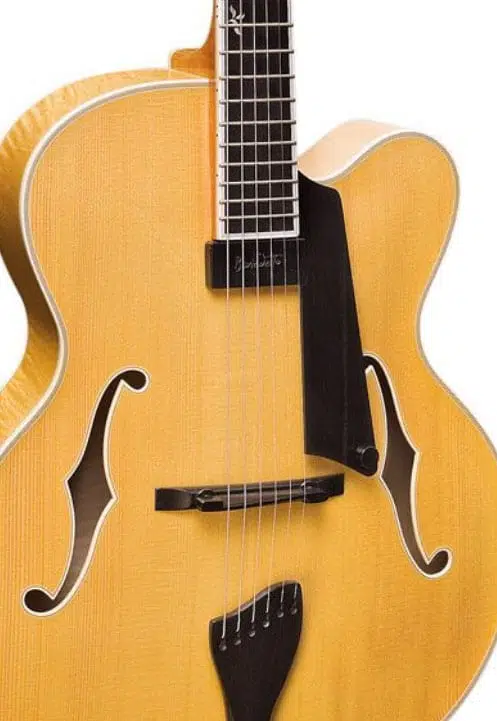



The Master Guide to Archtop Guitar Maintenance: Preserving Fine Craftsmanship
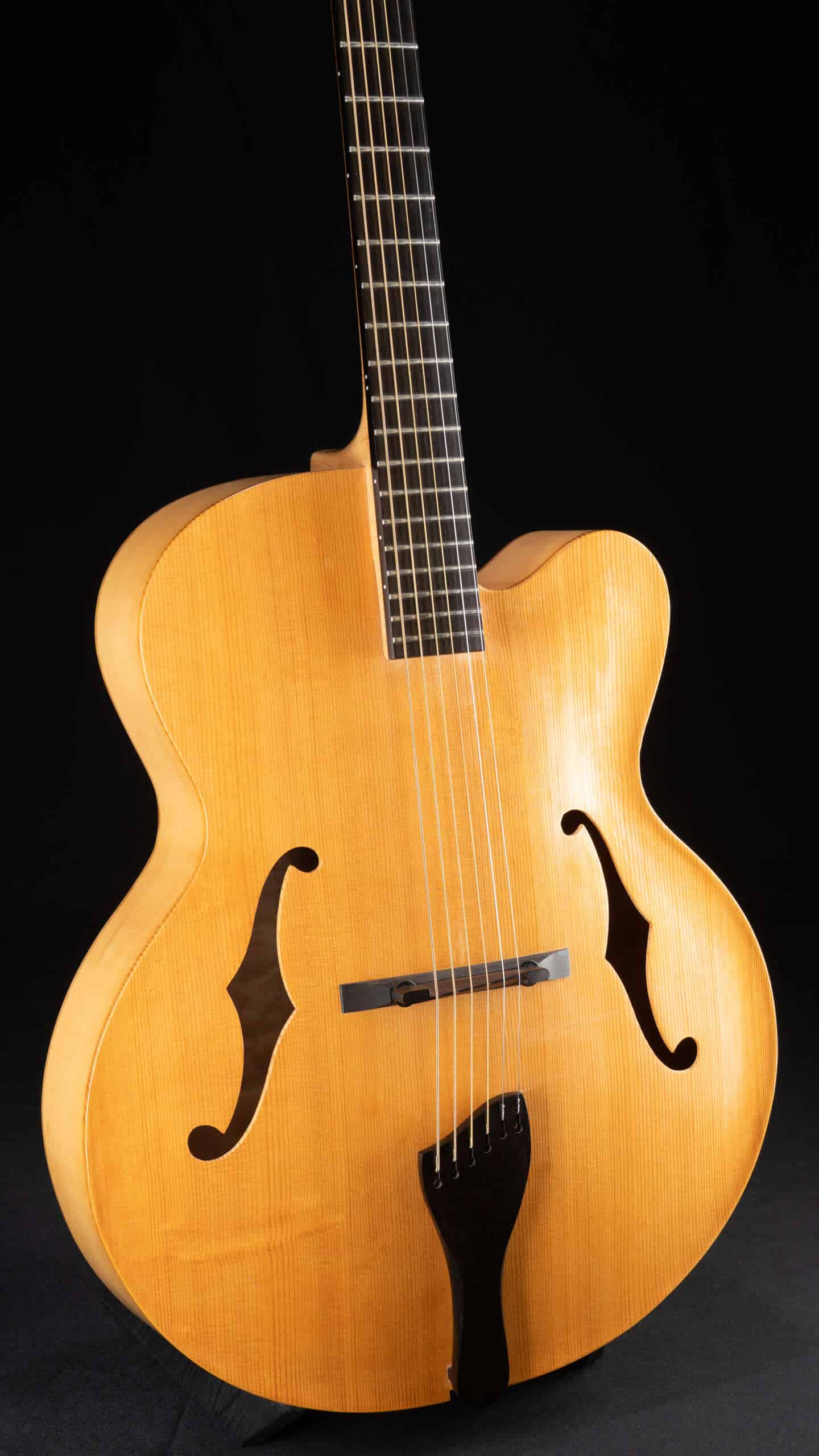
A premium archtop jazz guitar is built differently from a solid-body electric. Rather than a rigid piece of wood, it functions as a delicate, tension-loaded acoustic chassis. Its hand-carved or precision-pressed tonewoods continuously interact with the surrounding environment. Because of this, a disciplined maintenance routine is the single most important factor in preventing structural shifts, preserving effortless playability, and protecting your musical investment over a lifetime.
To help you care for an instrument built to such exacting standards, our luthiers have compiled this master maintenance guide directly from our workshop bench. The same half-century legacy of traditional craftsmanship that guides our hands when building these instruments dictates the climate standards, restringing steps, and technical care protocols detailed below. Whether you play a highly resonant acoustic archtop or a durable, laminate stage workhorse, these benchmark guidelines will keep your guitar performing at its peak.
1. Climate Stabilization: The Critical Humidity Guardrail
The bedrock of archtop care is controlling the environment around it. Premium woods like spruce and maple act like sponges—they constantly absorb and release moisture from the air.
While solid-body guitars can handle a bit of neglect, a fine archtop requires a specific safety zone:
- The Archtop Gold Standard: Keep your guitar in a room stabilized between 30% and 60% relative humidity (RH) at a temperature of around 21°C (70°F).
- The Danger of Dry Air (<30% RH): When the air dries out, the wood shrinks. On a carved archtop, this pulls the top soundboard downward, causing your action to drop and your strings to buzz against the frets. If left dry for too long, the wood will crack along the grain or split down the center seam.
- The Danger of High Humidity (>60% RH): Too much moisture makes the wood swell. The arched top will push upward, throwing your action through the roof and choking the guitar’s natural resonance into a muddy, lifeless thud.
Environmental Monitoring Protocols
To track and adjust the climate surrounding your instrument effectively, follow these three luthier-approved steps:
- Deploy Digital Hygrometers: Keep a calibrated digital hygrometer in your main practice room and another nested directly inside your guitar case’s accessory pocket. Do not rely on seasonal guesswork.
- Implement Two-Way Humidification: During winter heating seasons, utilize an in-case evaporative humidification system. Conversely, in humid coastal environments, use specialized two-way moisture-control packets to absorb excess water vapor.
- Avoid Thermal Shock: Never store an instrument near heating vents, air conditioners, exterior walls, or in the direct path of sunlight. Sudden thermal shifts can shock the wood, shattering a sensitive nitrocellulose lacquer finish.
2. Guitar String Replacement: The Floating Bridge Rule
Changing strings on an archtop requires a different approach than a standard fixed-bridge guitar. Because an archtop uses a floating ebony bridge held in place solely by downward string pressure, removing all six strings at once is a major mistake.
The Golden Rule of Archtop Restringing
Never remove all six strings at once. Doing so takes away the structural load on the top soundboard, causing the unanchored bridge to shift or fall off. Finding the precise acoustic “sweet spot” where the guitar intonates perfectly takes specialized alignment tools and a lot of patience. Instead, always change your strings one or two at a time to keep the bridge locked in its calibrated position.
Step-by-Step String Maintenance Process
- Slack and Remove: Back off the tension on a single string (such as the low E) until slack, then unthread it from the tuning post and the tailpiece.
- Clean the Board: With that section of the fingerboard exposed, use a dry, lint-free microfiber cloth to wipe away any sweat or finger oils.
- Anchor and Tune: Thread the fresh string through the tailpiece, guide it over the bridge saddle notch, wrap it securely around the tuning post, and bring it up to pitch. Repeat this process across the remaining strings.
- Check the Alignment: Once you are fully re-strung, inspect the floating bridge base from the side. It must sit completely flush against the curved top.

3. Surface Cleaning and Nitrocellulose Finish Care
Every time you play, skin oils, sweat, and acids accumulate on the neck, body, and pickguard. Over time, these natural acids act as a mild solvent, permanently clouding or softening a traditional nitrocellulose lacquer finish.
Safe Cleaning and Polishing Techniques
- The After-Use Wipe Down: Make it an absolute habit to wipe down the entire instrument, including the strings, fingerboard, and metal hardware, with a clean, completely dry microfiber cloth after every single playing session.
- Spot Cleaning Stubborn Smudges: For localized sweat film or smudge marks, lightly breathe a layer of condensation onto the finish surface and gently buff it clear using circular motions with a clean microfiber cloth. Never use moisture on unsealed wood.
- Chemical Safety Restrictions: Never use commercial furniture sprays, aerosol polishes, or cleaners containing silicone, wax, or abrasive compounds. Silicone bonds directly to nitrocellulose, rendering future finish touch-ups or structural wood repairs nearly impossible. Stick strictly to premium, water-soluble luthiery polishes recommended explicitly for fine stringed instruments.
If you play a stage-ready model made from high-grade pressed laminate—like the instruments in our Professional Series—the guitar is incredibly resilient. However, the finish still requires the same regular care to prevent road sweat and grime from dulling the wood over years of touring.
4. Hardware and Electronic Integrity
An archtop’s hardware needs to be in perfect mechanical alignment to deliver clean chord articulation and sustain. Neglecting these connections can introduce distracting acoustic buzzes or signal problems.
- Tuning Machine Screws: Periodically check the small mounting screws holding your tuning buttons in place. If they work loose, they can vibrate at specific frequencies (often on an open G or B string), mimicking a terrifying internal brace failure.
- Scratchy Pots and Jacks: If your guitar features top-mounted controls or a pickguard thumbwheel, oxidation can cause a crackling sound over time. Spray a little non-lubricated electronic contact cleaner into the controls twice a year, rotating the knob completely to sweep away debris.
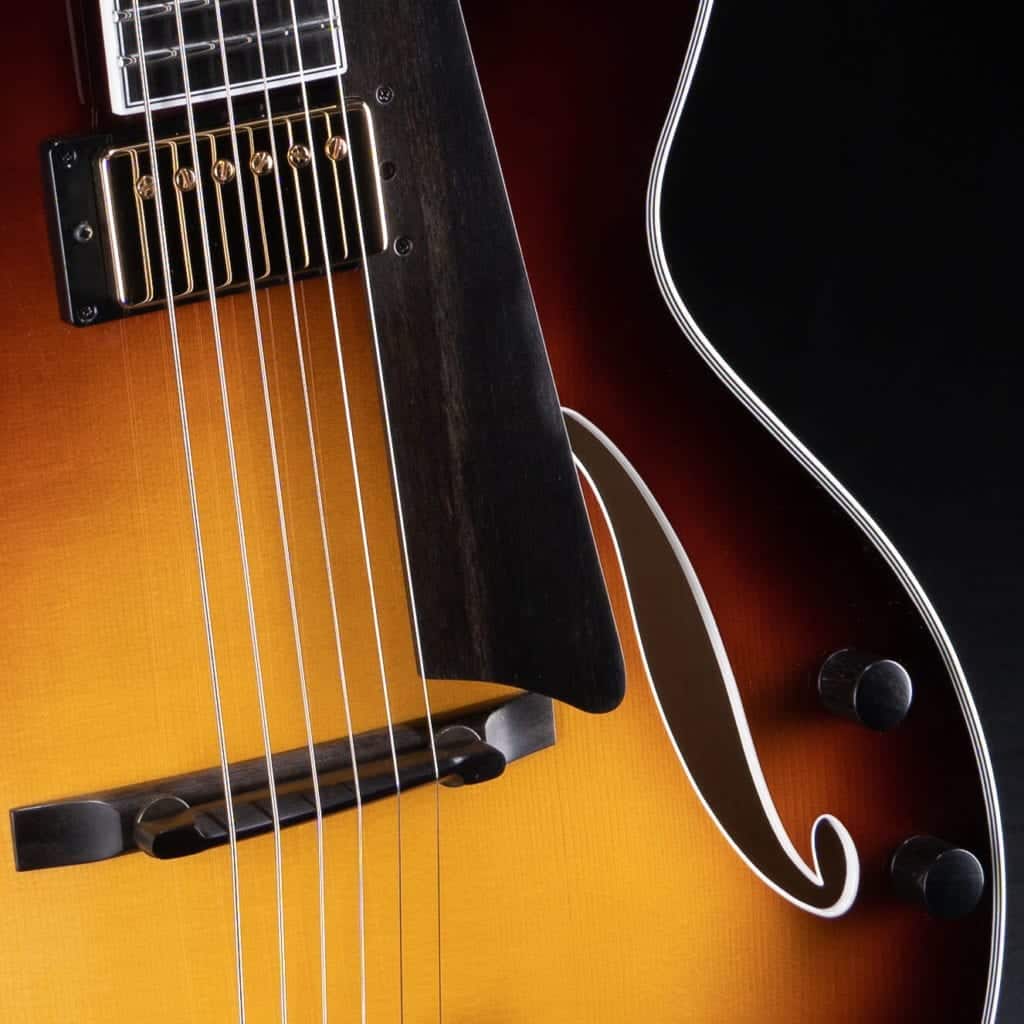
- Pickup Height Balance: To get excellent note separation, your pickup height needs to be properly calibrated. If a humbucker sits too close to the strings, its strong magnetic field will pull on string vibration, shortening your sustain and causing odd harmonic distortion. Always set pickup heights while the strings are tuned to full pitch.
Technical Maintenance Timing
To keep your proactive care routine on track, follow this straightforward workshop schedule:
Safe Guitar Storage and Transport
The vast majority of structural damage happens when an archtop is resting outside of its protective case. Protect your instrument from accidents with these simple rules:
- Cases Over Stands: Padded floor stands are fine for a quick break, but they leave your guitar vulnerable to getting knocked over. Furthermore, the cheap foam or rubber padding on many stands reacts chemically with nitrocellulose, permanently marring the finish on the neck or bottom of the guitar. For long-term protection, keep it in its hardshell case.
- Travel Smart: Always transport your instrument inside an impact-resistant, plush-lined hardshell case or robust gig bag. When loading it into a vehicle, lay the case flat on a level surface rather than propping it upright on a seat where it can slide. Never leave an archtop inside a car trunk during hot summer days or freezing winter nights; temperatures can spike or plummet in minutes, destroying glue joints and structural wood seams.
Secure Your Musical Legacy
Maintaining a world-class archtop is a shared responsibility between player and craftsman. By staying on top of your climate control, changing your strings correctly, and wiping it down regularly, you ensure your guitar will grow with you from the practice room to the recording studio.
If you notice changes in your neck alignment, get a buzz you can’t fix, or think it’s time for a seasonal tune-up, don’t leave it to chance. Please don’t hesitate to reach out to our shop. Our bench luthiers are always here to answer questions.
If you are ready to map out your dream jazz box from scratch, tailored perfectly to your hands and your ears, we look forward to helping you bring your own custom commission to life.
Guitar Maintenance: Frequently Asked Questions (FAQ)
How often do I really need to check my guitar’s humidity?
You should monitor your digital hygrometer daily. Because archtops react quickly to changes in the air, checking your climate conditions every day—especially during seasonal transitions when the heat or air conditioning kicks on—is the best way to catch a problem before the wood shrinks or cracks.
Can I change all six strings at once to clean the fingerboard?
We highly discourage removing all six strings simultaneously. Because the bridge is held down purely by string tension, taking all the strings off means the bridge will slide out of place, throwing off both your alignment and your intonation. Always replace your strings one or two at a time.
My frets are perfectly level, so why is my archtop still buzzing?
An elusive buzz on an archtop is frequently caused by a hardware component vibrating at a specific frequency. Check for a loose screw on your tuners, a loose nut on your input jack, or pickup wires rattling against the underside of the pickguard before assuming your neck requires a truss rod adjustment.
What should I look for when choosing an archtop guitar?
Focus on how the top construction (carved vs. laminate), the electronics, and the body size match where you plan to play. For a deep dive into choosing the right setup for your style, take a look at our comprehensive Jazz Guitar Buyer’s Guide.
Related Content

Understanding Tonewoods: How Wood Choices Shape Jazz Guitar Tone
How Tonewoods Shape the Sound of a Jazz Guitar Every jazz guitarist knows the importance of tone, but few elements influence that sound as much as the wood beneath your hands. From warmth and resonance to clarity and projection, tonewoods …
Read More >
How to Choose the Right Jazz Guitar for Your Playing Style
The guitar you choose defines how you sound and feel as a player. In jazz, tone and touch matter more than volume or flash. A well-chosen guitar responds to your phrasing, supports your rhythm, and inspires new ideas. Choosing the …
Read More >
Your Next Guitar?
This new Bravo is up in Bob’s Boutique and ready to go! Click on over to buy online, or contact us with any questions: info@benedettoguitars.com
Read More >