

How to Choose a Guitar for Jazz: The Complete Archtop Buyer’s Guide
For a jazz musician, a guitar is not simply an instrument but an active partner in an ongoing musical conversation. The genre demands split-second expression, which is exactly why the distinct warmth, acoustic “air,” and immediate response of an archtop have defined the sound of jazz for nearly a century.
However, finding an instrument that flawlessly translates the music in your head into a physical response means navigating a mix of body styles, tonewoods, and electronics. Whether your goal is to commission a brand-new custom build tailored to your exact specifications or to find a rare gem in our vintage consignment collection, the luthiers at Benedetto are here to help you find your perfect match.
Step 1: Evaluate Your Performance Environment (Carved vs. Laminate)
The first and most important fork in the road is deciding how your guitar’s top—the soundboard—is built. In the archtop world, this comes down to a choice between solid, hand-carved tonewoods and premium pressed laminates. Your choice should depend entirely on where you play most.
Solid Hand-Carved Tops (The Acoustic Voice)
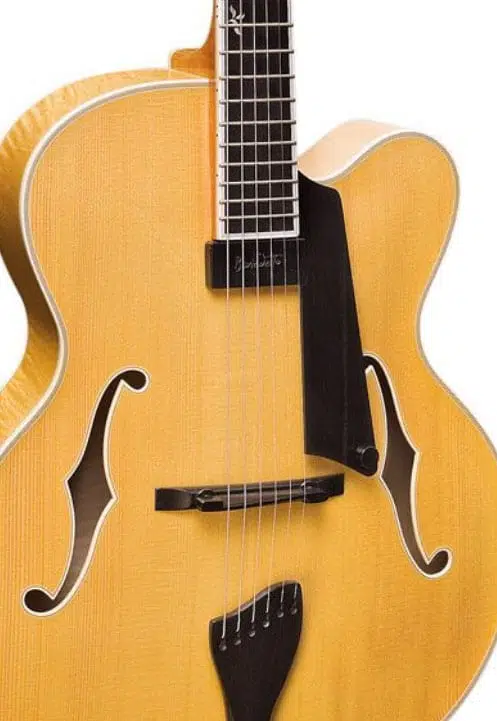
Carved-top instruments—like our legendary Manhattan or The Cremona from the Flagship Series—are meticulously shaped and tuned by a Master Luthier from master-grade spruce.
- The Sound: Unmatched acoustic warmth, deep three-dimensional resonance, and rich overtones that respond instantly to the subtlest touch.
- Best For: Solo guitarists, intimate acoustic ensembles, recording studios, and players who prioritize pure acoustic fidelity above all else.
Premium Laminate Tops (The Electric Gigging Workhorse)
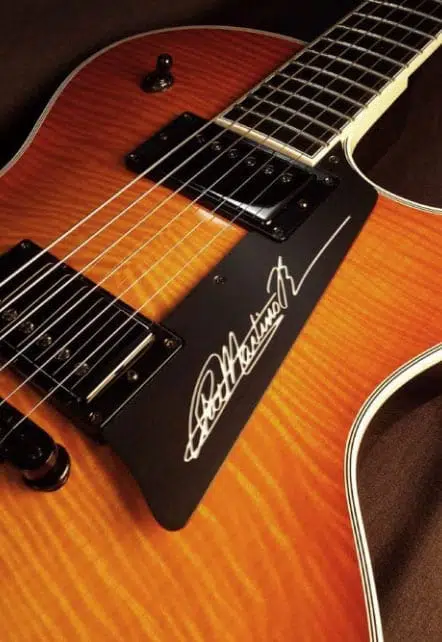
Laminate instruments—such as our gig-ready Professional Series models like the Bravo—are constructed from pressed layers of high-grade wood veneers.
- The Sound: A highly focused, punchy electric voice with great note-to-note clarity and a defined “pop” on the note attack.
- Best For: Touring professionals, big bands, high-volume club dates, and players who need excellent feedback rejection when plugged into a hot amplifier.
Step 2: Determine Your Ergonomic Fit (Body Size Selection)
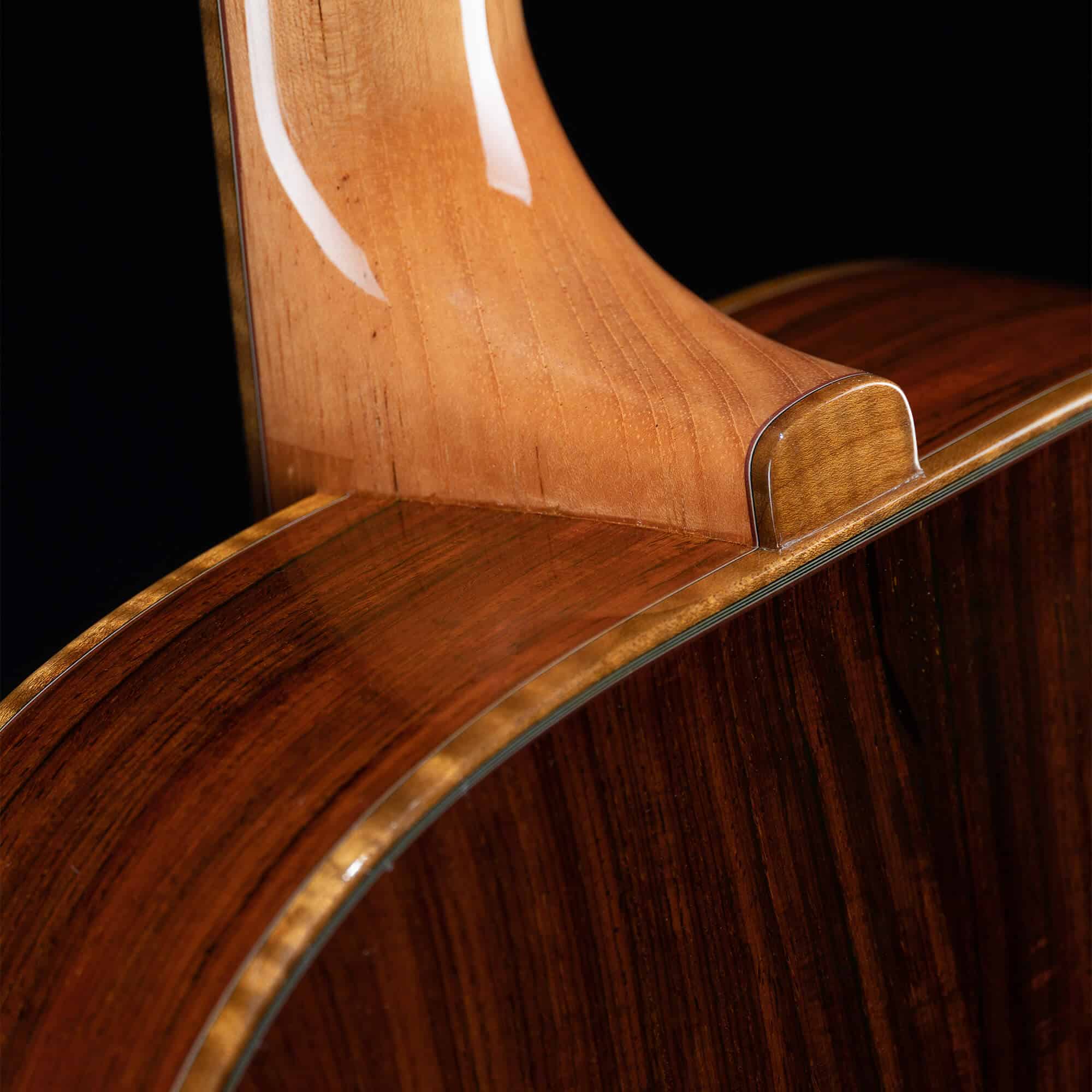
An instrument that feels uncomfortable will inevitably hold back your technique and creative flow. Archtop body sizes are measured across the widest point of the lower bout, and each size changes both the physical feel and the overall acoustic footprint of the guitar.
Step 3: Match Your Electronic Configuration to Your Playing Style
How your instrument translates string vibration into an amplified signal depends heavily on pickup placement. When customizing a new build or shopping our inventory, you’ll choose between two distinct electronic philosophies:
1. The Floating Mini-Humbucker
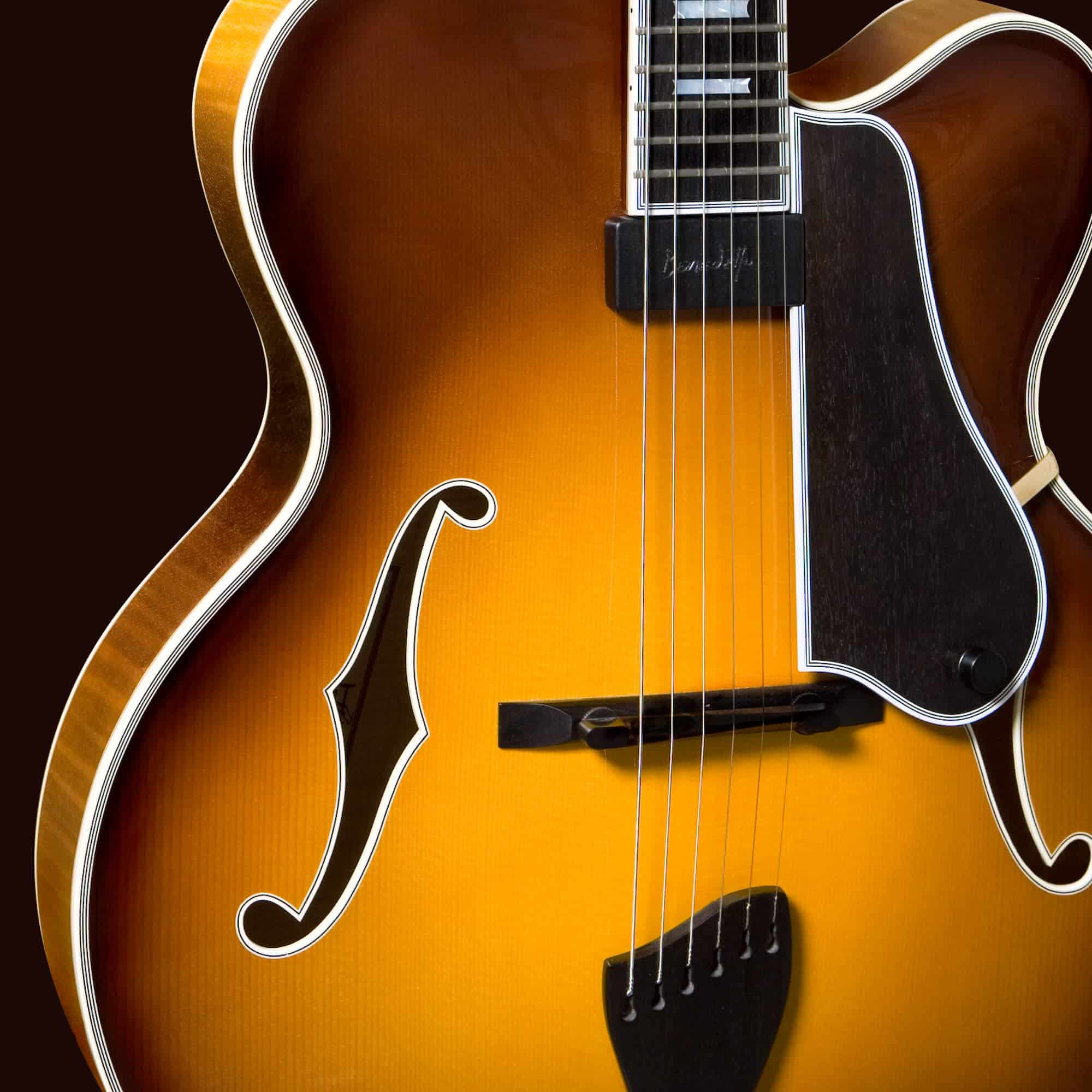
A floating pickup is suspended completely off the end of the fingerboard, never physically touching the carved spruce top. Because there are no holes cut into the soundboard, the wood is free to vibrate completely unhindered. This preserves the natural acoustic properties of the guitar, delivering a pure “acoustic-plus-amplified” character loved by traditional jazz purists.
2. Built-In Humbuckers
Built-in pickups are routed and mounted directly into the wood top. The physical weight of the pickup anchors the top, dampening a small amount of its acoustic movement. While this slightly reduces the unplugged volume, it rewards the player with incredible electric sustain, a darker, rounder note attack, and unparalleled feedback control at higher stage volumes.

Step 4: Understand the Structural Guardrails of Fine Luthiery
When investing in a premium jazz guitar, understanding the technical choices behind its design ensures you get an instrument that plays flawlessly for a lifetime.
- Custom Inlays: Beyond pure utility, customization allows you to personalize your instrument’s aesthetic. Options range from a minimalist, unbound ebony fingerboard to our iconic, hand-fitted mother-of-pearl or abalone Floral and Fratello fret-marker motifs.
- Scale Length: Our workshop utilizes a traditional 25-inch scale length for snappy acoustic tracking and familiar string tension. It’s the perfect compromise between the top-driving tension of a 25 ½ inch scale and the reach and supple feel of a 24 ¾ inch scale.
- Fretwork Geometry: To preserve our historical body contours and internal bracing, we strictly adhere to single-scale fingerboards. We do not offer multi-scale or “fan-fret” configurations, as altering the fret geometry would disrupt the balanced architectural design of a true Benedetto.
Step 5: Committing to Long-Term Archtop Maintenance
Handcrafted musical instruments are living structures made of organic materials. Protecting your investment requires a little routine care:
- Climate Control: Solid tonewoods shrink and expand with atmospheric changes. Always store your instrument in an environment kept between 30% and 60% relative humidity (and around 21°C / 70°F) to prevent top-sinking or wood splits.
- Finish Preservation: Wipe down your instrument with a dry, lint-free microfiber cloth after every session. This prevents skin oils from degrading the sensitive nitrocellulose lacquer finish. Never use synthetic solvents or silicone- or wax-based polishes.
- Floating Bridge Care: Because an archtop bridge floats freely on the top plate—held down entirely by string pressure—always change your strings one or two at a time. This keeps the bridge from shifting and throwing off your intonation.

Realize Your Sonic Identity
Navigating these design choices is the first step; the next is turning them into a physical reality that elevates your playing.
If you are ready to design a brand-new instrument tailored precisely to your personal touch and visual style, explore our options to build your own Benedetto directly from our workshop.
Unsure which wood combinations, pickup structures, or body sizes align with your goals? Please don’t hesitate to contact our shop. Our small team is always here to chat gear, talk specs, and guide your choice.
Frequently Asked Questions (FAQ)
How do I choose a guitar for jazz based on my playing environment?
Look at where you perform most. If you primarily play unplugged acoustic settings, small ensembles, or studio sessions, choose a hand-carved spruce top for maximum acoustic resonance. If your schedule consists of loud club dates, big bands, or amplified ensemble work, opt for a premium laminate top for better feedback rejection and electric clarity.
What is the primary difference between a carved and a laminate jazz guitar top?
A carved top is hand-shaped from a solid billet of spruce to maximize acoustic tone, overtone complexity, and natural projection. A laminate top is pressed from high-grade wood veneers, making the top stiffer and far more resistant to electronic feedback—perfect for amplified, electrified stage performances.
Why do jazz guitars utilize a floating ebony tailpiece and bridge?
Unlike fixed metal hardware, a floating ebony tailpiece and bridge eliminate the metallic ring and harsh high frequencies from the string’s decay. The wood naturally dampens unwanted frequencies, warming up the note attack and transferring string energy directly to the soundboard for a rounder, woodier tone.
Related Content

Understanding Tonewoods: How Wood Choices Shape Jazz Guitar Tone
How Tonewoods Shape the Sound of a Jazz Guitar Every jazz guitarist knows the importance of tone, but few elements influence that sound as much as the wood beneath your hands. From warmth and resonance to clarity and projection, tonewoods …
Read More >
How to Choose the Right Jazz Guitar for Your Playing Style
The guitar you choose defines how you sound and feel as a player. In jazz, tone and touch matter more than volume or flash. A well-chosen guitar responds to your phrasing, supports your rhythm, and inspires new ideas. Choosing the …
Read More >
Your Next Guitar?
This new Bravo is up in Bob’s Boutique and ready to go! Click on over to buy online, or contact us with any questions: info@benedettoguitars.com
Read More >