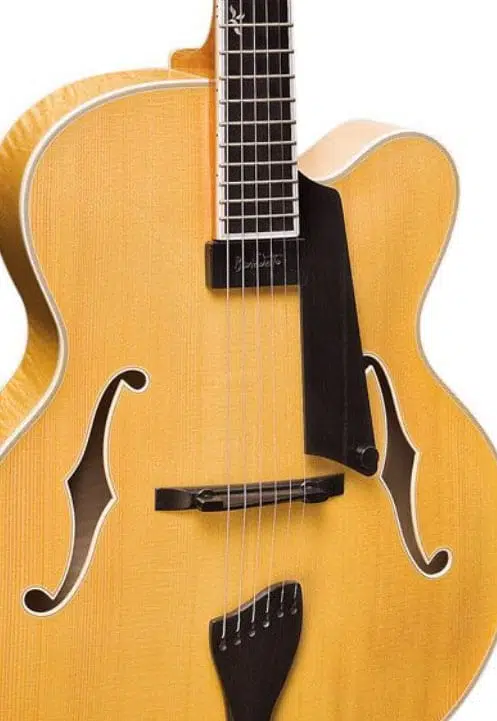



How Do You Care for and Maintain Your Archtop Jazz Guitar for Longevity?
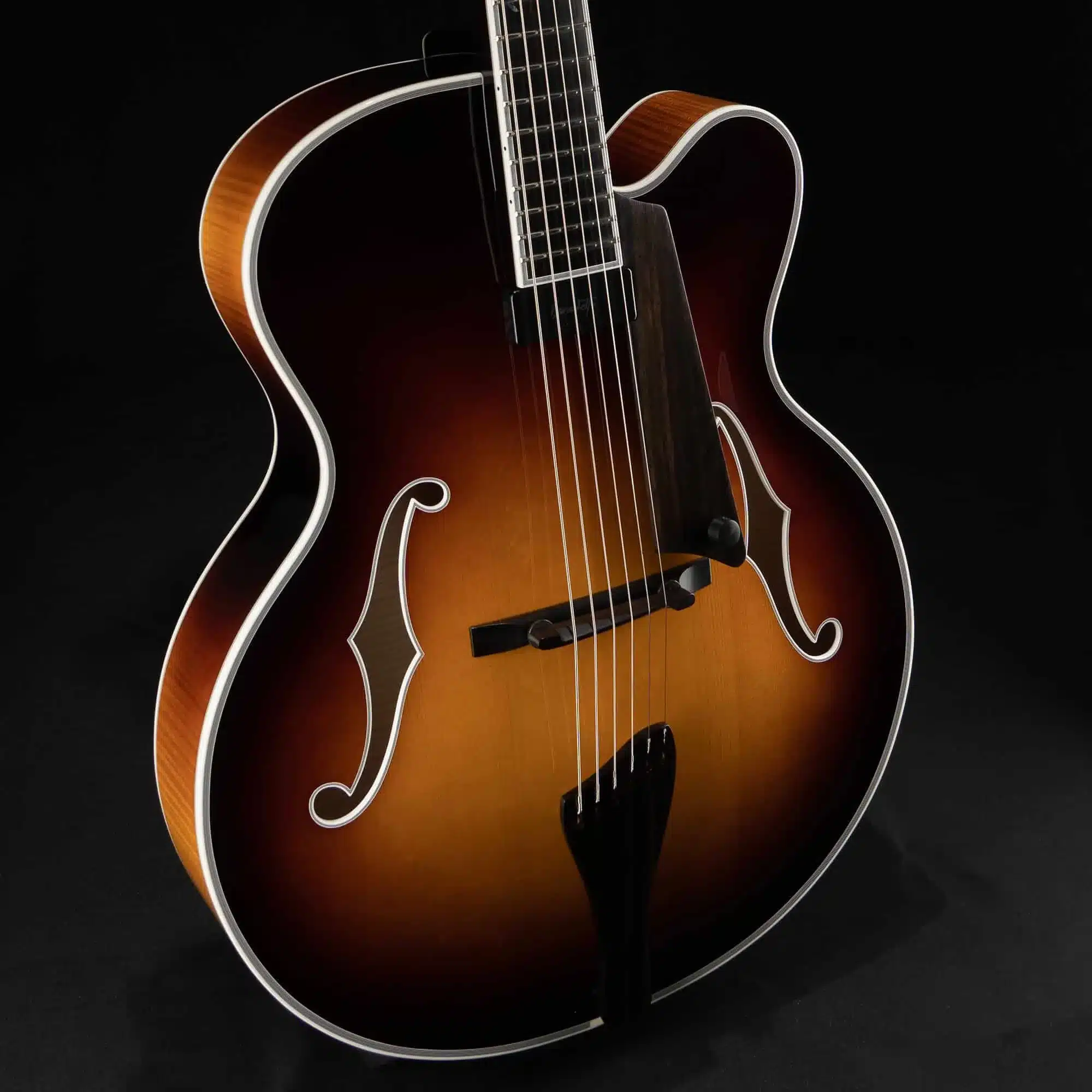
An archtop jazz guitar is a living, breathing work of art. Unlike mass-produced solid bodies, it constantly interacts with its environment, shifting with the season, reacting to your hands, and reflecting every hour you put into the neck. Protecting that investment doesn’t require a luthiery degree, but it does demand respect for the instrument’s engineering. Whether you are gigging nightly with a gig-ready Professional Series laminate model or preserving a hand-carved heirloom, this guide covers the essential shop-tested practices to keep your archtop playing smoothly and sounding its best for a lifetime.
Archtop Guitar Maintenance Priorities at a Glance
Caring for an archtop jazz guitar for longevity comes down to four core practices: maintaining relative humidity between 30% and 60%, wiping down the nitrocellulose finish after every performance, conditioning the ebony fretboard annually, and monitoring floating bridge alignment. While laminate archtops offer enhanced structural stability and feedback rejection under stage lights, all fine archtops require consistent climate management to protect internal bracing, maintain accurate intonation, and preserve playability for decades to come.
Climate & Tonewoods: Laminate Tops vs. Hand-Carved Acoustics
How much environmental movement you encounter depends directly on whether your archtop features a pressed laminate soundboard or a solid, hand-carved spruce top.

While laminate soundboards don’t shift as dramatically as hand-carved solid spruce tops, the surrounding components, including solid wood necks, ebony fingerboards, and internal bracing, remain fully active and vulnerable to humidity extremes.
To safeguard your instrument:
Store in a hardshell case: Keep your guitar inside a quality case equipped with a digital hygrometer when not in use.
Maintain two-way humidification: Utilize two-way humidity control packets to maintain equilibrium within the case.
Select safe resting locations: Keep the case away from exterior walls, cold drafts, direct sunlight, and heating vents.
Allow the instrument to acclimate: If your guitar has been transported in cold weather, leave the case closed for several hours inside a warm room before opening it to protect the nitrocellulose finish from thermal shock.
Nitrocellulose Finish and Hardware Care
Every archtop our team of luthiers builds receives a thin layer of traditional nitrocellulose lacquer. This finish allows the instrument to vibrate freely without dampening tone, but it requires mindful upkeep.
Preserving the Lacquer
Perspiration contains acids and salts that dull lacquer over time, particularly along the lower bout where your forearm rests during long gigs.
Daily Wipe-Down: Use a dry, high-density microfiber cloth after every session to remove skin oils from the top, back, neck, and hardware.
Deep Cleaning: If residue accumulates, apply a small amount of non-silicone/non-wax guitar polish to your cloth, never directly onto the instrument, and buff gently.
Stand Precautions: Standard rubber or foam guitar stands contain synthetic plasticizers that react chemically with nitrocellulose, marring the finish. Use leather-covered or nitro-safe stands, or cushion contact points with pure cotton cloth.
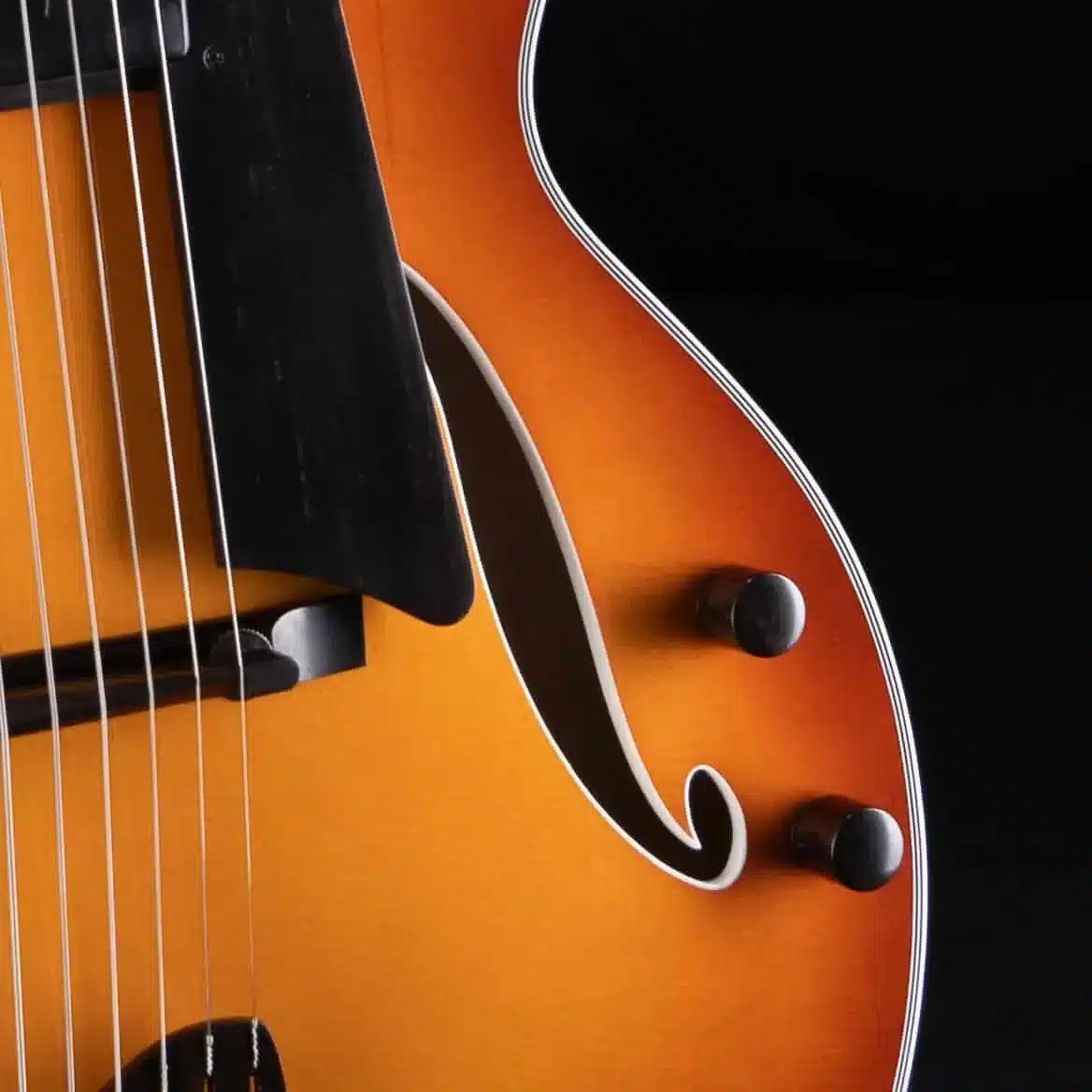
Caring for Ebony and Hardware
Unfinished ebony components, such as fingerboards, floating bridge bases, and tailpieces, require conservative care. Excess hydration softens wood grain and destabilizes the bridge footprint.
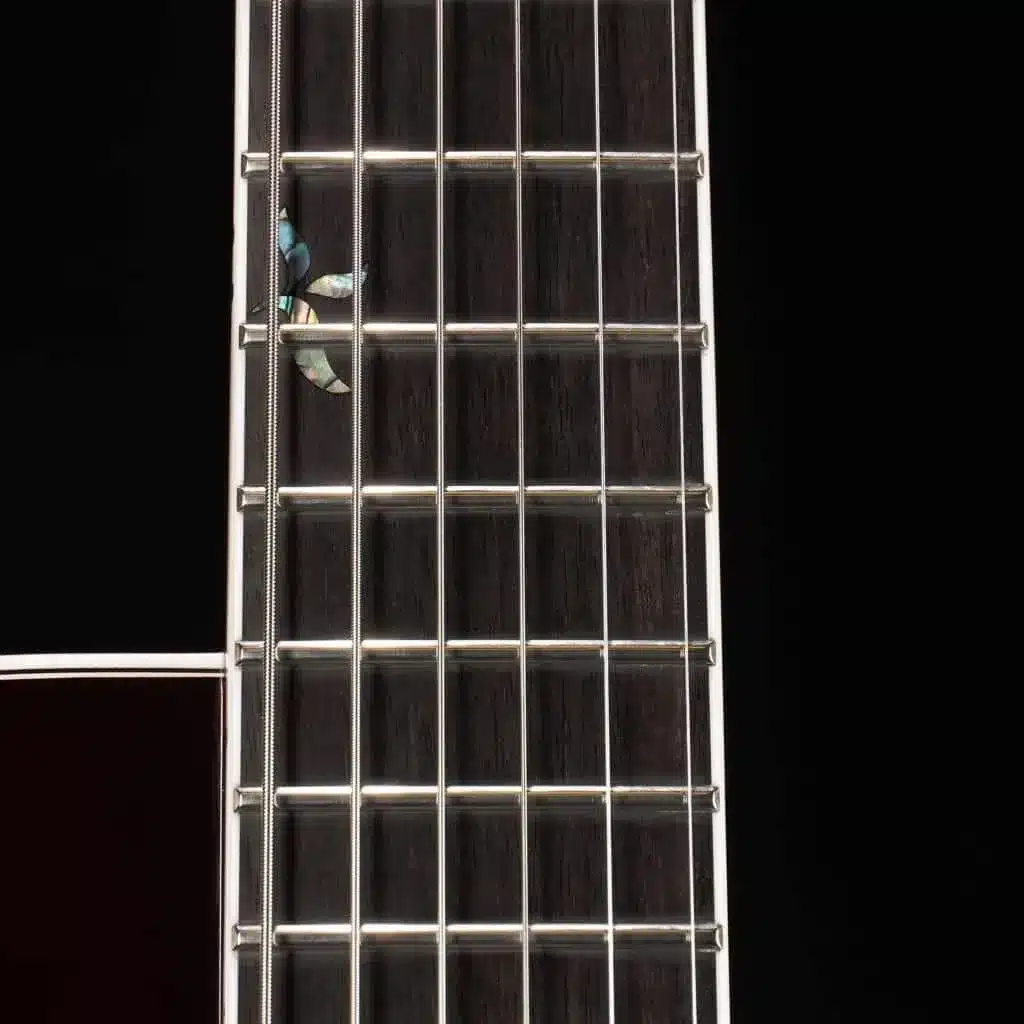
Fingerboards: Apply two or three drops of quality fretboard oil to a cloth once a year, work it into the ebony, and buff completely dry immediately.
Pickups & Electronics: On electric archtops featuring mounted humbuckers or floating pickups, wipe down pickup covers, pole pieces, and controls with a dry cloth to prevent sweat corrosion. Never spray metal polish near pickups, as liquid can seep into internal coil windings.
Protecting the Soundboard: Floating Bridge & Tension Management
On both laminate and carved archtops, the bridge sits on the soundboard held strictly by string tension. The wooden or tune-o-matic bridge foot is custom-fitted to match the exact contour of the top. If the bridge shifts, intonation suffers, and the finish can be scratched.
Changing Strings Safely
Removing all six strings simultaneously eliminates downward pressure on the soundboard, allowing the floating bridge to slide out of position.
The Single-String Method: Replace and tune strings one at a time. This maintains steady downward pressure on the top and keeps the bridge foot anchored in its calibrated position.
Painter’s Tape Protocol: If you must remove all strings to clean the fingerboard, outline the corners of the wooden bridge base with low-tack painter’s tape before slacking tension.
Preventing Soundboard Deformity & Bridge Post Tilt
Over time, constant string tension can cause wooden bridge bases to settle unevenly or force the threaded thumbwheel posts to tilt forward toward the neck.
Check the footprint annually: Ensure the full contour of the wooden bridge foot sits perfectly flush against the arch of the top. Gaps under the foot concentrate string tension onto tiny pressure points, which can dent the soundboard lacquer over time.
Inspect the adjustment posts: Make sure the bridge thumbwheels sit flat and the posts aren’t bending forward under string pull. Replacing worn bridge posts early prevents structural stress on the bridge base.
Archtop Guitar Storage Best Practices
Where and how your instrument rests directly impacts its structural health over time.
Active Use: Between sets, use a stable, weighted floor stand positioned away from walkways, cables, and doorways. Never lean an archtop against an amplifier or furniture.
Extended Storage: Keep the instrument in its fitted hardshell case, stored flat on its back or vertically on its bottom edge. Avoid resting cases on their sides or stacking gear on top.
Tension During Storage: Maintain standard pitch during short-to-medium storage periods to keep consistent load on the bracing. If storing an instrument unmonitored for over six months, drop string pitch by one full step to ease overall tension.
If you are considering designing a custom Benedetto archtop or selecting custom options, establishing proper storage protocols from day one will protect your investment for a lifetime.
The Master Luthier’s Maintenance Checklist
Regular inspections help identify minor structural shifts before they require shop repairs.
[ ] Inspect Relative Humidity: Ensure room or case humidity stays within 30%-60%
[ ] Check Fret Ends: Feel along the neck binding; protruding fret ends indicate a dry, shrinking fingerboard.
[ ] Verify Bridge Alignment: Ensure the bridge foot sits flush against the top without gaps or tilting posts.
[ ] Examine Hardware & Controls: Check that strap buttons, tuning machine bushings, jack plates, and pickguard brackets are secure.
[ ] Audit the Finish: Check high-contact areas for sweat buildup and wipe clean with a microfiber cloth.
[ ] Listen for Electrical Buzzes: Plug into an amplifier and test volume/tone pots for scratchiness or ground hum.
If you notice minor shifts during your inspection, immediately stabilize the guitar’s humidity inside its case and address simple, non-invasive fixes like wiping down residue or snugging loose screws; for persistent issues like protruding frets, structural gaps, or electrical hum, defer to a qualified luthier.
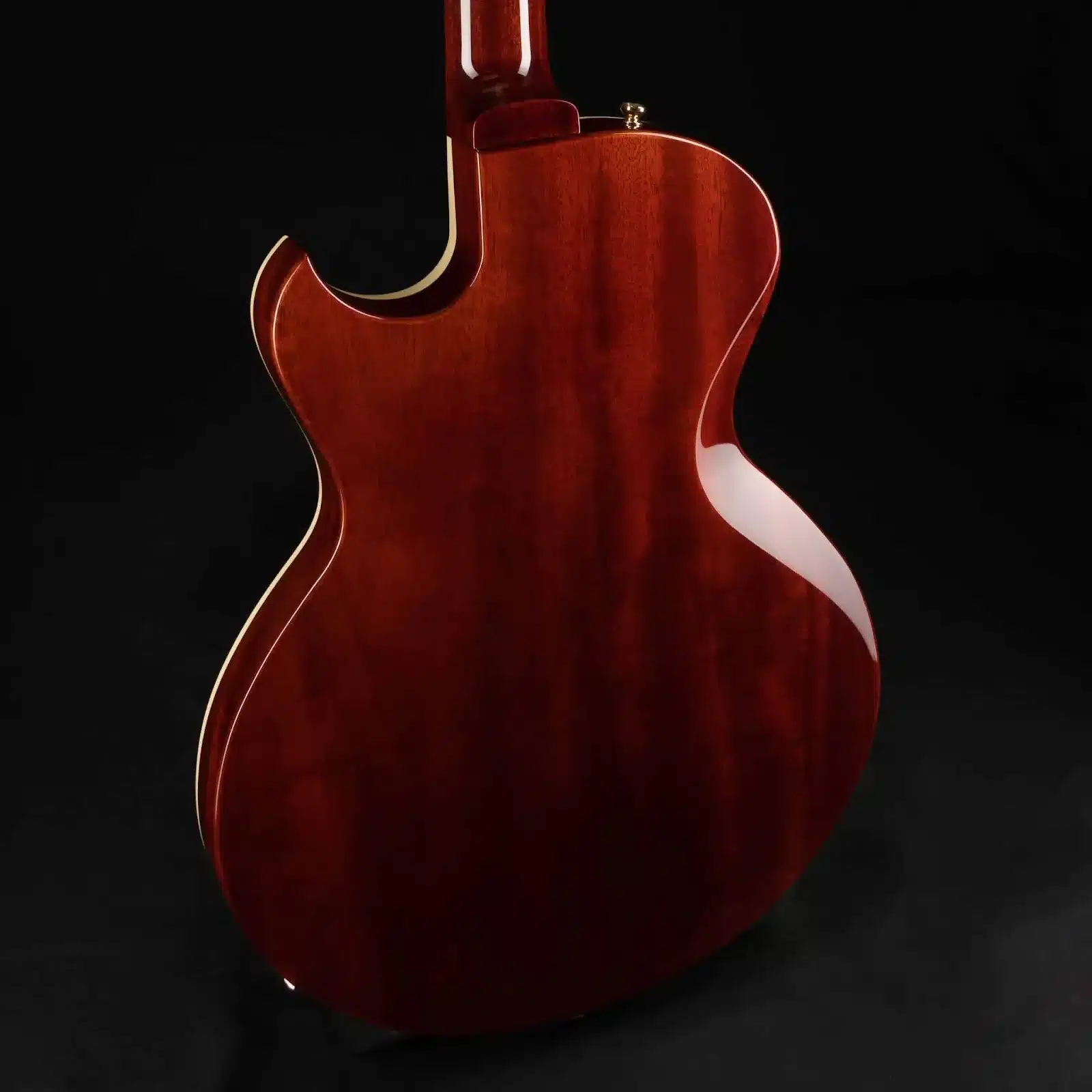
Caring for Your Musical Legacy
Preserving an archtop jazz guitar is ultimately about stewardship. Built on a half-century tradition established by our founder, Robert Benedetto, these instruments are designed to endure decades of active performance, evolving alongside the musicians who play them. By establishing steady maintenance habits, you ensure that your instrument maintains its response, structural integrity, and acoustic projection. Treat routine care not as a chore, but as an essential part of your playing routine, safeguarding your guitar’s voice for a lifetime of music.
Have questions about caring for your archtop, or ready to find your next instrument? Reach out to our expert team to talk shop, get expert maintenance advice, or start exploring your ideal archtop today.
Archtop Maintenance Frequently Asked Questions
Do laminate archtops require less maintenance than solid carved archtops?
While laminate tops are much more resistant to feedback and cracking caused by humidity changes, the rest of the guitar, including the solid neck, ebony fingerboard, nitrocellulose finish, and electronics, requires the exact same climate care as a hand-carved acoustic archtop.
How often should I condition an ebony fretboard?
Condition an ebony fingerboard once every 12 to 18 months using a few drops of specialized fretboard oil. Ebony is a dense wood; over-oiling can soften the wood fibers, loosen fret wire, and attract dirt.
Why does my archtop bridge shift, and how do I fix it?
Archtop bridges are floating and held in place entirely by string tension. If bumped during travel or restringing, the bridge foot can slide. To correct this, match the 12th-fret harmonic pitch to the fretted 12th-fret note by adjusting the bridge position toward or away from the tailpiece until pitch alignment is restored.
How do seasonal humidity changes affect archtop action?
In dry winter conditions, wood loses moisture and contracts, lowering the bridge and causing string buzz. In humid summer months, wood swells and expands, lifting the action. Maintaining relative humidity between 30% and 60% minimizes these seasonal shifts.
Related Content

Understanding Tonewoods: How Wood Choices Shape Jazz Guitar Tone
How Tonewoods Shape the Sound of a Jazz Guitar Every jazz guitarist knows the importance of tone, but few elements influence that sound as much as the wood beneath your hands. From warmth and resonance to clarity and projection, tonewoods …
Read More >
How to Choose the Right Jazz Guitar for Your Playing Style
The guitar you choose defines how you sound and feel as a player. In jazz, tone and touch matter more than volume or flash. A well-chosen guitar responds to your phrasing, supports your rhythm, and inspires new ideas. Choosing the …
Read More >
Your Next Guitar?
This new Bravo is up in Bob’s Boutique and ready to go! Click on over to buy online, or contact us with any questions: info@benedettoguitars.com
Read More >