

Why the Archtop Is the Definitive Guitar for Jazz
For nearly a century, hollow-body archtop guitars have anchored the sound of jazz. When you pluck a chord on a premier archtop, the instrument responds with a warm, punchy, and highly focused voice that flat-top acoustics or solid-body electrics simply can’t replicate.
This isn’t an accident or just a historical coincidence. Every structural element of an archtop, from its hand-carved soundboard to its violin-style f-holes, is uniquely suited to handle the complex chords and fast melodic lines that define the genre. Whether you require a road-ready touring workhorse like our Professional Series for amplified stage settings or a traditional carved instrument for acoustic purity, understanding why this specific design works so well is the secret to finding the best archtop guitars for jazz.
The Acoustic Physics: Why the Archtop Design Fits Jazz Perfectly
The best archtop guitars for jazz earn their reputation through a specialized blueprint rooted in acoustic physics. Unlike flat-top guitars, which are built to maximize sustained, booming bass frequencies for folk strumming, an archtop is engineered for note separation, midrange clarity, and rapid response.
1. Midrange Punch and Voice Matching
Jazz harmony relies on dense chord voicings (extensions, alterations, and close-interval clusters). On a standard flat-top guitar, these complex chords can easily sound muddy because the instrument emphasizes massive low-end overtones that ring out for too long.
An archtop’s curved top plate acts like a built-in mechanical equalizer. It naturally rolls off those muddy sub-bass frequencies and tames piercing high overtones, leaving you with a warm, focused midrange voice. This frequency response fits beautifully in the exact sonic space occupied by other classic jazz instruments like the upright bass, saxophone, and piano, allowing the guitar to blend seamlessly into an ensemble.
2. Fast Attack and Immediate Decay
Because an archtop top plate is carved or pressed into a rigid arch, it reacts differently to your pick attack than a flat piece of wood.
The Attack: When you strike a string, the floating bridge drives that energy straight down into the arched top, compressing the air inside the body cavity. This creates an immediate, punchy acoustic response.
The Decay: Right after that initial punch, the note drops off quickly rather than ringing out forever. This rapid decay is incredibly important for fast bebop lines or steady “four-on-the-floor” rhythm playing. It ensures that fast notes and complex chords don’t bleed into one another, keeping every single note crisp and articulate.
3. Directional Projection
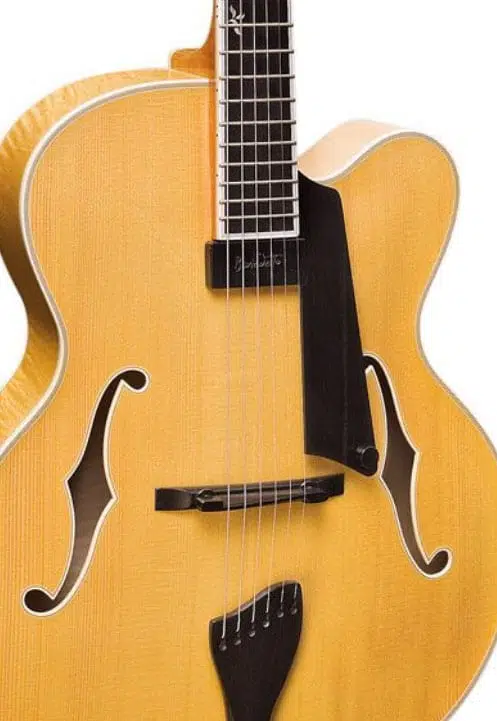
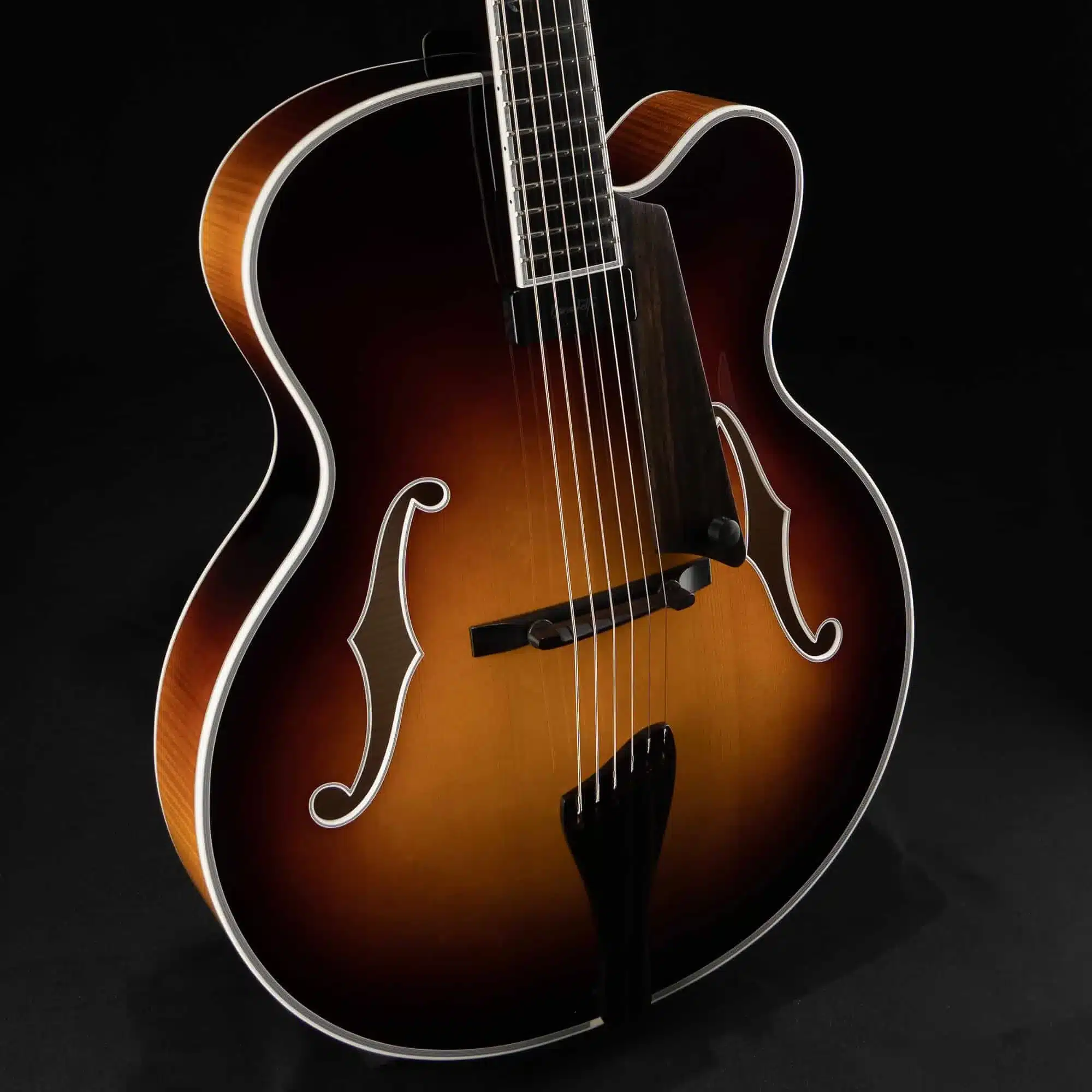
Traditional flat-top acoustic guitars push sound out in a wide, ambient bubble around the player. Archtops, using dual f-holes modeled after the violin family, act more like directional projectors. The sound waves are focused and pushed straight out from the front of the instrument. This design gave early jazz guitarists the pure acoustic horsepower they needed to cut right through loud horn sections before amplifiers came along.

Do You Actually Need an Archtop for Professional Jazz?
While you can technically play jazz on any guitar, professional players consistently return to the archtop because the instrument acts as a direct extension of your musical phrasing.
The dynamic range of a hand-carved archtop responds immediately to the slightest change in how you hold your pick or press your fingers. Dig into a single-note line, and the instrument barks with punchy midrange authority. Lighten your touch, and it responds with a dark, smoky warmth. This wide palette of expression gives your lines a vocal quality that solid-body guitars, which rely almost entirely on electronic pickups and tone knobs, simply can’t recreate.
Choosing Your Build Style: Carved vs. Laminated Archtops
When you’re exploring the best archtop guitars for jazz, you’ll have to make a choice between a hand-carved solid top and a custom-pressed laminated top. Both styles offer distinct performance advantages depending on where you plan to play.
The Carved Approach: Pure Acoustic Expression
A hand-carved solid spruce soundboard functions like a fine cello or violin. It is incredibly sensitive to string vibrations, opening up and developing deeper tonal complexity the more it is played over the years. For pure acoustic jazz or low-volume club gigs, a carved top delivers unmatched air, depth, and organic texture.
The Laminated Approach: Gig-Ready Stability
When you put a highly resonant acoustic instrument right next to a loud jazz guitar amplifier, the top wood can start to vibrate uncontrollably from the speaker’s sound waves, causing annoying low-end feedback. To solve this for touring musicians, high-quality laminated archtops use custom-pressed multi-ply configurations. The added stiffness dampens those feedback-causing vibrations while keeping the essential woody warmth and punch you need for live jazz.
The Benedetto Standard: Designing for the Jazz Ear
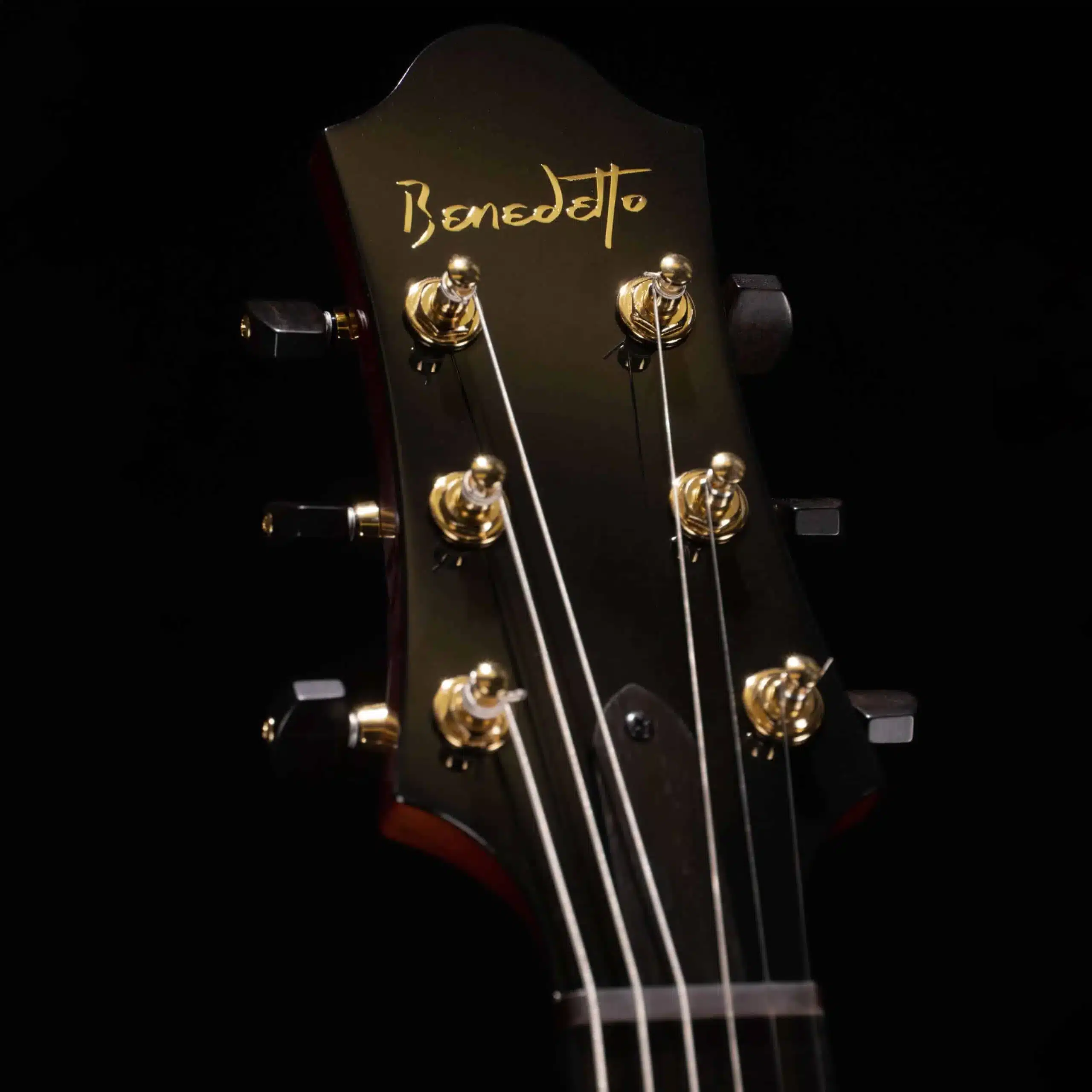
At Benedetto Guitars in Savannah, Georgia, our team of eleven skilled artisans has spent more than five decades refining the archtop guitar specifically for the jazz community. Founded by master luthier Robert Benedetto in 1968, our workshop follows a strict “ear first” philosophy.
We approach building as a deliberate balance of acoustic science and intuition. Because wood is an organic material, no two pieces of spruce or maple resonate exactly alike. Our builders inspect every raw wood billet by hand, tap-tuning and planing micro-layers off the plates to tune the natural resonant frequency of the timber. This meticulous voicing ensures that the finished guitar vibrates in perfect harmony with your hands.
Exploring Our Instrument Lineup
To serve the varied needs of modern jazz guitarists, we manufacture two distinct series of instruments inside our Savannah workshop, maintaining a strict policy of zero outsourcing.
The Flagship Series
Our Flagship Series represents the absolute peak of traditional, hand-carved luthiery. Built using master-grade European and American tonewoods, these archtops are individually voiced for the player seeking maximum acoustic depth, projection, and refined visual elegance.
The Professional Series
Designed from the ground up for the working jazz musician, our Professional Series utilizes premium laminated constructions. These models deliver incredible feedback control and structural stability across changing climates on tour, all while maintaining the exact same elite playability, fretwork, and final assembly standards as our premier carved instruments.
The Custom Order Experience
For players who need a truly personalized tool, our Build Your Own Benedetto program lets you collaborate directly with our workshop team. This process eliminates the guesswork, letting you tailor key elements to your exact requirements:
Tonewood Selection: Pair select spruce soundboards with figured maple, mahogany, or glassy ebony components.
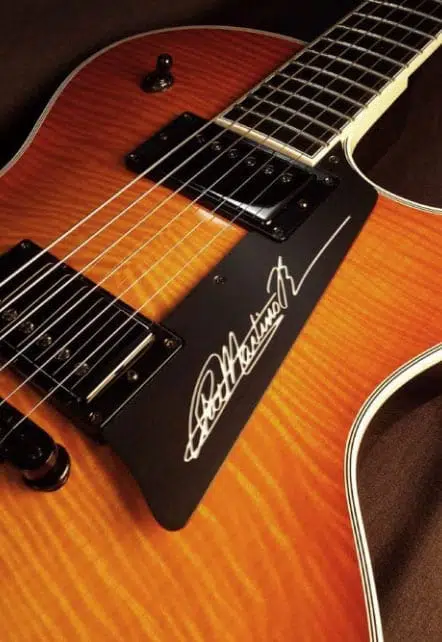
Electronic Layouts: Choose between built-in humbuckers or floating pickups to match your amplification goals.
Neck Geometry: Specify custom nut widths, depths, and profiles for optimal playing comfort.

Join a Living Legacy
From historic jazz festival stages to recording studios worldwide, the archtop guitar remains the definitive voice of jazz expression. You can explore the rich history of our workshop on the About Benedetto Guitars page, or see how these instruments perform in the hands of global masters by browsing our official Players Roster.
Whether you choose a highly responsive carved model or a gig-ready laminated tool, your archtop forms the foundation of your creative voice. Explore our available inventory or contact our Savannah team today to begin designing your custom build.
Frequently Asked Questions
Why do archtop guitars have less sustain than flat-top guitars, and why is that good for jazz?
Archtops are designed to transfer string energy to the top plate very rapidly, resulting in a punchy attack and a quicker note decay. This shorter sustain is exactly what you want for jazz because it prevents fast-moving bebop lines or complex, altered chords from ringing over each other and turning into a muddy blur. It keeps your notes distinct and clean.
What is the tonal difference between a floating pickup and a built-in pickup?
A floating pickup is attached to the pickguard or neck extension, never touching the soundboard itself. This lets a hand-carved top vibrate completely freely, preserving the guitar’s natural acoustic voice when amplified. A built-in pickup is mounted directly into a cutout in the wood top. This dampens some of the top’s acoustic resonance, which helps cut down on feedback and creates that heavier, darker, and warmer electric jazz tone popular since the 1950s.
How does the wood on the back and sides affect an archtop’s tone?
While the spruce top acts as the main acoustic engine, the back and side hardwoods serve as a reflective chamber. Figured maple is highly dense and reflects sound waves quickly, adding brightness, crisp note separation, and high-end clarity. Mahogany is less dense, absorbing a bit more high-frequency energy to produce a warmer, woodier midrange response with a rounder treble profile.
Related Content

Understanding Tonewoods: How Wood Choices Shape Jazz Guitar Tone
How Tonewoods Shape the Sound of a Jazz Guitar Every jazz guitarist knows the importance of tone, but few elements influence that sound as much as the wood beneath your hands. From warmth and resonance to clarity and projection, tonewoods …
Read More >
How to Choose the Right Jazz Guitar for Your Playing Style
The guitar you choose defines how you sound and feel as a player. In jazz, tone and touch matter more than volume or flash. A well-chosen guitar responds to your phrasing, supports your rhythm, and inspires new ideas. Choosing the …
Read More >
Your Next Guitar?
This new Bravo is up in Bob’s Boutique and ready to go! Click on over to buy online, or contact us with any questions: info@benedettoguitars.com
Read More >