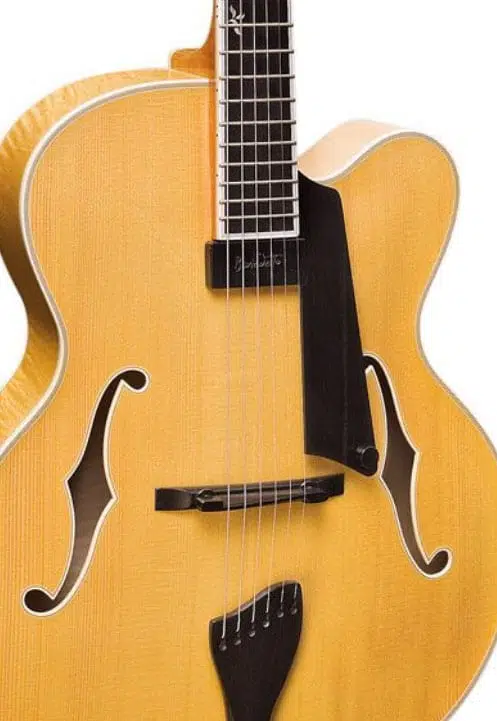



What Common Issues Should You Be Aware of When Purchasing an Archtop Jazz Guitar?
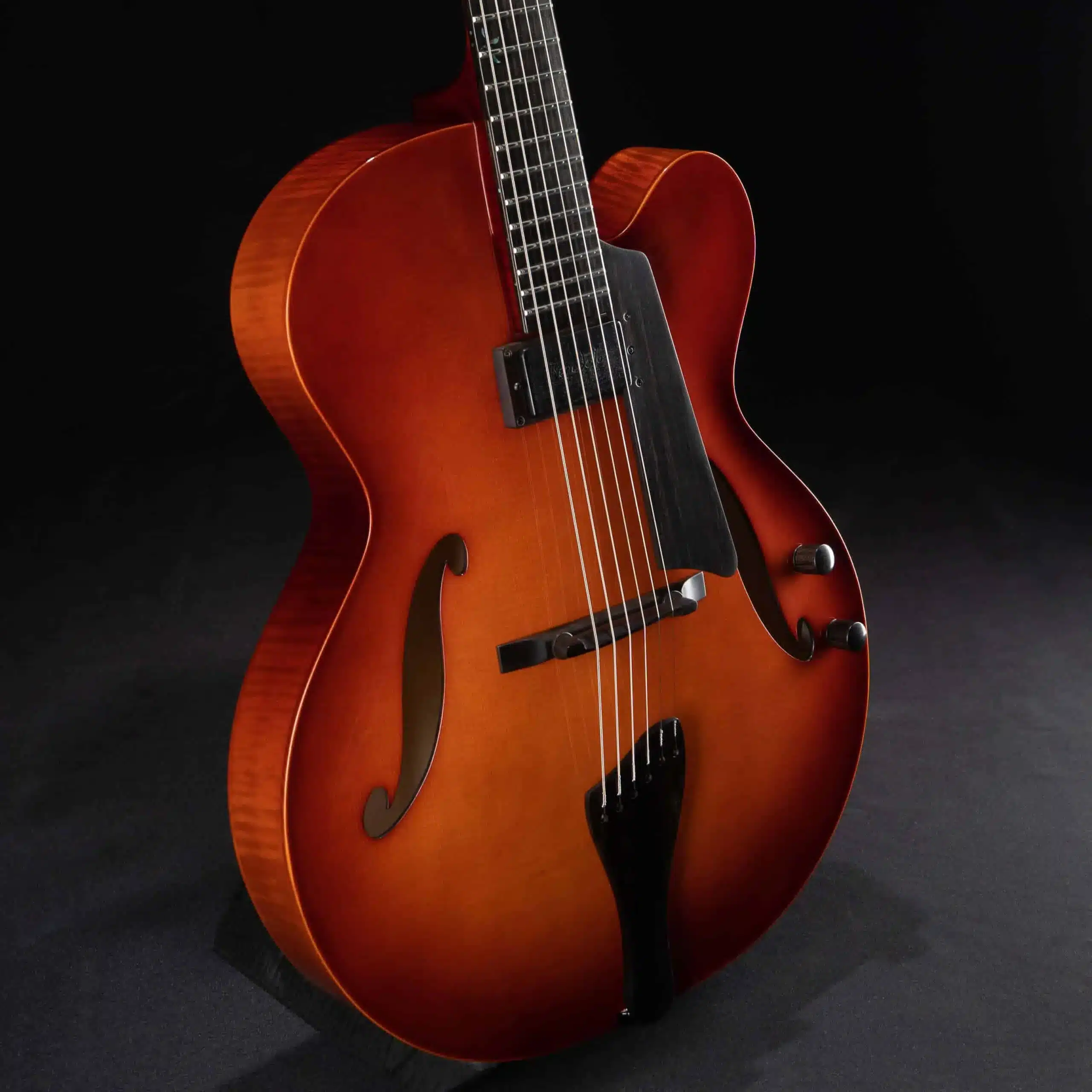
Investing in a premium jazz guitar is an exciting milestone for any musician or serious collector. Unlike mass-produced solid-body electric guitars, archtops are highly sensitive acoustic instruments. Every structural joint, wood graduation, and setup tolerance directly determines your amplified tone, acoustic projection, and the long-term investment value of your instrument.
When navigating the premium market, it helps to know exactly what separates a masterfully built archtop from a compromised alternative. Lower-tier manufacturers frequently cut corners on materials and final assembly, leaving buyers with instruments that require immediate repairs. Knowing what to look for can help you identify these factory defects before you buy.
At Benedetto Guitars in Savannah, Georgia, our small workshop team eliminates these structural risks entirely by building to strict artisan standards. Whether you are exploring our meticulously hand-carved Flagship Series or looking for a dependable stage partner, this guide outlines the critical structural and material points to keep in mind so you can find an instrument that performs beautifully out of the box.
The Initial Evaluation: Tracking Factory Deficits and Added Costs
One of the most common issues players face when purchasing a jazz guitar from a mass-production factory is a lack of precision in the final setup. Because detailed bench adjustments take time, large-scale manufacturers often rush their instruments to shipping, leaving the buyer with an unrefined setup that can be expensive to fix.
Common Quality Shortcuts in Mass Production
Improper Nut Slotting: If the string slots at the headstock nut are cut too shallow, the guitar’s action will feel incredibly stiff in the lower registers, causing hand fatigue. If they are cut too deeply, you will face persistent open-string buzzing.
Uneven Fret Levels: Budget factory instruments routinely exhibit high or low frets across the fingerboard. This forced manufacturing shortcut makes it impossible to get low string action without localized buzzing, meaning you have to raise the bridge action to uncomfortable heights.
Poor Bridge Contour: A floating archtop bridge base must be carefully scraped by hand to match the unique three-dimensional contour of the guitar’s top plate. Mass-produced brands often use pre-fab bridge bases that leave small gaps beneath the feet, which chokes your sustain and ruins intonation.
Improper Nut Slotting: If the string slots at the headstock nut are cut too shallow, the guitar’s action will feel incredibly stiff in the lower registers, causing hand fatigue. If they are cut too deeply, you will face persistent open-string buzzing.
Uneven Fret Levels: Budget factory instruments routinely exhibit high or low frets across the fingerboard. This forced manufacturing shortcut makes it impossible to get low string action without localized buzzing, meaning you have to raise the bridge action to uncomfortable heights.
Poor Bridge Contour: A floating archtop bridge base must be carefully scraped by hand to match the unique three-dimensional contour of the guitar’s top plate. Mass-produced brands often use pre-fab bridge bases that leave small gaps beneath the feet, which chokes your sustain and ruins intonation.
Correcting these fundamental factory oversights can require significant post-purchase shop labor, which quickly erodes the apparent savings of a cheaper instrument. At Benedetto, every guitar undergoes a rigorous setup and multi-point inspection before it ever leaves our Savannah shop, ensuring the action is low, smooth, and ready for the stage immediately.
Soundboard Architecture: Understanding Carved vs. Laminated Tops
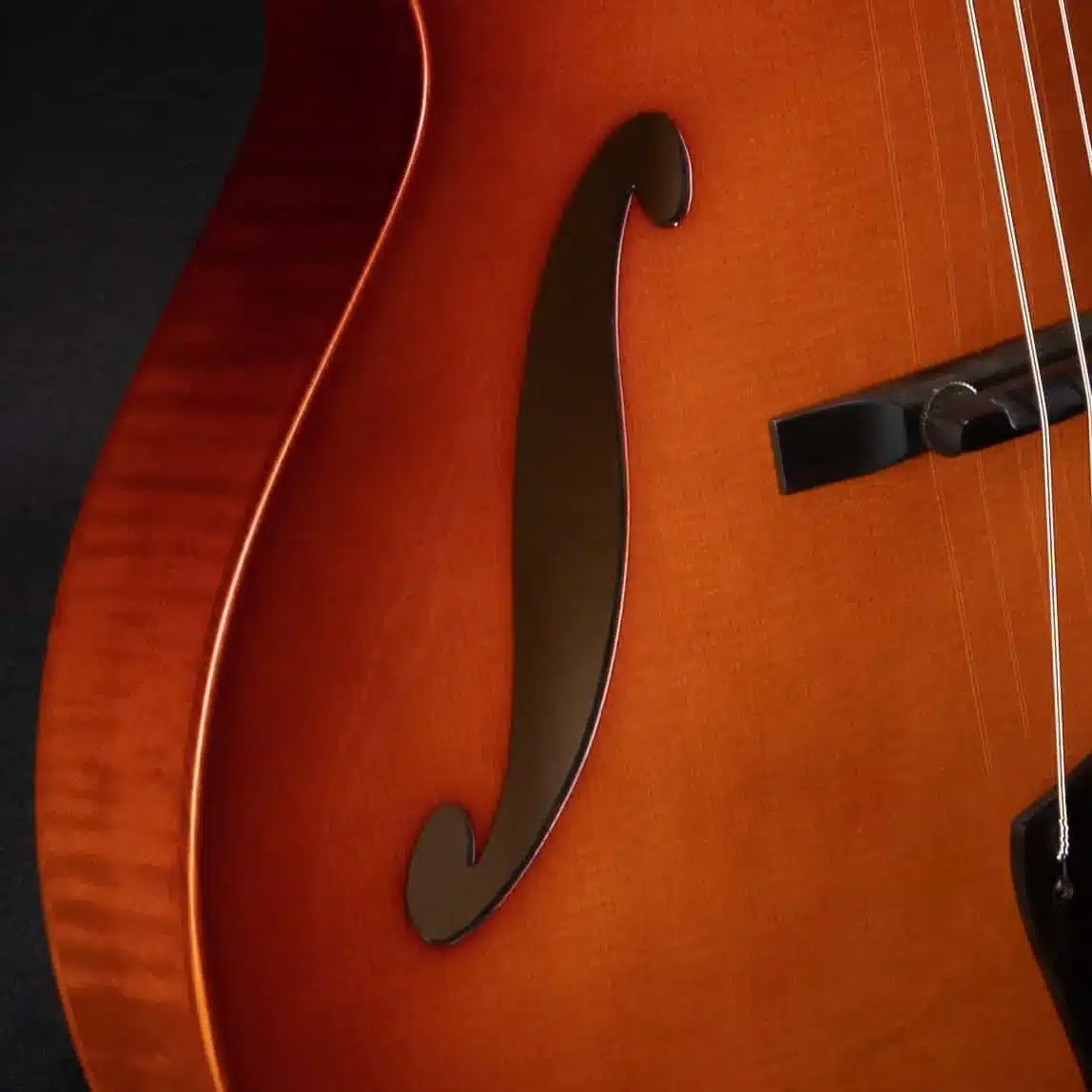
The soundboard acts as the guitar’s primary engine, flexing under string tension and moving air out of the body cavity. When evaluating an archtop, understanding the construction approach—whether a hand-carved solid top or a custom laminated top—is essential, as each design serves a distinct musical purpose.
Hand-Carved Tops: Acoustic Purity and Resonance
Hand-carved soundboards are crafted from solid billets of select tonewood. Using precise graduation techniques Robert Benedetto perfected over 50 years, the wood is sculpted thinner near the edges while maintaining strength at the center. This allows the grain to flex freely, delivering the rich acoustic warmth, crisp note separation, and open dynamic response prized in acoustic environments.
Laminated Tops: Stage Control and Punchy Tone
Laminated tops are constructed using hydraulic presses to fuse select wood plies. While some view laminates purely as a cost-saving measure in mass production, in expert luthiery, laminated construction is a deliberate performance choice. Models like our Bravo and Bambino feature custom-pressed tops crafted from just three ultra-thin layers of select, high-grade tonewood veneers. This minimal, lightweight 3-ply design preserves the natural acoustic responsiveness of the wood, providing working musicians with exceptional feedback resistance at higher stage volumes while delivering a warm, punchy, highly focused electric tone through an amplifier.
Material and Assembly Checkpoints: Factory Shortcuts vs. The Benedetto Bench
When you are inspecting any archtop jazz guitar on the open market, certain construction details instantly reveal whether the instrument was mass-produced on an assembly line or built by a specialist.
To help you run your own hands-on inspection, here is how typical factory shortcuts compare to the structural standards we maintain at Benedetto:
1. The Top and Back Arches
The Factory Issue: Assembly-line guitars often display uneven graduation, flat spots, or even slight tool ridges under the finish where high-speed copy carvers left rough marks.
The Benedetto Standard: Our builders graduate each plate smoothly from the thickest part of the center crown out to the delicate recurve near the edge binding, creating a perfectly balanced geometric arch that flexes evenly under full string tension.
2. F-Hole Cutting and Binding
The Factory Issue: Check the inside edges of the f-holes for rough wood splinters, uneven routing tracks, or binding joints that look forced or messy. Mass-production tools often cause tearout on the delicate soundboard grain.
The Benedetto Standard: Every f-hole on our instruments is cut cleanly and bound flush to the soundboard with microscopic precision, keeping the internal soundboard edges sealed and structurally stable.
3. Neck Joint and Binding Integration
The Factory Issue: Mass-market imports often hide small gaps, finish sinking, or heavy glue lines around the neck heel joint. You might also notice the edge binding feels sharp or uneven against the neck wood.
The Benedetto Standard: Our wood-to-wood joinery at the heel is entirely flush. The binding is scraped perfectly smooth to eliminate any tactile ridges, ensuring a completely uninterrupted feel as your hand moves up the neck.
4. Finish Application
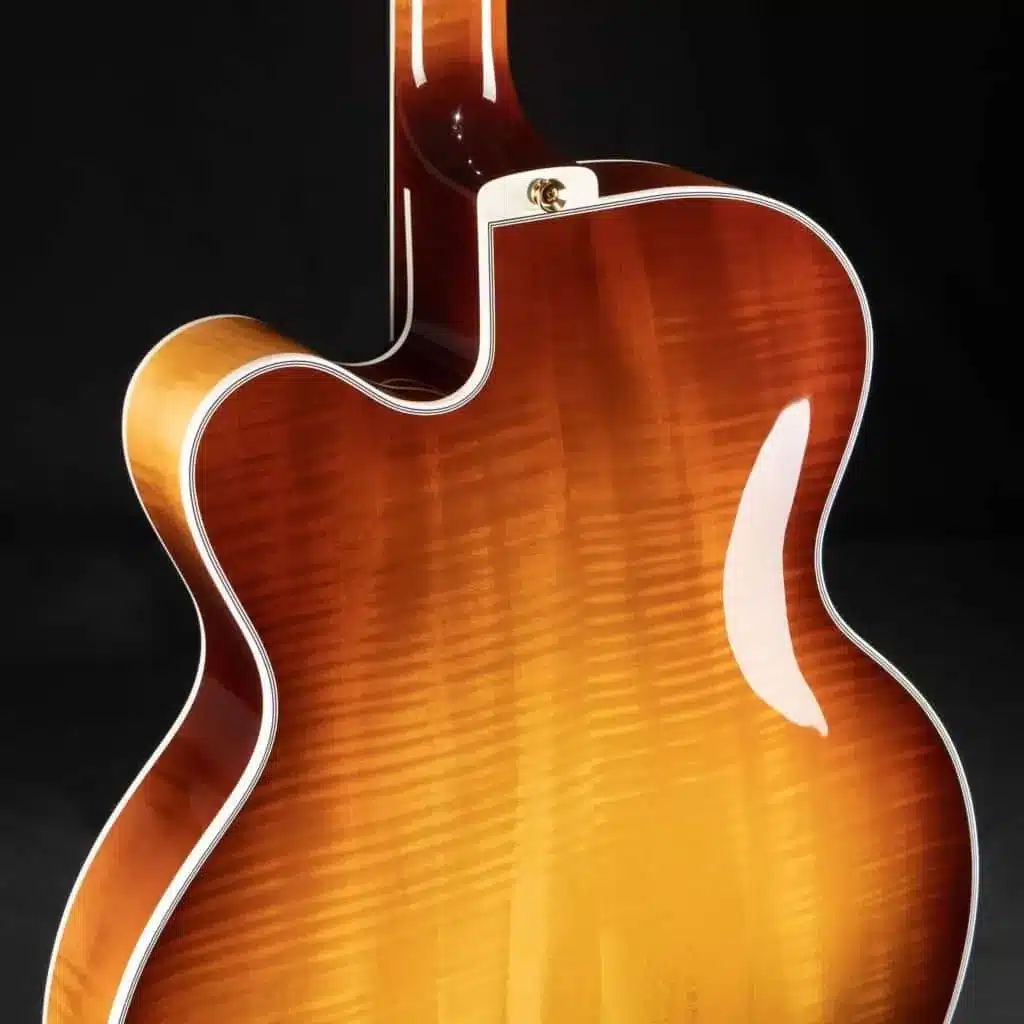
The Factory Issue: Factory brands often spray a thick, heavy coat of UV-cured polyurethane over the body because it dries instantly. This acts like a hard plastic shell, choking the guitar’s natural acoustic projection and preventing the wood from aging well.
The Benedetto Standard: We apply a traditional, ultra-thin nitrocellulose lacquer finish. This allows the tonewood cells to breathe, flex naturally, and mature in tone over decades of playing.
Component Layout: Floating vs. Built-In Electronics
Another crucial element to consider is how the electronics are integrated into the guitar’s body. The mounting style you choose directly affects how the soundboard behaves.
Archtop Electronics Quick-Reference
Choosing between these options depends on where you perform most. If you want a purely acoustic voice that sings through a microphone, a floating layout is ideal. If you require maximum feedback resistance on a loud stage, our gig-ready Professional Series utilizes specialized laminate geometries and built-in pickups to ensure predictable, warm electric performance under heavy amplification.
Inside the Benedetto Workshop: From Raw Billet to the Bench
When you step away from mass-produced commercial factory options, the process of acquiring an archtop becomes a direct, human collaboration. At Benedetto, we maintain an intentionally small footprint. Our 11-employee workshop operates as a true artisan collective, meaning your guitar isn’t passed down an anonymous assembly line. Instead, a dedicated team of craftsmen oversees your build from the moment the raw tonewood is pulled from our inventory until the final lacquer polish is applied.
This hands-on bench environment completely eliminates the mechanical and structural defects that plague mass-market instruments. Our luthiers spend the necessary hours meticulously balancing the top plate graduation, hand-profiling the neck, and scraping the bridge base so that your guitar arrives with flawless intonation and low, fluid action. By managing every variable under one roof, we ensure your instrument leaves our shop as a lifetime performance tool, perfectly optimized for your specific touch.
The foundation of this approach comes from decades of dedicated American luthiery. Discover the history of Benedetto Guitars to see how this lineage shapes our daily bench work, and browse our official Players Roster to see how our exacting standards translate to world tours and recording studios.
Want to talk through your ideal setup? Let’s map out your instrument’s performance profile together. Get in touch with our team to initiate a bench consultation and explore what is possible for your next archtop.
Frequently Asked Questions (FAQ)
What common issues should I look for when purchasing a jazz guitar?
When purchasing an archtop, you should watch out for setup deficits like uneven fret levels, poorly slotted headstock nuts, and floating bridges that do not sit flush against the body. You should also check for structural shortcuts like heavy factory polyurethane finishes and steam-pressed plywood tops, which limit acoustic projection.
How can I tell if an archtop jazz guitar has a hand-carved or pressed top?
You can identify a hand-carved top by checking its graduation and acoustic response. A hand-carved top features varying thickness, thinner near the outer rims and thicker at the center crown, allowing the solid wood to vibrate freely. Pressed tops have a completely uniform thickness because they are steam-bent into shape, which compresses the internal grain cells and deadens resonance.
Why do mass-produced archtop guitars often require a professional setup out of the box?
Mass-produced guitars require extra setup work because large assembly plants prioritize shipping speed over detailed bench adjustments. Factory assembly lines frequently skip the time-consuming tasks of precision fret leveling, deep nut slotting, and hand-scraping the floating bridge base to match the unique curvature of the guitar top.
Does a thick factory finish change the tone of a jazz guitar?
Yes. Heavy applications of UV-cured polyurethane act as a structural constraint on a hollow-body guitar, dampening the wood’s natural vibration and choking the acoustic volume. Premium archtops use an ultra-thin nitrocellulose lacquer finish instead, which permits the tonewood to breathe, flex, and mature in tone over time.
Related Content

Understanding Tonewoods: How Wood Choices Shape Jazz Guitar Tone
How Tonewoods Shape the Sound of a Jazz Guitar Every jazz guitarist knows the importance of tone, but few elements influence that sound as much as the wood beneath your hands. From warmth and resonance to clarity and projection, tonewoods …
Read More >
How to Choose the Right Jazz Guitar for Your Playing Style
The guitar you choose defines how you sound and feel as a player. In jazz, tone and touch matter more than volume or flash. A well-chosen guitar responds to your phrasing, supports your rhythm, and inspires new ideas. Choosing the …
Read More >
Your Next Guitar?
This new Bravo is up in Bob’s Boutique and ready to go! Click on over to buy online, or contact us with any questions: info@benedettoguitars.com
Read More >