

Unique Design Elements of Archtop Guitars: Jazz Guitar Craftsmanship & Benedetto Features

An archtop guitar is not simply a flat-top instrument with a curved face; it is an entirely different acoustic ecosystem. In fact, its architecture has a lot more in common with a cello or a violin than it does with a flat-top guitar. Every single carve, contour, and component changes how the instrument moves air, projects notes, and responds to the subtle nuances of your pick attack.
When you look at a truly great jazz guitar, the visual elegance is just a byproduct of acoustic physics. The magic lies in the delicate interplay of hand-graduated tonewoods, tuned internal bracing, and specialized hardware designed to let the wood vibrate freely.
For decades, Benedetto Guitars has refined these traditional techniques, building instruments that serve as the definitive voice for modern jazz.
What Defines Archtop Guitar Construction?
The heart and soul of a traditional jazz guitar is its three-dimensional arched soundboard. If you look at mass-produced factory instruments, you often see that they use heat and steam to force flat sheets of wood into a curved shape. This introduces massive internal stress to the wood, which ultimately chokes its natural resonance. A true premium archtop is sculpted by hand, carved away from a thick, solid billet of radial sawn tonewood.
Our builders carve the wood so it remains thicker at the center for structural integrity, then gradually shave it down thinner as it approaches the rims. This allows the entire top plate to act as a highly responsive, floating diaphragm.
This completely hollow architecture relies on two core design features to shape its voice:
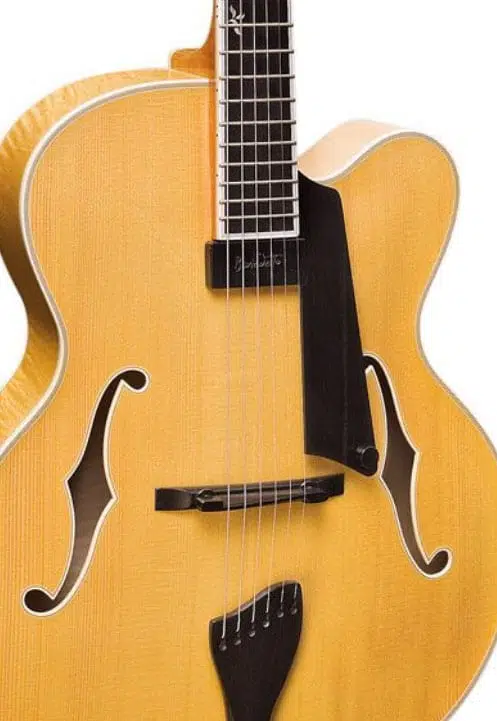
- The Arched Profile: This specific contour provides the immense structural strength needed to support the heavy downward pressure of the bridge, all while maximizing acoustic projection and dynamic range.
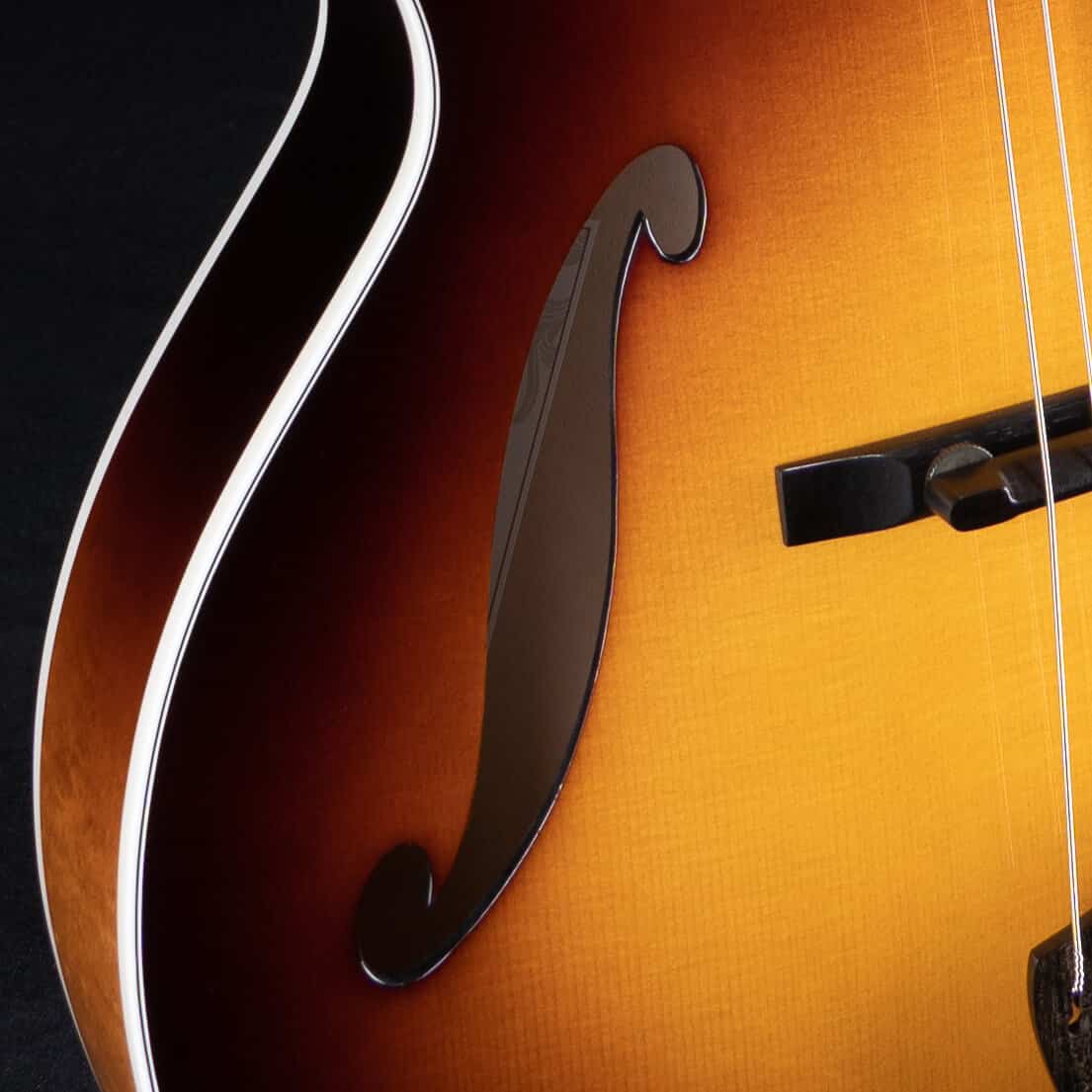
- F-Holes: A central round soundhole actually weakens the most flexible part of a guitar top. Parallel f-holes open up the outer perimeters instead. This lets soundwaves escape cleanly while focusing those punchy, articulate midrange frequencies that make jazz lines pop.
Body depth further sculpts this response. Deeper rims increase the internal air volume, giving you a bloomy, acoustic resonance with plenty of low-end depth. Shallower rims tighten that acoustic envelope, accelerating note separation and naturally rejecting feedback when you’re playing on loud, modern stages.
The Role of Tonewood Selection
Wood is a living, variable medium, and every species brings its own unique density, structural stiffness, and natural dampening properties to the table. At Benedetto, we hand-select individual cuts based on how they will vibrate together to establish the fundamental tone of the instrument.
Spruce
Spruce is our definitive choice for the archtop soundboard. Because it is structurally stiff yet remarkably lightweight, the carved top can vibrate freely with very little string energy. This sensitivity gives the guitar its responsive feel, translating delicate fingerstyle nuances and aggressive pick attacks with equal clarity.
Maple
We look to maple for the back, sides, and neck because it provides a dense, highly reflective foundation. While the spruce top generates the fundamental warmth, the reflective maple body acts like an acoustic mirror to project those frequencies forward, keeping complex chords clear and articulate. Plus, its physical rigidity ensures excellent neck stability when you’re traveling through changing climates on tour.
Ebony
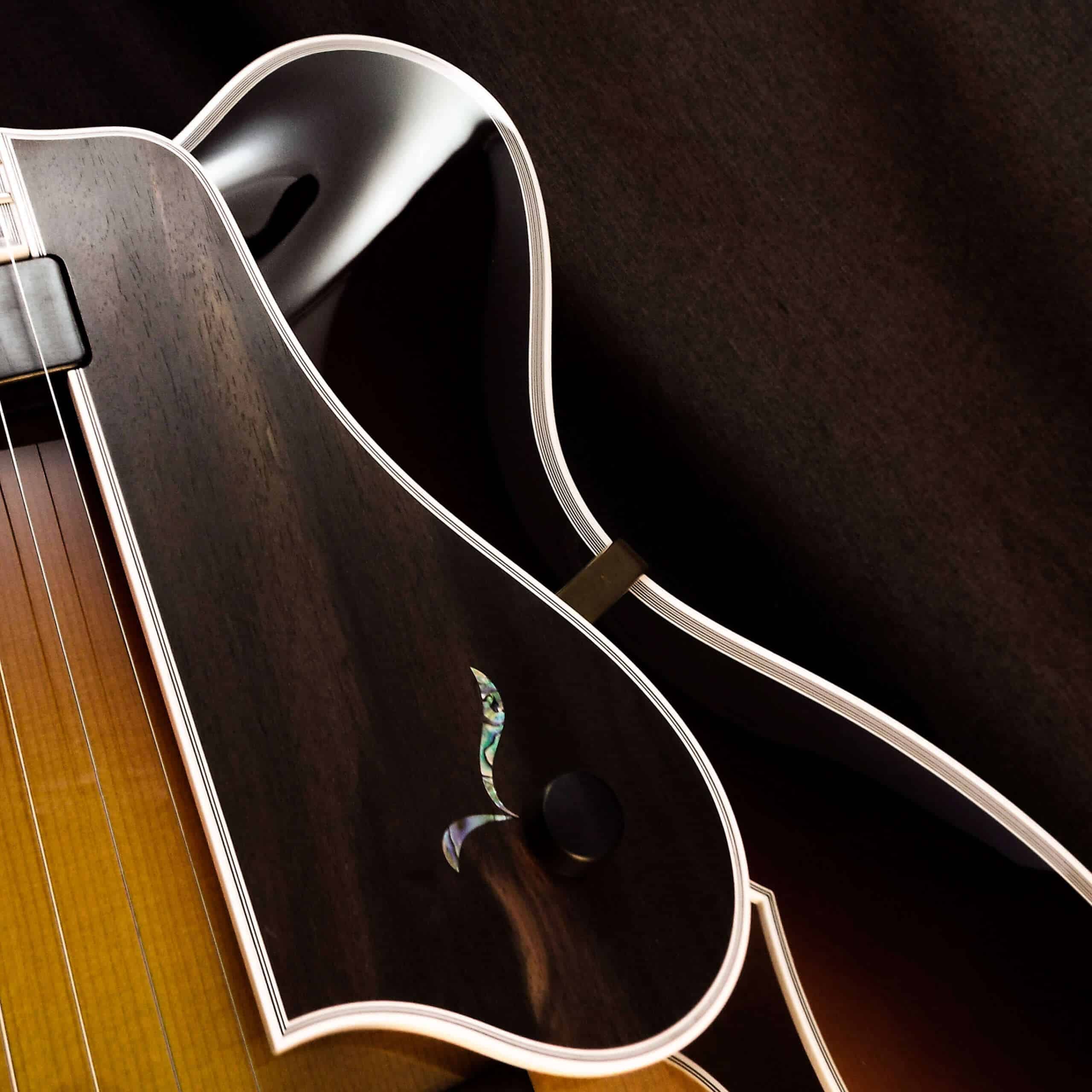
If spruce and maple build the acoustic chamber, ebony is the tactical anchor of the guitar. We use premium ebony for our fingerboards, bridges, and tailpieces. Its extreme density easily resists wear from decades of heavy playing, while its hardness gives you a quick, immediate note attack, ensuring fast bebop lines never blur together.
Alternative Tonewoods
While spruce and maple form our traditional foundation, alternative woods offer distinct tonal flavors. Mahogany necks introduce a smooth, dark midrange warmth, while a wood like walnut offers a beautiful balance of top-end bite and lower-register depth.
Handcrafted Construction and Tone Quality
Because wood is an organic material, no two boards are genetically identical. An automated factory machine can’t feel the stiffness of a specific piece of spruce, and it certainly can’t hear its natural pitch. Handcrafted building allows a luthier to listen to the wood and adapt the design on the fly.
This painstaking process ensures the completed soundboard vibrates uniformly. It’s the reason a Benedetto has such an even response across the entire fingerboard, allowing a high chord voicing on the top strings to ring out with the exact same volume and clarity as a single note played low on the fretboard.
Hardware and Electronics Built for Performance
An archtop’s hardware is a critical part of its acoustic circuit. Standard heavy metal hardware can weigh down a carved top, acting like a mute and introducing brittle, synthetic overtones. To avoid this, every component must protect the wood’s natural vibration.
Bridges and Tailpieces
By swapping out heavy metal brackets for low-mass wooden components, we let the top plate breathe. The dense ebony bridge base is meticulously scraped and matched to the exact contour of the guitar’s top, ensuring every ounce of string vibration transfers cleanly into the acoustic body.
Amplification and Custom Pickups
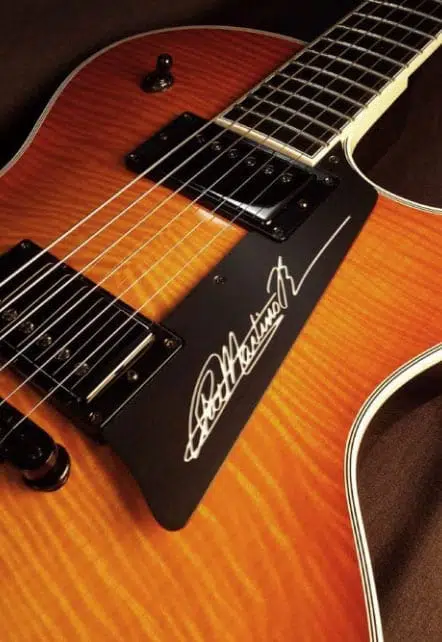
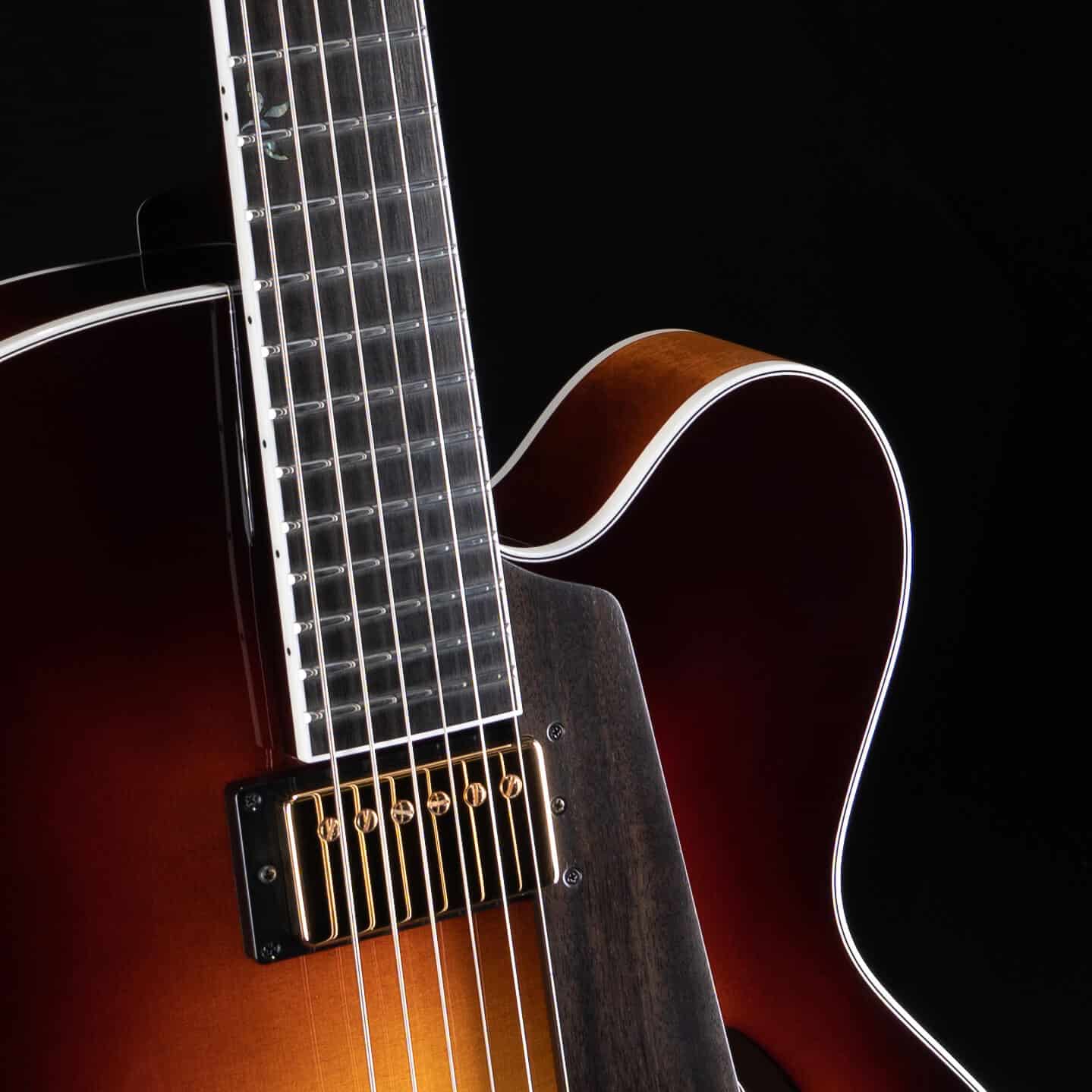
To capture this organic acoustic voice through an amplifier, the electronics have to stay out of the way of the physical construction. Our custom-voiced floating pickups are suspended just above the body, attached directly to the side of the neck or the pickguard. Because the pickup never touches the soundboard, you get an authoritative, rich jazz tone that never sounds flat or synthetic.
Selecting the Right Archtop Architecture
How these design elements are mixed determines where an instrument will perform best. We split our instruments into two distinct families tailored to different environments.
The Flagship Series
These are our acoustic purists—instruments like The Cremona or La Venezia. Built with master-grade, hand-carved solid tonewoods, they maximize acoustic resonance, dynamic range, and tonal complexity. They are designed for players, tracking studios, and collectors who prioritize traditional acoustic projection, historical luthier artistry, and the pure acoustic legacy of the archtop. Discover these legacy instruments in the Benedetto Flagship Series.
The Professional Series
These are our pure workhorses. Built for touring pros, educators, and working musicians, they use premium laminate construction or specialized chambered bodies. This design handles dramatic humidity changes, resists the structural rigors of travel, and rejects feedback at higher stage volumes, all while retaining our signature clear, warm jazz voice. Explore the line at the Benedetto Professional Series.
Inside the Shop: The Bracing Decision
A common point of confusion for players is the difference between parallel bracing and X-bracing. The internal bracing design completely alters how the top flexes, changing the immediate feel under your fingers and the shape of the notes you play.
At Benedetto, we look at bracing as a structural tone control, intentionally selecting the internal pattern that best unlocks the specific acoustic potential and musical purpose of each guitar model we create.
Customizing Your Instrument
Because your connection to the fingerboard is entirely personal, standard factory dimensions may not fit your individual technique. Tailoring specific structural elements ensures the guitar works with your playing style rather than against it.
Through the Build Your Own Benedetto program, you work directly with our workshop to specify every design element:
- Neck Profiles & Nut Widths: Carved and shaped by hand to fit your hand posture, reducing fatigue during long sets or teaching sessions.
- Bracing Patterns: Voiced parallel for traditional acoustic cutting power, or X-braced for a lush, modern jazz ballad feel.
- Electronic Layouts: Built-in humbuckers for a fat, warm electric voice with high feedback rejection, or floating configurations to keep the acoustic voice front and center.
Whether you select an instrument from our established line or design a bespoke creation tailored entirely to your touch, your guitar is brought to life by the dedicated team of master artisans in our shopand backed by a generational legacy trusted by the world’s most elite jazz artists.
Frequently Asked Questions
What is the difference between a carved-top and a pressed-top archtop guitar?
A carved-top archtop is sculpted from a solid block of wood, graduating the thickness to create a highly responsive, vibrating diaphragm. A pressed-top guitar forces flat wood into shape using heat and steam, which introduces internal stress and stifles the natural acoustic resonance.
How do f-holes affect the sound of a jazz guitar?
Parallel f-holes allow acoustic soundwaves to escape efficiently from the hollow body. Mechanically, they preserve the structural flexibility of the top plate much better than a central round soundhole, focusing the punchy midrange frequencies essential for clear jazz articulation.
Why do Benedetto archtops use ebony hardware instead of metal?
Traditional heavy metal hardware acts like a mute, adding unnecessary mass that dampens wood vibration. Benedetto utilizes lightweight, hand-fitted ebony tailpieces and bridges to lower surface weight, allowing the carved top to breathe freely and transfer string energy cleanly into the body.
Should I choose parallel bracing or X-bracing for an archtop guitar?
Choose parallel bracing for a stiffer soundboard structure that yields a rapid attack, strong midrange focus, and clear cutting power in an ensemble. Opt for X-bracing if your playing demands a more flexible top plate that produces a darker, warmer acoustic voice with longer sustain.
Related Content

Understanding Tonewoods: How Wood Choices Shape Jazz Guitar Tone
How Tonewoods Shape the Sound of a Jazz Guitar Every jazz guitarist knows the importance of tone, but few elements influence that sound as much as the wood beneath your hands. From warmth and resonance to clarity and projection, tonewoods …
Read More >
How to Choose the Right Jazz Guitar for Your Playing Style
The guitar you choose defines how you sound and feel as a player. In jazz, tone and touch matter more than volume or flash. A well-chosen guitar responds to your phrasing, supports your rhythm, and inspires new ideas. Choosing the …
Read More >
Your Next Guitar?
This new Bravo is up in Bob’s Boutique and ready to go! Click on over to buy online, or contact us with any questions: info@benedettoguitars.com
Read More >