

String Replacement Tips for Custom Jazz Guitars: How to Select Archtop Guitar Strings for Optimal Tone
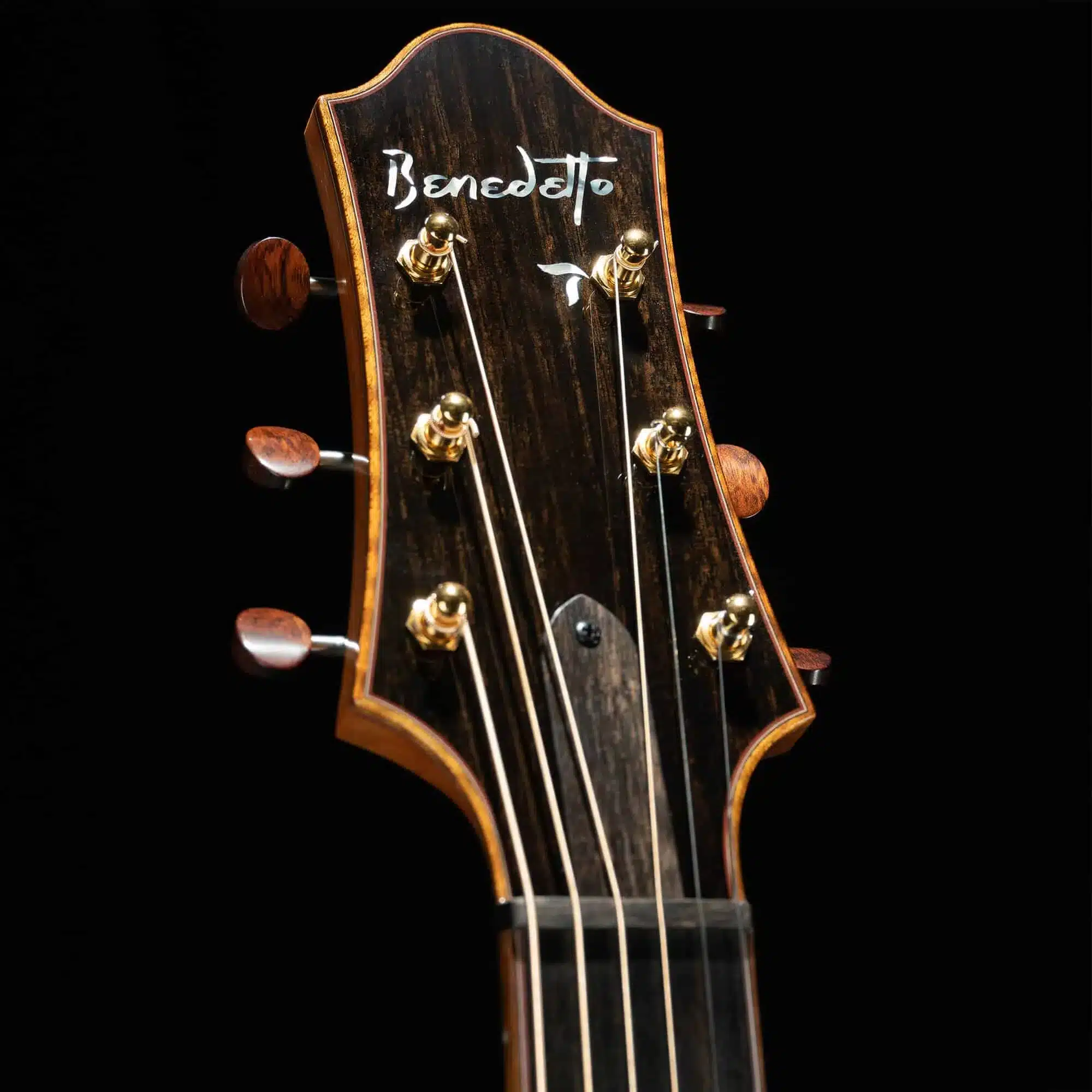
It is easy to view strings merely as replaceable accessories, but on a floating-bridge instrument, they form half of its structural voice, providing the downward pressure that anchors the ebony bridge and drives the tap-tuned spruce top beneath it. Whether you are fine-tuning a guitar you have owned for decades or exploring the rare pieces in Bob’s Boutique, matching your string set to the guitar’s physical architecture changes everything about how it speaks on stage and in the studio.
Why Archtop String Gauge Selection Is a Structural Decision
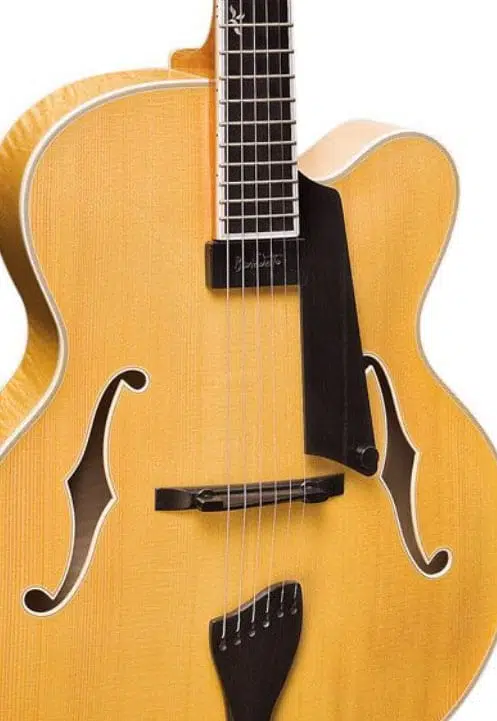
A floating ebony bridge is neither glued nor pinned. It stays in place through string pressure alone, and that pressure travels directly into a spruce soundboard carved by hand by our luthier team, who tap and listen as the graduations are refined. The strings press down, the arch pushes back, and the equilibrium between those two forces is what gives the instrument its voice.
Lighter strings reduce that downward pressure, so the top is driven less and the guitar becomes quieter acoustically, with a slightly thinner response under a heavy pick. Heavier strings ask the carved diaphragm to carry more load than it may have been graduated for. Neither direction is inherently wrong; the right choice depends on the particular guitar and on what you ask of it night after night.
Scale length plays a larger role than most players expect. Because string tension rises with the square of scale length, the same set behaves differently across our instruments: moving from our 25″ scale to 24-3/4″ lowers tension on an identical set by roughly 6 percent, and on The Andy’s 23″ scale the reduction is closer to 15 percent. This is why we remain committed to single-scale geometry, a standard rooted in half a century of traditional archtop building. Our bracing and top loading are designed around a known figure, and a fixed scale keeps that figure dependable, which is what allows each guitar to find the sweet spot of tension and tone.
Flatwound vs. Roundwound Jazz Guitar Strings (and the Half-Round Option)
The winding type shapes the attack, the sustain, and the way each string interacts with a magnetic pickup.
Flatwound nickel: A smooth ribbon wrap with a quick decay and the warm, rounded attack that comping players have favored for generations. Finger noise is minimal, which makes these the traditional choice for amplified chord-melody work.
Roundwound phosphor bronze or 80/20 bronze: Brighter, with longer sustain and a broader spread of overtones. These strings are at their best when the guitar is played acoustically or recorded with a microphone but won’t work well with a magnetic pickup.
Roundwound nickel: More brilliance than flatwounds while remaining fully compatible with magnetic pickups, offering a middle path for players who want added clarity through an amplifier.
Half-round (ground wound): Roundwound strings partially polished flat, producing less finger noise than rounds with more definition than flats, which suits players who move between acoustic and amplified settings.
Players who work primarily through an amplifier, particularly those who rely on our gig-ready Professional Series for nightly performance, frequently settle on nickel flatwounds as their long-term standard.
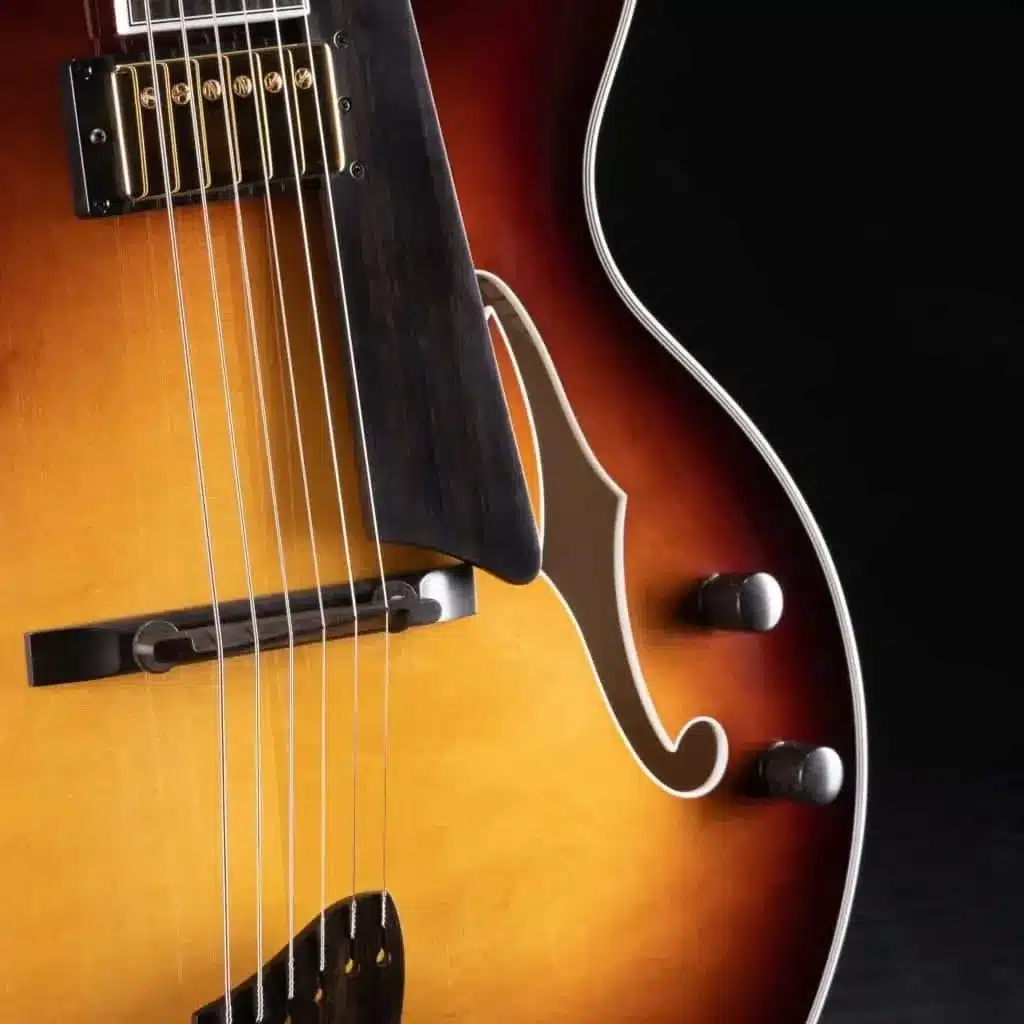
Floating Pickup String Response: Why Bronze and Magnets Disagree
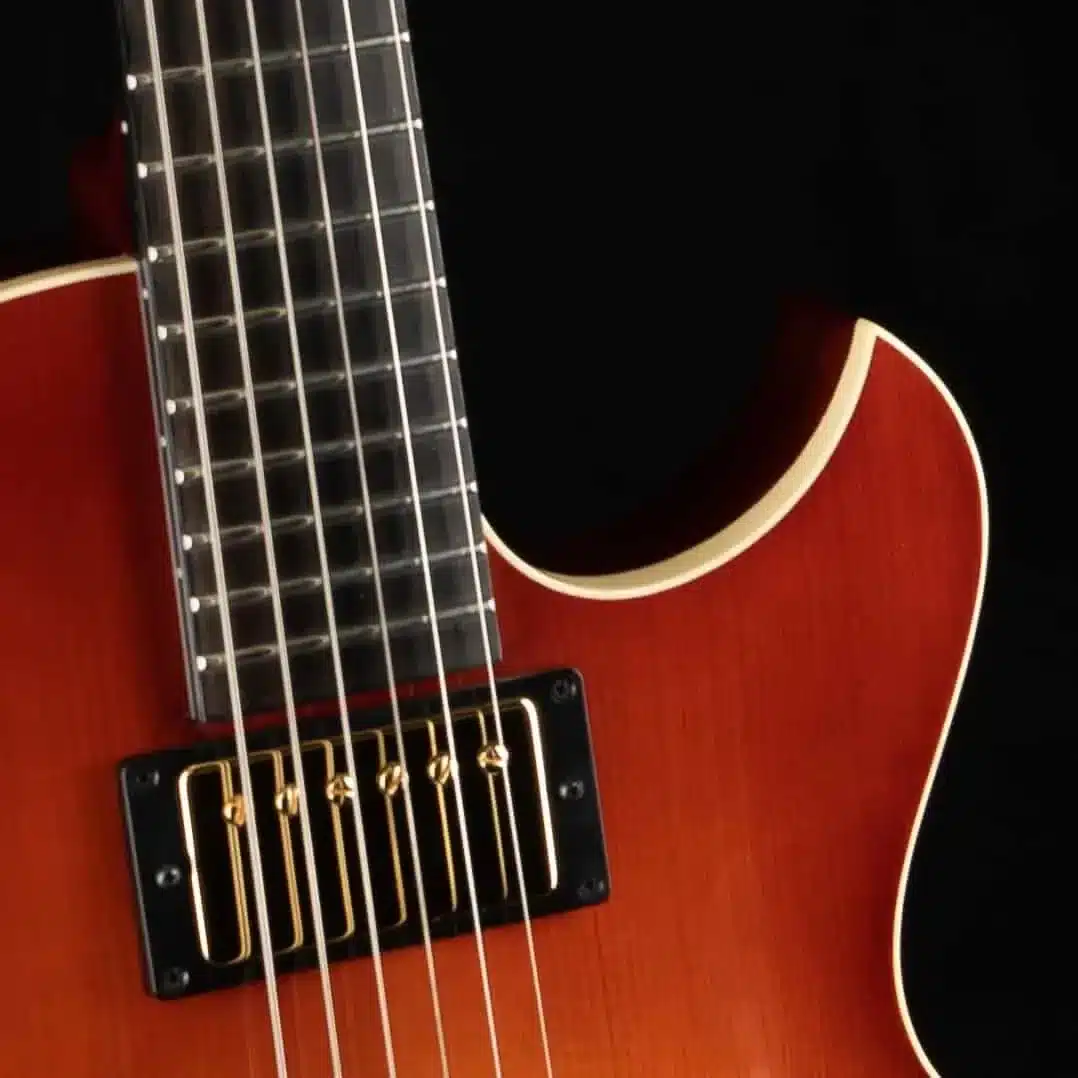
One detail surprises even experienced players. Bronze is not magnetic, so a floating mini-humbucker senses only the steel core of a bronze-wound string while largely ignoring its wrap. The result is that the wound strings sound weak through the pickup while the plain strings stand out, creating an imbalance that no amount of amplifier adjustment will fully correct.
Nickel windings, whether flat or round, keep the output consistent from string to string. In our experience, the guiding principle is straightforward: when the pickup carries most of the sound, choose nickel, and when the carved top is doing the work, bronze becomes the more rewarding option. Our acoustic Flagship models, hand-carved and tap-tuned in Savannah, GA, respond so directly to string choice that they reward thoughtful experimentation with bronze sets or heavier flatwounds.
The third string deserves attention as well. Most jazz sets include a wound G, which matches its neighbors more closely in feel and volume and distributes the pull more evenly across the bridge, whereas a plain G in the .020s can sound thin and stand apart from the rest of a chord voicing.
String Replacement Tips for Custom Guitars When You Change Gauge or Winding
Replacing strings with the same set you have always used is a routine task, but changing gauge or winding type calls for more care. These are the points we check in the workshop:
Change one string at a time. Keeping most of the tension in place ensures that the unpinned bridge stays on its footprint and that the top is not unloaded and reloaded all at once, which matters particularly when the overall load is already shifting.
Recheck intonation. Different gauges intonate differently, so compare the 12th-fret harmonic with the fretted note on both E strings and adjust the bridge base if needed.
Inspect the nut slots. Moving to a heavier gauge can cause wound strings to bind in slots cut for lighter ones, leading to pinging and tuning instability; this is work best left to a qualified technician.
Allow the neck to settle. Additional tension draws the neck forward, so give the guitar a day to stabilize before making small, measured truss rod adjustments.
Observe the bridge base. If the base no longer sits flush against the arch after a significant change, consult a luthier before playing further.
Matching Strings to the Guitar in Front of You
Body size also influences the choice. A 17″ lower bout moves a considerable volume of air and often benefits from a heavier set that drives the top fully, while a 14-1/2″ or 16″ body tends to speak more evenly with a slightly lighter gauge.
Playing style completes the picture. A guitarist who comps behind a horn section in a loud room has different needs from one who plays unamplified duo sets, and the same instrument can be tuned toward either role through string choice alone. If you are designing a custom Benedetto archtop, share your string preferences early in the process so that the nut and bridge can be set up around the strings you intend to play, rather than adapted to them afterward.
FAQ: Choosing Archtop Guitar Strings
What gauge strings are best for a jazz archtop?
Most players settle on .012 or .013 sets, choosing flatwounds for amplified playing and bronze roundwounds for acoustic projection.
Can I use phosphor bronze strings with a floating pickup?
You can, although the wound strings will sound noticeably weaker through a magnetic pickup, which is why nickel strings are generally preferred for amplified playing.
Will heavier strings damage my carved top?
A moderate increase in gauge is usually well tolerated by a properly built archtop, but a substantial jump can overload a top graduated for lighter tension, so it is wise to consult your luthier first.
Do I need a setup after changing string gauge?
In most cases, yes, because intonation, nut slot fit, and neck relief can all shift when the gauge changes.
Why do archtop sets use a wound G string?
A wound G balances volume and feel with the neighboring strings and spreads the load more evenly across the floating bridge.
Related Content

Understanding Tonewoods: How Wood Choices Shape Jazz Guitar Tone
How Tonewoods Shape the Sound of a Jazz Guitar Every jazz guitarist knows the importance of tone, but few elements influence that sound as much as the wood beneath your hands. From warmth and resonance to clarity and projection, tonewoods …
Read More >
How to Choose the Right Jazz Guitar for Your Playing Style
The guitar you choose defines how you sound and feel as a player. In jazz, tone and touch matter more than volume or flash. A well-chosen guitar responds to your phrasing, supports your rhythm, and inspires new ideas. Choosing the …
Read More >
Your Next Guitar?
This new Bravo is up in Bob’s Boutique and ready to go! Click on over to buy online, or contact us with any questions: info@benedettoguitars.com
Read More >