

Famous Jazz Guitarists: The Masters Who Shaped the Archtop Legacy

We’ve spent over fifty years around the workbench, listening to how different hands drive a piece of carved spruce. When you build archtops day in and day out, you realize quickly that the history of jazz is written in the instrument’s geometry as much as in the sheet music.
The story of the famous jazz guitarists who built this genre is inextricably tied to the physical boxes they held against their ribs. As players pushed for more velocity, richer chord-melody extensions, and feedback-resistant sustain, luthiers had to rethink top thickness, bracing patterns, and scale dynamics. Here is how the icons of jazz guitar reshaped the music, changed the way we build, and established the gold standard of jazz archtops.
From Rhythm Anchor to Lead Voice: The Evolution of the Jazz Archtop
As jazz evolved from swing-era dance halls to modern bebop and post-bop clubs, the role of the guitar shifted dramatically. The instrument had to adapt from an unamplified percussive anchor into a primary melodic voice capable of horn-like speed and intricate harmony.
When looking at the history of our Benedetto players roster and the broader tradition of jazz archtops, that musical evolution maps directly to three fundamental mechanical shifts:
Plectrum Projection to Amplified Fluidity: Early rhythm players needed stiff tops and high action for raw acoustic projection, while modern soloists rely on refined top resonance and smooth action for fast, effortless articulation.
Harmonic Separation: As chord structures expanded beyond basic triads into complex alterations and 7-string counterpoint, archtops required tighter acoustic focus to prevent dense voicings from muddying together.
Timbral Balance: Blending the natural acoustic resonance of carved spruce with pickup amplification created the signature warm, punchy archtop voice heard on definitive jazz recordings.

The Archtop Architects: Benedetto Players Who Redefined the Genre
How Player Demands Drove Luthiery Innovations
Every time a player hit a wall on stage, luthiers went back to the drawing board. Understanding this evolution helps illuminate why certain instrument specs exist today.
The Acoustic Bark vs. The Amplified Horn
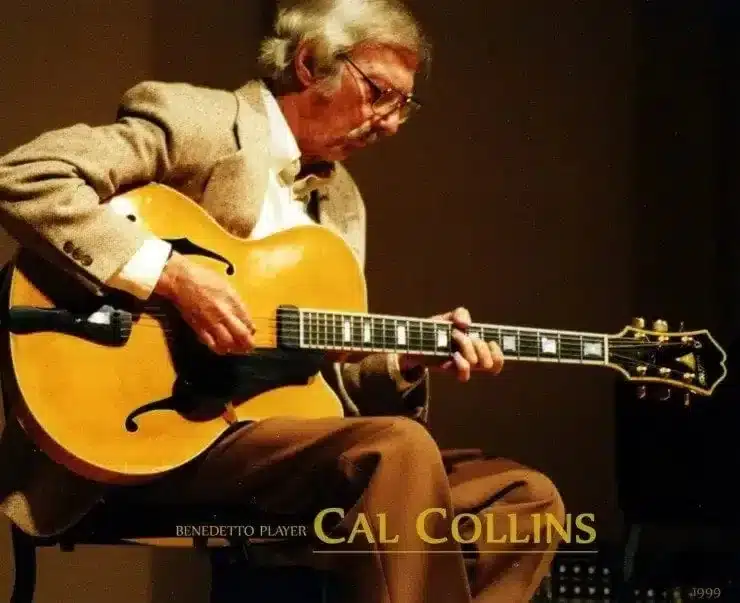
In the unamplified swing era, rhythm masters like Cal Collins needed an archtop to do one job above all else: stay audible next to a blaring trumpet section. Luthiers carved tops thick, and rhythm players ran heavy strings with high action so they could dig in hard without string rattle. Struck close to the bridge, that setup produced a tight, punchy attack with short sustain, the classic acoustic bark that drove an entire swing orchestra.
Electricity turned that dynamic on its head. Bebop soloists like Chuck Wayne didn’t need brute force to be heard; they needed string response fast enough to keep up with their fingers. Plugging into an amplifier meant a player could use a lighter attack, lower action, and focus on long, fluid single-note runs.
That shift changed how we cut wood on the bench. While an ultra-resonant soundboard delivers rich acoustic bloom, high stage volume drives spruce into sympathetic feedback. We bridge this divide with two distinct build paths: our acoustic-first Flagship Series features thin, tap-tuned carved spruce for maximum natural bloom, while our Professional Series uses laminated tops and chambered construction for total feedback control on a loud stage.
The Floating Pickup Revolution: Johnny Smith
Johnny Smith wanted the pristine response of a hand-carved, tap-tuned solid spruce soundboard, but he needed to amplify it without cutting holes in the wood. Routing a hand-carved soundboard to mount a heavy humbucker restricts the movement of the top diaphragm, deadening its natural acoustic resonance.
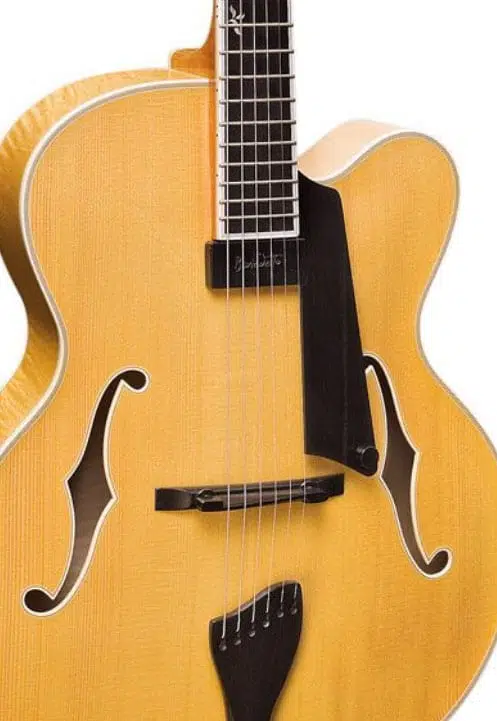
The solution was the neck-mounted floating pickup. By suspending the pickup off the fingerboard extension and mounting controls directly to the pickguard, the carved spruce top remains free to vibrate. It’s an acoustic-first design option we still offer when designing a custom Benedetto archtop for players looking to capture pure soundboard resonance.
High-Volume Punch & Feedback Control: Pat Martino
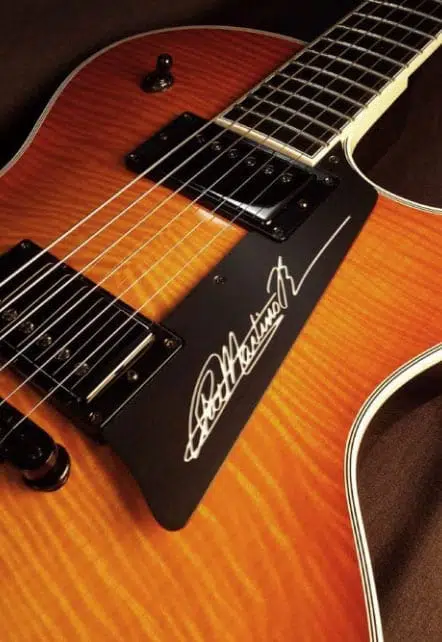
Pat Martino played with uncompromising power, thick strings (.015 to .052 gauge), and staggering speed. Put Pat on stage in front of a loud quartet with a fully acoustic, lightweight 17″ archtop, and the top would immediately resonate sympathetically and howl with low-frequency feedback.
To handle Pat’s heavy attack and extreme stage volume without sacrificing warmth or articulation, Bob Benedetto designed the Pat Martino Signature Model™. Built with a compact 14-1/2″ lower bout, a chambered solid mahogany body, and a carved maple top, it offered total feedback immunity alongside a dark, authoritative fundamental voice. That same engineering philosophy underpins our gig-ready Professional Series laminated archtops, instruments built for high-volume structural rigidity, lightning-fast note tracking, and total feedback control.
The Benedetto Legacy: Handcrafted for Uncompromising Performance
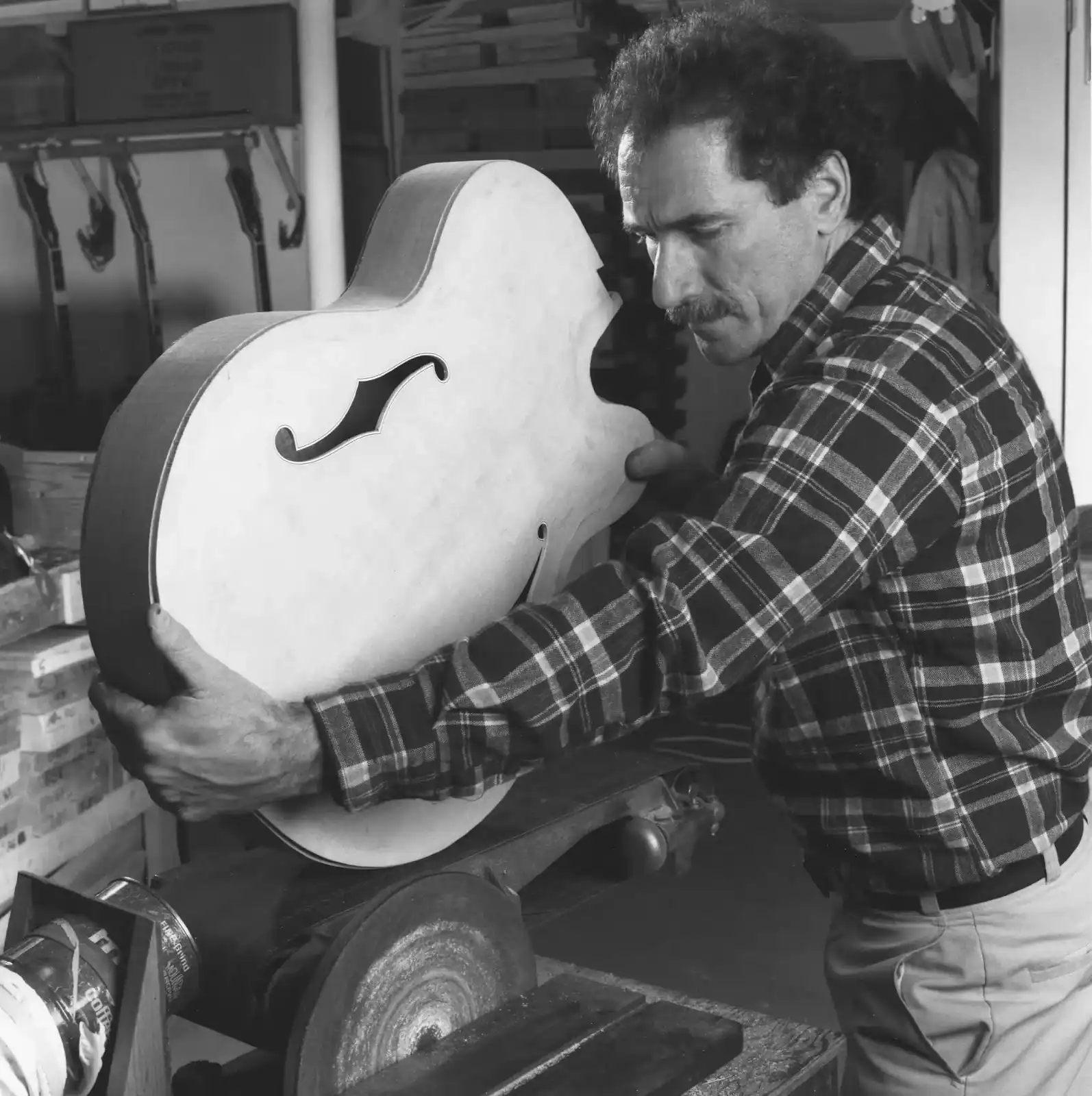
When Bob Benedetto established our workshop standards in 1968, he set out to refine the archtop into its absolute peak as a musical tool. The choices made on our Savannah workbench, from the feedback-resistant bodies engineered for Pat Martino to the floating pickups Johnny Smith used to preserve top resonance, were never about factory convenience. We do not outsource our labor, rely on offshore factory assembly, or cut corners to meet mass-production targets. Instead, we dedicate our small-batch production entirely to meeting the exacting demands of professional and aspiring jazz guitarists.
Today, if you meet our team of master luthiers at our shop, you’ll see the same hand-building techniques in motion. We still hand-carve solid acoustic spruce tops, meticulously tap-tune each soundboard to its resonant sweet spot, and execute exacting joinery one instrument at a time. At our Savannah workshop, nothing is mass-produced, because honoring the legacy of the masters who shaped jazz requires an equal commitment from the hands carving the wood.
FAQ: Archtop Mechanics & History
Why do straight-ahead jazz guitarists prefer archtops over flat-top acoustic guitars?
Flat-top guitars are engineered to sustain notes longer by using thin tops and X-bracing that flex under light tension. Archtops use a carved, arched spruce soundboard supported by parallel or longitudinal bracing. This creates a quick, punchy note attack with a strong fundamental frequency and short, controlled sustain, ideal for fast single-note runs and complex chord voicings that would sound muddy on a resonant flat-top.
What is the difference between parallel bracing and X-bracing in a jazz archtop?
Parallel bracing uses two acoustic tone bars running lengthwise along the top, yielding maximum acoustic projection, cutting power, and a brighter, punchier fundamental tone (classic for big band comping). X-bracing uses two crossing tone bars under the bridge, producing a warmer, darker, more complex acoustic tone with longer sustain, ideal for modern chord-melody and solo playing.
What made Bucky Pizzarelli and Howard Alden adopt the 7-string archtop?
The 7-string archtop, popularized by George Van Eps in the late 1930s, adds a low A (or low C) string. This allows chord-melody players like Bucky Pizzarelli and Howard Alden to play walking basslines underneath mid-register chord inversions simultaneously, effectively turning the guitar into a self-contained piano-like instrument without requiring a stand-up bassist.
Related Content

Understanding Tonewoods: How Wood Choices Shape Jazz Guitar Tone
How Tonewoods Shape the Sound of a Jazz Guitar Every jazz guitarist knows the importance of tone, but few elements influence that sound as much as the wood beneath your hands. From warmth and resonance to clarity and projection, tonewoods …
Read More >
How to Choose the Right Jazz Guitar for Your Playing Style
The guitar you choose defines how you sound and feel as a player. In jazz, tone and touch matter more than volume or flash. A well-chosen guitar responds to your phrasing, supports your rhythm, and inspires new ideas. Choosing the …
Read More >
Your Next Guitar?
This new Bravo is up in Bob’s Boutique and ready to go! Click on over to buy online, or contact us with any questions: info@benedettoguitars.com
Read More >