

How to Choose a Custom Guitar: The Archtop Buyer’s Guide
Choosing a custom guitar comes down to a handful of practical decisions: how you play, where you’ll play it most, and how a luthier’s construction choices shape the way it sounds and feels. Knowing how to choose a custom guitar means looking past surface aesthetics and understanding how body dimensions, top architecture, and electronic physics work together under your fingers.
At our Savannah, Georgia workshop, our small team builds every instrument by hand, carrying forward a half-century legacy of fine luthiery. If you are considering a custom Benedetto archtop, here is how we help you navigate the blueprint.
How Do You Choose the Right Custom Archtop?
Choosing the right custom archtop guitar hinges on matching your primary performance setting with the right top architecture and body footprint. Solid hand-carved spruce tops deliver ultimate three-dimensional acoustic resonance for solo or studio work, while laminates offer feedback rejection for loud stages. Body dimensions, nut widths, scale length, and pickup integration then tailor the instrument’s physical response precisely to your touch.
1. Carved vs. Laminate: Evaluating Your Performance Environment
The very first fork in the road is deciding how your guitar’s top soundboard is built. In high-end archtops, this means choosing between solid hand-carved tonewoods and premium pressed laminates.
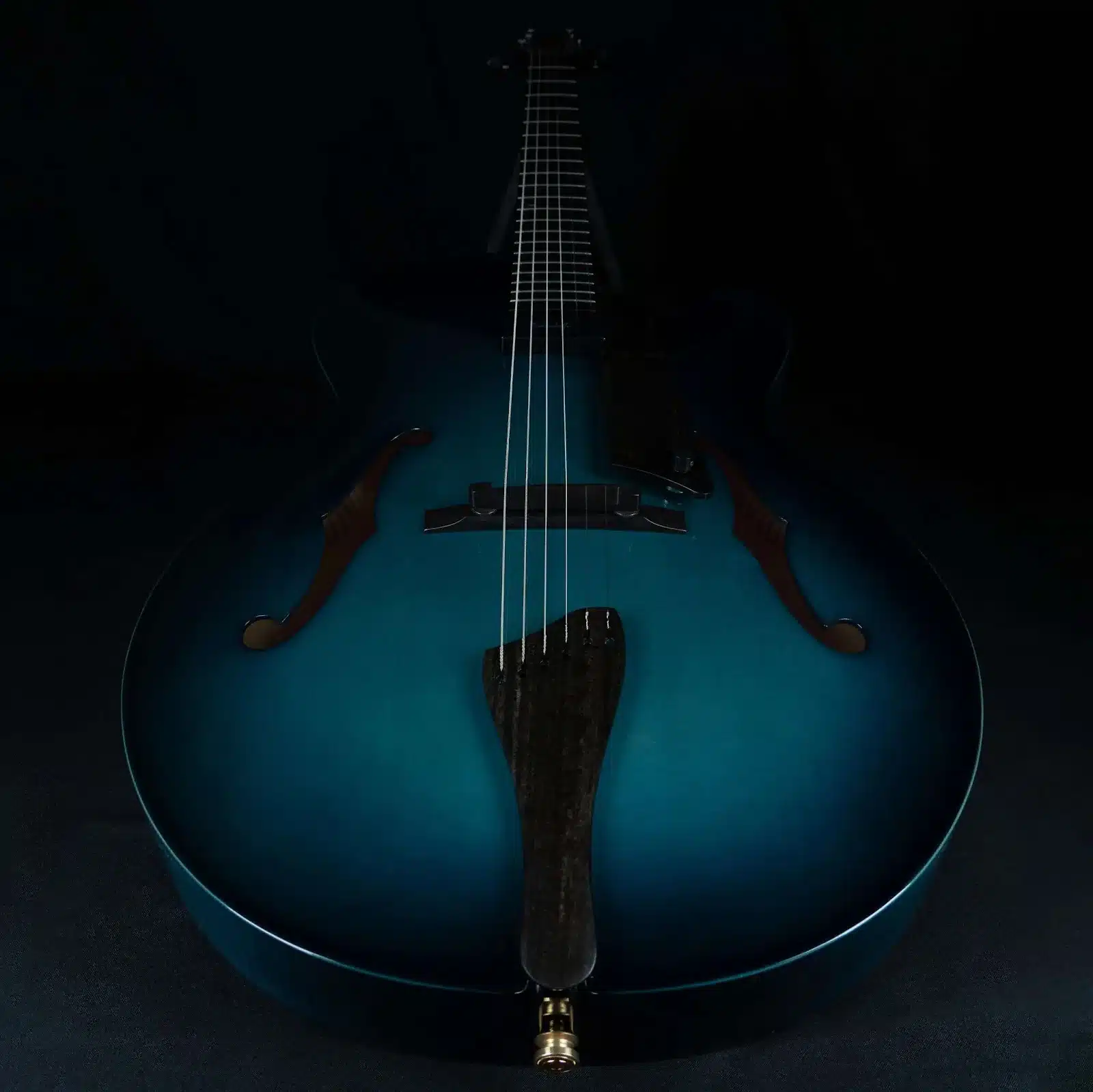
Solid Hand-Carved Tops: We master-grade spruce plates by hand using traditional finger planes and chisels, tap-tuning the wood until it rings with maximum vitality. Our acoustic Flagship models offer rich harmonic overtones that bloom with even the lightest right-hand touch.
Premium Laminate Tops: Built from pressed layers of high-grade wood veneers, these soundboards are structurally stiffer and naturally stubborn against stage feedback. Models from our gig-ready Professional Series deliver a tight, punchy attack when you’re plugged into a hot amp on a crowded stage, while maintaining the feel and responsiveness of a traditional archtop guitar.
2. Finding Your Ergonomic Fit: Sizing and Nut Widths
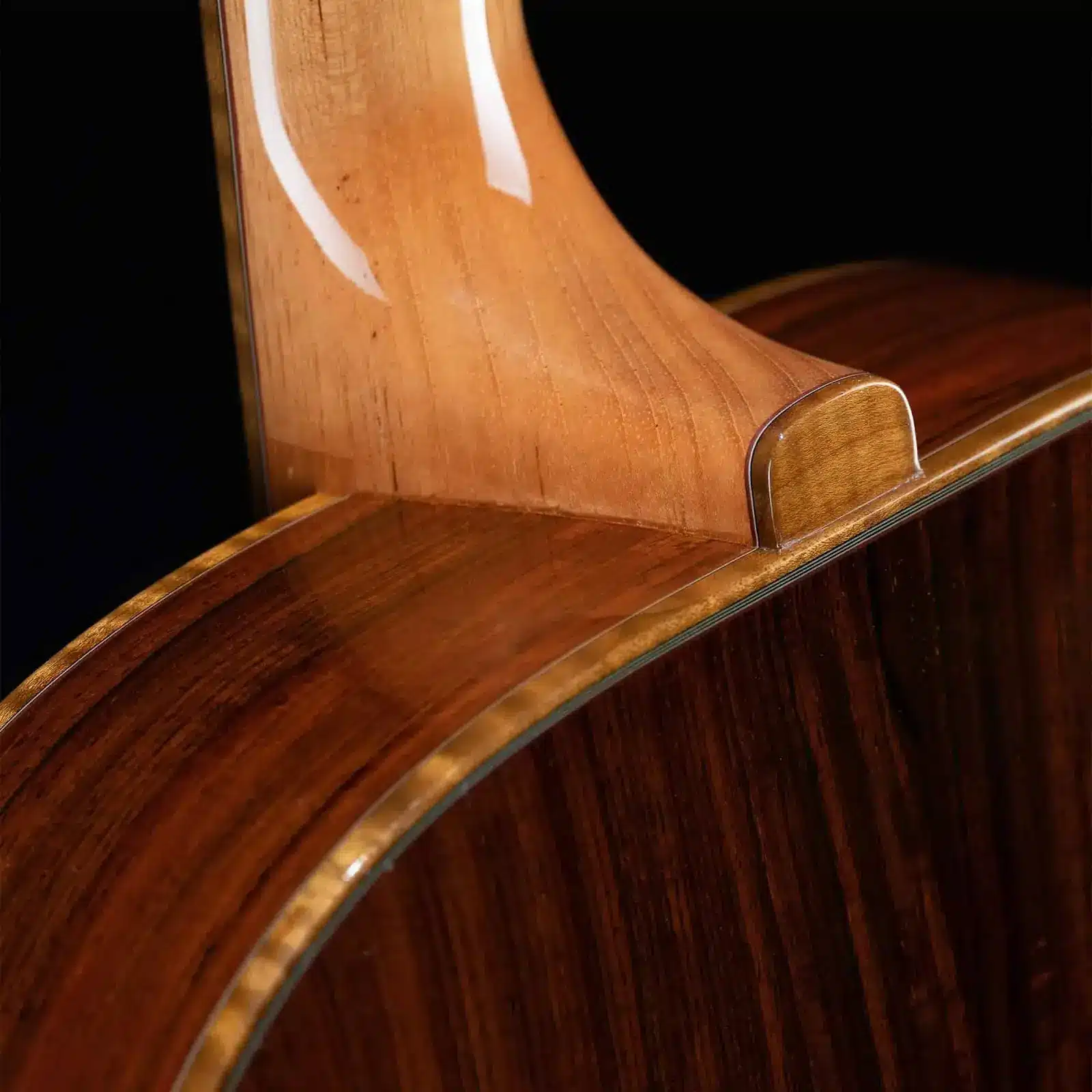
Body width is measured across the lower bout, and finding the right fit keeps you comfortable through long gigs or a full day of teaching. We can accommodate custom body depths on almost all models, like a 3” Bravo or a sleeker 2-1/2” Manhattan, so long as the acoustic response stays perfectly balanced.
Standard nut widths swap out seamlessly across models at no additional charge during a build. If you need a hyper-specific nut width or a custom neck profile tailored to your hand, we’re happy to shape it for you.
3. Pickup Integration and Architectural Integrity
How string energy moves from the instrument into an amplifier depends entirely on how the pickups are mounted:
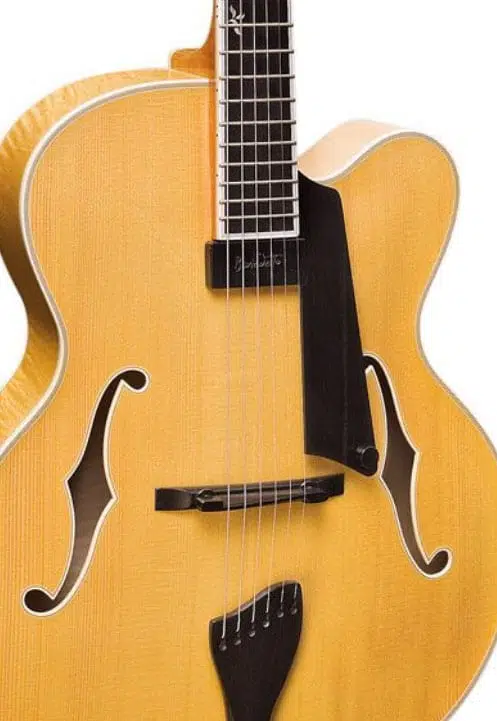
Floating Mini-Humbuckers: Suspended right off the end of the fingerboard, floating pickups never touch the carved spruce top. That leaves the soundboard free to vibrate as an unhindered acoustic diaphragm, preserving an open “acoustic-plus-amplified” character.
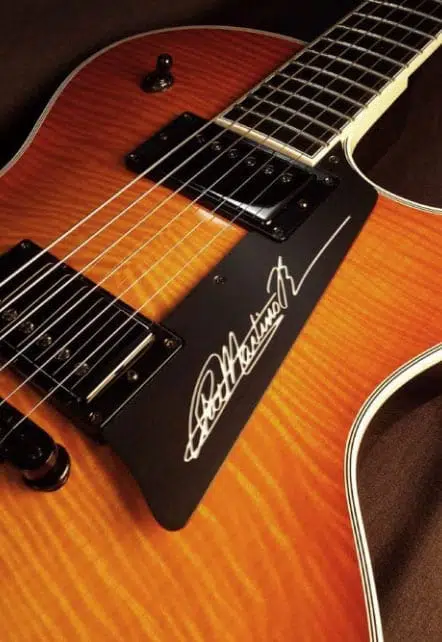
Built-In Humbuckers: Routed directly into the top plate, built-in pickups add mass that anchors and stabilizes the top plate. What you trade in acoustic volume, you gain back in electric sustain, note definition, and feedback resistance.
A Quick Rule on Laminates: We get asked a lot, but we never mount floating pickups on laminated tops. Our floating S-series pickups need the physical movement of a hand-carved spruce top to bloom; on a stiff laminate top, a floating pickup sounds thin. Laminated models are built specifically for built-in humbuckers to give you a thick, clear electric tone.

4. Scale Mechanics, Fingerboards, and Workshop Rules
Scale length is the one number that ripples through everything else on the guitar: neck feel, bridge placement, f-hole positioning, even the bracing pattern inside. Moving a scale length means re-architecting the entire guitar.
The 25-Inch Standard: Inspired by our founder, Robert Benedetto, and his respect for Johnny Smith, our standard 25-inch scale length hits the ultimate sweet spot. It creates enough string tension to flex the carved spruce top while keeping string feel supple under your fingers.
Scale Options: While we can accommodate 25-1/2″ or 24-3/4″ scales upon request, we highly recommend sticking with our standard 25″ scale. It is the architectural sweet spot for our instruments, and we always advise discussing it with us first before making a change.
Single-Scale Integrity: We build exclusively on traditional single-scale geometries. Multi-scale or fan-fret layouts require altering our historical body contours and bracing, so we don’t offer them.
Fingerboard Aesthetic: You can opt for clean, unbound ebony, classic Fratello blocks, or our signature floral inlays. (Simple dot inlays aren’t available).
Preparing for Your Custom Consultation
When you’re ready to get your build underway, a little prep work goes a long way toward turning your ideas into carved wood:
Bring Tone References: Point us to recordings or players whose acoustic or electric voice matches what you hear in your head.
Know Your Ergonomics: Measure your favorite neck, know your nut width preference, and consider how deep a body feels comfortable against your ribs.
Map Out Your Main Stage: Be honest about where the guitar will spend 80% of its time, whether that’s an acoustic studio room, a university lecture hall, or a loud club stage.
Building an Instrument to Carry Your Legacy
Commissioning a custom archtop guitar is ultimately an intimate collaboration between a player’s hands and a luthier’s workbench. When you align your physical requirements with the time-tested physics of archtop design, the resulting instrument ceases to be just a collection of tonewoods and hardware. It becomes a seamless vehicle for your technique, dynamic range, and individual musical identity.
From selecting the first wedge of master-grade spruce to setting the final bridge height, our team in Savannah approaches every build with the same single-minded focus that Bob Benedetto established over fifty years ago. Whether you are ready to outline your specifications or simply want to talk through wood options and neck profiles, we invite you to learn more about our Savannah workshop or meet our team of master luthiers. When you’re ready to begin, give our shop a call. We’re here to help you build a guitar that will serve your music for decades to come.

Frequently Asked Questions
What should I prepare before ordering a custom jazz guitar?
Arrive with clear musical goals, reference recordings, and target playing environments in mind. Knowing your preferred neck profile, nut width, and whether you need pure acoustic projection or stage feedback resistance makes the consultation process effortless.
Why does a small workshop size matter for a custom archtop build?
Our Savannah workshop relies on a tight-knit team of dedicated craftspeople. That means direct, open communication throughout your build, ensuring your personal specifications are handled directly by the luthiers carving your instrument.
Can I request fan-fret or multi-scale options on a custom Benedetto Guitar?
No. We strictly stick to single-scale fingerboard geometries (typically 25″ ) to preserve our historic body contours, bridge placement, and internal bracing patterns.
Can I order a laminate guitar with a floating pickup?
No. Floating pickups require the acoustic top movement of a hand-carved spruce soundboard to sound warm and full. On a laminate body, floating pickups sound thin, which is why our laminated models are engineered exclusively with built-in humbuckers.
Related Content

Understanding Tonewoods: How Wood Choices Shape Jazz Guitar Tone
How Tonewoods Shape the Sound of a Jazz Guitar Every jazz guitarist knows the importance of tone, but few elements influence that sound as much as the wood beneath your hands. From warmth and resonance to clarity and projection, tonewoods …
Read More >
How to Choose the Right Jazz Guitar for Your Playing Style
The guitar you choose defines how you sound and feel as a player. In jazz, tone and touch matter more than volume or flash. A well-chosen guitar responds to your phrasing, supports your rhythm, and inspires new ideas. Choosing the …
Read More >
Your Next Guitar?
This new Bravo is up in Bob’s Boutique and ready to go! Click on over to buy online, or contact us with any questions: info@benedettoguitars.com
Read More >