

Cleaning and Polishing Archtop Guitars: The Luthier’s Guide to Finish Care

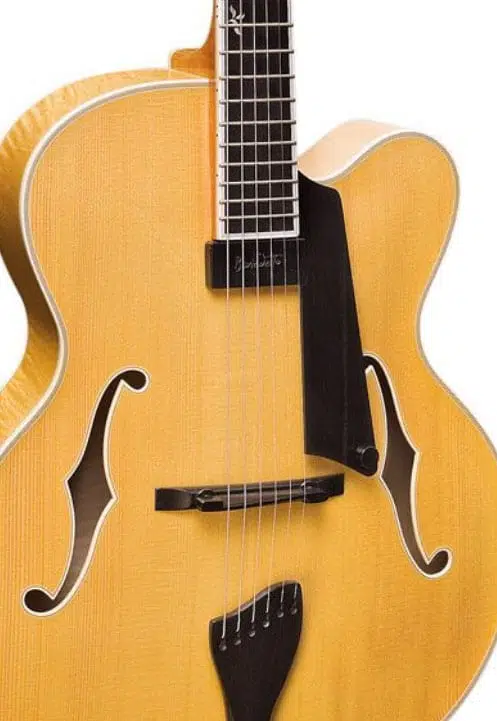
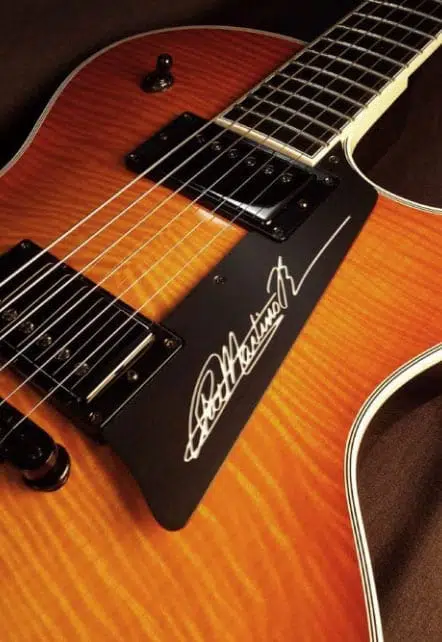
A fine archtop is an acoustic engine under constant tension. Whether you’re driving the top of a hand-carved acoustic box or touring with a gig-ready Professional Series laminate, the finish shields responsive tonewoods from sweat acids, hot stage lights, and brutal humidity shifts.
In our Savannah, GA workshop, we spend hundreds of hours carving solid spruce soundboards, tap-tuning, x-bracing, and spraying paper-thin nitrocellulose lacquer coats. We engineer these instruments to deliver acoustic depth without sacrificing real-world stage performance. Yet, more often than structural damage, we see instruments arriving at our shop with dulled lacquer and chemical residue from heavy-handed cleaning routines.
Proper maintenance doesn’t mean slathering on cleaner every week. Here is how our luthiers recommend caring for a hand-applied lacquer finish to protect your instrument’s tone and playability for a lifetime.
Key Takeaway: How Do You Clean and Polish an Archtop Guitar?
To safely clean and polish an archtop guitar, wipe down the body, neck, and hardware with a dry, lint-free microfiber cloth after every session. For stubborn sweat film, use a light misting of water or a dedicated non-silicone, water-soluble nitrocellulose polish. Apply sparingly, buff in small circular motions, and immediately wipe dry to preserve the tonewood diaphragm and avoid lacquer clouding.
Why Less Polish Means Better Tone
Polish doesn’t magically fill in scratches. Fine particles suspended in a liquid base cut micro-abrasions into the clear coat, leveling the surface until light reflects evenly. That registers to your eyes as a high gloss, but you are actually removing a microscopic layer of finish every single time you apply it.
On a hand-carved, tap-tuned solid spruce soundboard, we keep our nitrocellulose lacquer coats intentionally thin. A heavy finish acts like a dampener on a speaker, choking the top’s natural vibrational diaphragm and dulling dynamic response.
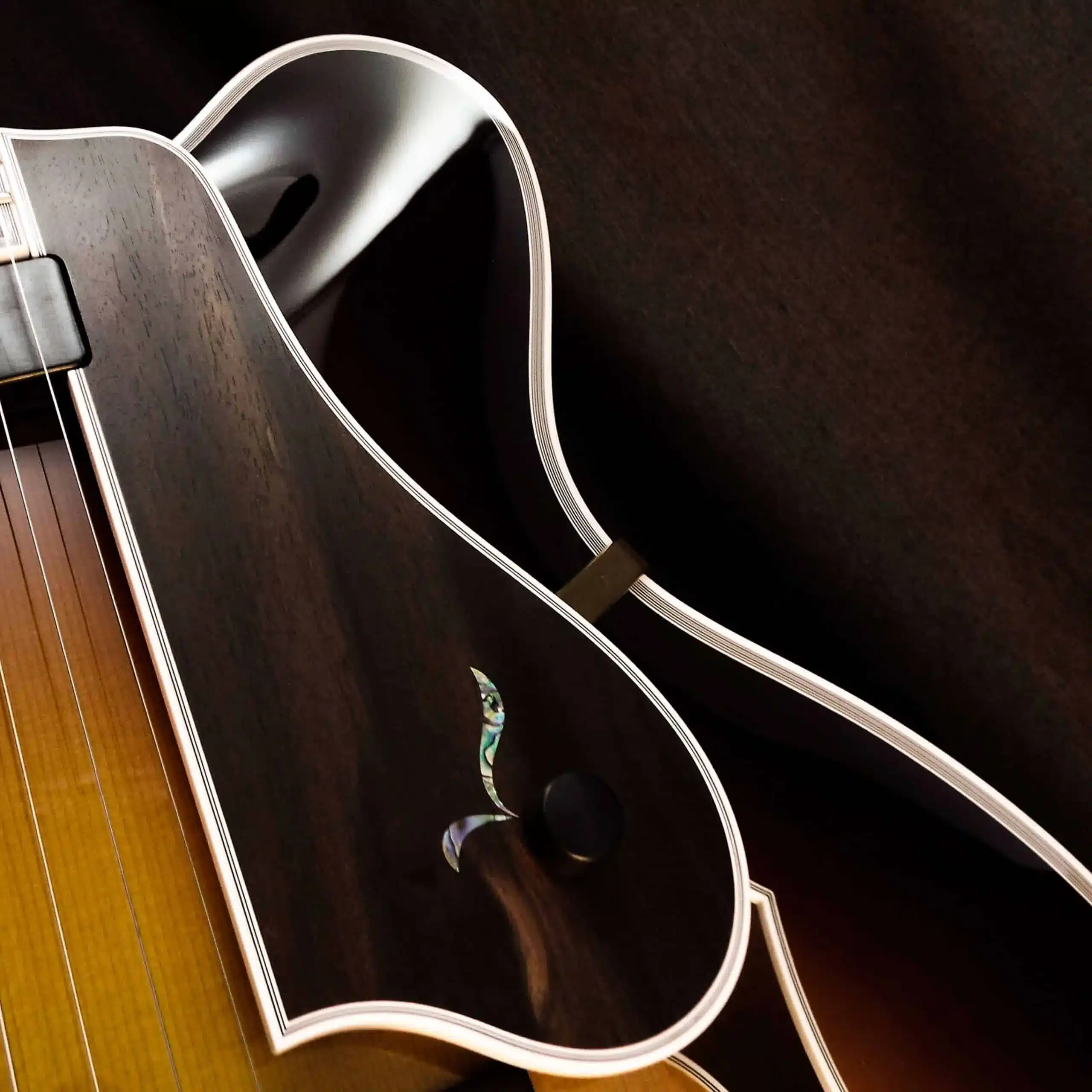
Polishing an instrument every week gradually strips away that protective layer. Over-polishing around delicate areas, like the edges of hand-cut f-holes or purfling seams, drives moisture into unsealed wood, causing structural clouding or localized finish separation. Treat polish as an occasional corrective measure rather than a daily habit.
Assembling Your Bench Supplies
Before touching a cloth to your instrument, clear your bench and double-check your supplies. Using the wrong bottle off the shelf can lead to finish degradation that requires a full restoration to fix.
Essential Cleaning Supplies
Dedicated Microfiber Cloths: Keep three clean, ultra-soft, borderless microfiber cloths on hand. Reserve these strictly for guitar care.
Water-Soluble Luthiery Polish: Choose a high-grade polish explicitly formulated for fine stringed instruments with nitrocellulose or thin catalyzed lacquer finishes.
Distilled Water or Breath Condensation: For most daily grime, a light mist of distilled water or a simple puff of breath on the lower bout lifts skin oils safely.
Pure Mineral Oil (For Fingerboards Only): Use purely to condition raw ebony fingerboards once or twice a year.
Finish Hazards
Silicone-Based Furniture Sprays: Never use household polishes. Silicone penetrates thin lacquer, bonding directly to the underlying tonewood. This permanently prevents future finish touch-ups, neck resets, or seam repairs because new glue and lacquer cannot adhere to silicone-contaminated wood.
Abrasive Auto Rubbing Compounds: These cut far too aggressively, stripping a thin nitrocellulose coat down to the raw spruce in seconds.
Paper Towels or Shop Rags: Paper fibers are wood-based and surprisingly abrasive, leaving permanent micro-swirls across a dark sunburst finish.
Step-by-Step Archtop Cleaning Protocol
Clearing sweat off a 17-inch hand-carved acoustic top after a heavy performance requires the same careful steps as cleaning up a touring instrument. Follow this workbench protocol:
Step 1: Dry Dust Removal
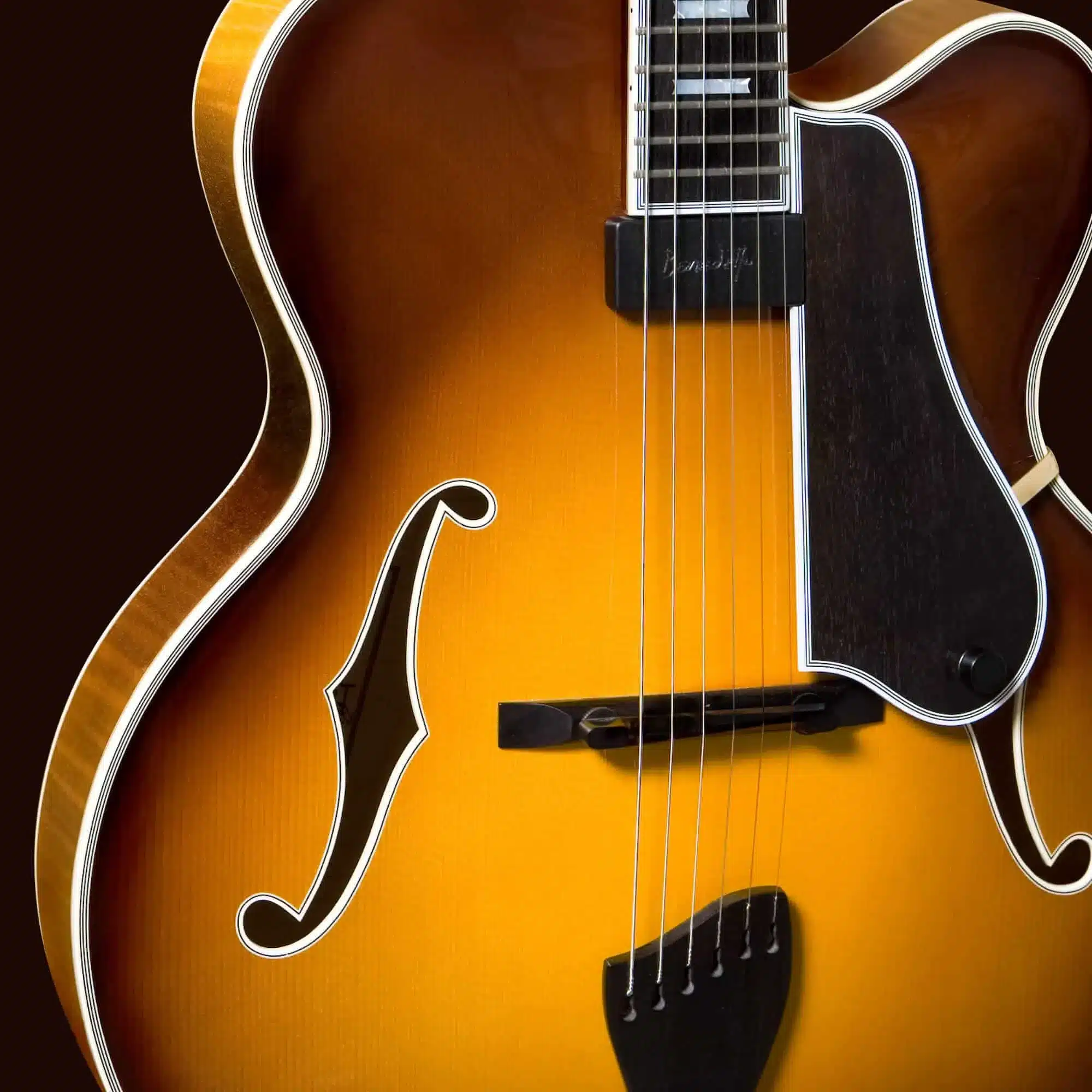
Before applying any liquid product, wipe the entire instrument down with a dry, clean microfiber cloth. Pay close attention to the area around the bridge foot, the floating mini-humbucker, and under the pickguard. Any rogue dust or grit left on the surface acts like sandpaper once you start buffing.
Step 2: Targeted Spot Cleaning
For routine haze, fingerprints, or stage grime:
Breathe a thin layer of condensation directly onto a section of the finish (such as where your arm rests on the lower bout).
Gently buff the area using light, circular motions with your second microfiber cloth.
For stubborn skin oil buildup along the neck heel, slightly dampen a corner of the cloth with distilled water, wipe the area clean, and immediately dry it with a fresh towel.
Step 3: Minimal Polish Application (When Necessary)
If the finish develops a stubborn haze that simple condensation won’t budge:
Apply a single pea-sized drop of approved luthier polish directly to your cloth. Never spray liquid directly onto the guitar body.
Work in small, isolated sections (a 4×4-inch area at a time), using light, even pressure in circular paths.
Keep polish far away from raw wood edges, open f-holes, and the unfretted edges of the ebony fingerboard.
Step 4: Final Inspection and Buffing
Use a third dry, clean cloth to buff away any remaining haze until the surface feels completely glass-smooth. Angle the guitar under a warm bench light to verify that no polish residue remains trapped around pickup rings, thumbwheels, or hardware posts.
Finish Care Across Different Archtop Architectures
Different archtops demand care strategies tailored to their specific construction and woods:
Long-Term Maintenance & Hardware Integrity
Complete maintenance balances the finish alongside the mechanical components of the instrument:
Ebony Fingerboard Conditioning: When changing strings one or two at a time to preserve floating bridge intonation, inspect the board. If the wood looks dry or gray, apply a tiny drop of pure mineral oil every 6 to 12 months. Let it sit for two minutes, then scrub off all excess oil until the wood feels completely dry to the touch.
Hardware & Tailpiece Care: Acidic sweat oxidizes gold and nickel hardware over time. Wipe down the ebony tailpiece, floating pickup covers, and tuning machine buttons after performances.
Managing Neck Friction: The back of the neck takes the most physical abuse on stage. Sweat builds up into a sticky film that interferes with smooth position shifts across our historic 25″ and 24-1/4″ single-scale neck geometries. Wipe the neck heel clean with a damp cloth immediately after playing to keep it feeling fast and slick.
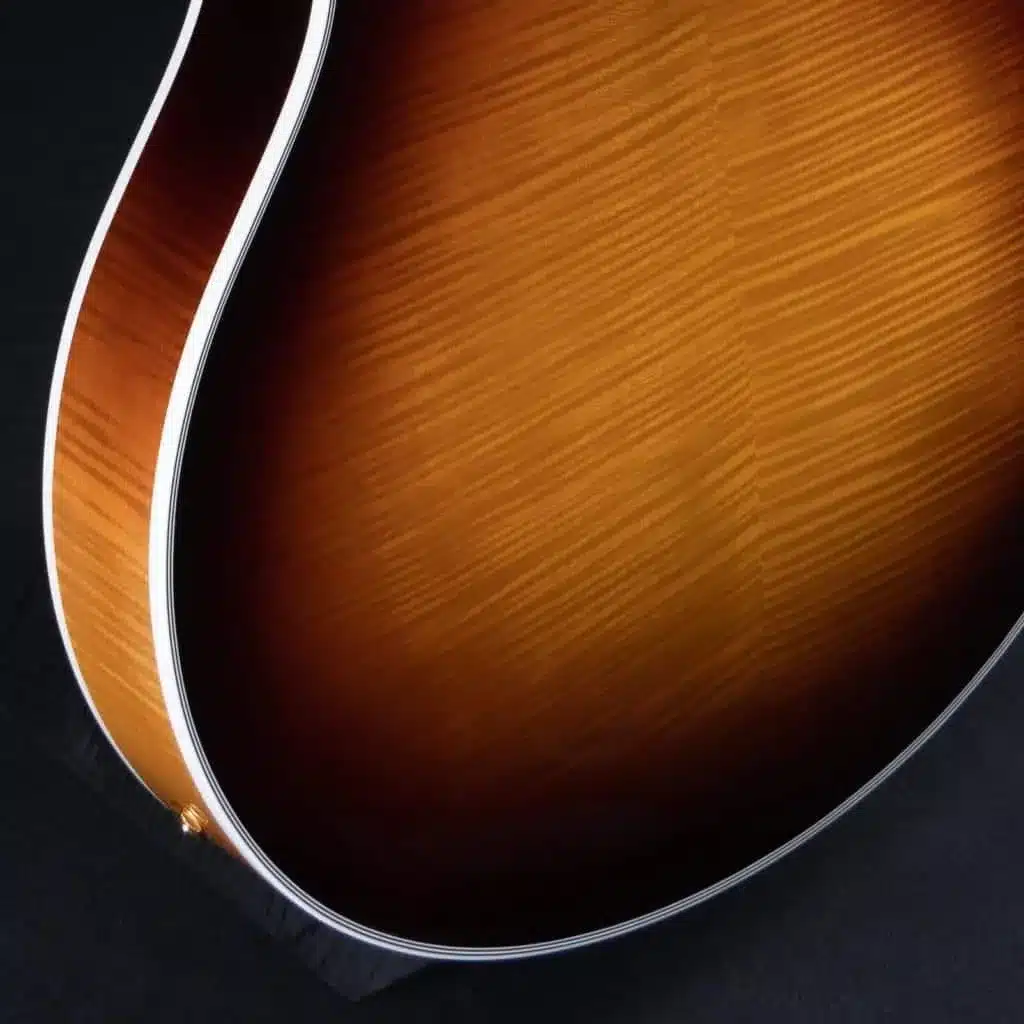
Preserving Your Instrument’s Legacy
Care for a fine archtop relies on a partnership between player and builder. Practicing restraint with liquid polishes, establishing a habit of daily dry wipes, and keeping silicone away from your case preserves the acoustic depth, playability, and structural integrity of the instrument for decades.
When you encounter a stubborn finish issue or want to explore building your own custom Benedetto, reach out to our shop. You can always meet our team of master luthiers or learn about the history of Benedetto Guitars directly from our Savannah, GA workshop.
Frequently Asked Questions
How often should I clean and polish my archtop guitar?
Wipe down your guitar with a dry microfiber cloth after every playing session. Only use specialized liquid polish sparingly—roughly two to three times a year—when breath condensation or a damp cloth fails to clear surface haze.
Can I use lemon oil on my archtop’s nitrocellulose finish?
No. Lemon oil belongs strictly on unsealed, dark hardwoods like ebony or rosewood fingerboards. Applying oils to a finished nitrocellulose top or back leaves an oily residue that attracts dirt and clouds the lacquer.
Why does my finish look hazy where my arm rests on the lower bout?
That haze develops when skin oils, sweat acids, and body heat react with the top layer of nitrocellulose lacquer. A dry or slightly damp microfiber cloth lifts it in most cases. If left uncleaned, those acids permanently soften the finish, requiring a luthier to buff out the area.
How do I clean underneath the floating pickguard and bridge?
Avoid forcing a thick cloth under a floating pickguard or bridge. Use a soft-bristled luthier brush or a clean artist’s paintbrush to sweep away dust and grit. When changing strings, swap them one at a time so the bridge stays locked in place, allowing you to safely wipe down the exposed wood around the bridge base.
Related Content

Understanding Tonewoods: How Wood Choices Shape Jazz Guitar Tone
How Tonewoods Shape the Sound of a Jazz Guitar Every jazz guitarist knows the importance of tone, but few elements influence that sound as much as the wood beneath your hands. From warmth and resonance to clarity and projection, tonewoods …
Read More >
How to Choose the Right Jazz Guitar for Your Playing Style
The guitar you choose defines how you sound and feel as a player. In jazz, tone and touch matter more than volume or flash. A well-chosen guitar responds to your phrasing, supports your rhythm, and inspires new ideas. Choosing the …
Read More >
Your Next Guitar?
This new Bravo is up in Bob’s Boutique and ready to go! Click on over to buy online, or contact us with any questions: info@benedettoguitars.com
Read More >