

Handcrafted Jazz Guitars Reviews: What the Pros Hear at the Bench and on Stage
In the world of high-end archtop luthiery, professional evaluations consistently rank Benedetto Guitars at the apex of the craft, tracing an unbroken lineage back to founder Robert Benedetto in 1968. Driven forward today under the leadership of President and CEO Howard Paul, our Savannah workshop continues to earn top acclaim from independent critics and touring musicians for our hand-carved spruce tops, structural balance, and rich acoustic response, confirming that whether you choose a carved Flagship model or a stage-ready Professional Series instrument, you are playing a studio-grade work of art.
What Makes Handcrafted Archtops Different?
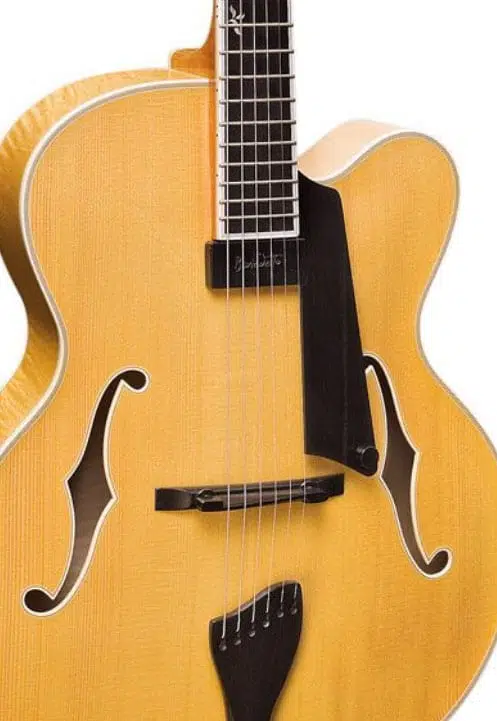
True craftsmanship separates a handmade archtop from an assembly-line guitar. Carrying forward over 50 years of heritage from our workshop in Savannah, Georgia, every carve, brace, and thin nitrocellulose coat passes through the hands of a small, dedicated team.
When guitarists dig through handcrafted jazz guitars reviews, they look for hard evidence that an instrument will stand up to the grueling demands of real-world performance. A guitar sitting untouched in a collection serves one purpose, but a working musician needs an instrument that holds its setup under hot stage lights, adapts to sudden room humidity shifts, and stays articulate through dense chord-melody extensions. While our archtops are celebrated among the world’s most collectible instruments, every guitar we build is designed first and foremost to deliver that uncompromised reliability on stage and in the studio.
Hand-Carved Archtop Physics and Soundboard Dynamics
While laminated tops offer excellent structural stability and feedback control for high-volume settings, a hand-carved soundboard provides a distinctly organic acoustic response. No two players attack the strings the exact same way, and a carved spruce top responds directly to your touch. It gives you room to shape your own voice instead of forcing you into a pre-packaged, boxy tone.
Key markers of custom archtop guitar construction include:
Graduated Spruce Soundboards: Hand-shaped to control resonance and projection.
Integrated X-Bracing or Parallel Bracing: Voiced to tune acoustic decay and sustain.
Single-Scale Architectural Integrity: Built strictly around classic 25″ scale geometry for optimal string tension.
Luthier-Driven Material Selection: Premium figured maple and ebony hardware chosen for structural stability and acoustic transfer.
Evaluating Archtop Jazz Guitar Quality and Tonal Character
When musicians evaluate a custom archtop jazz guitar, they trace lineage, structural balance, and tonal consistency. Robert Benedetto set the benchmark against which modern archtops are measured, and today, a new generation of luthiers carves at Bob’s own workbench in Savannah, upholding those exact standards.
Measuring Tone Across Musical Contexts
Guitarists look for acoustic voice, clean headroom, and note separation long before plugging into a hot amp. A great archtop guitar needs to separate dense chord voicings in the low-mid register while keeping single-note runs fat and sweet up past the 12th fret.
When evaluating a hand-carved archtop, players weigh several core factors:
Acoustic Tap Tuning: Our luthiers listen to the tonewood’s natural resonance during carving, paring away fractions of a millimeter to hit the acoustic sweet spot.
Unamplified Projection: A well-built box barks acoustically, giving you physical feedback through the back of the instrument before the pickup even enters the equation.
Pickup Integration: Floating mini-humbuckers preserve raw acoustic vibration, whereas built-in humbuckers anchor a warm, dark, electric jazz tone with increased feedback control.
Structural Seamlessness: Checking the neck joint, binding margins, and fretwork reveals whether a builder took shortcuts under the hood.

What Independent Reviews Reveal on the Bench
Objective assessments from major publications highlight our commitment to structural precision across every body shape and construction style:
The Benedetto 16B (Jazz Guitar Today): Reviewer Brad Jeter framed the 16B as an heirloom-quality masterpiece, calling it an “acoustic cannon.” He praised its flawless fretwork, noting that all 22 frets are perfectly crowned to eliminate micro-intonation issues completely.
The Benedetto Bravo (Vintage Guitar Magazine): Earning a “Standing O” for its stage precision, the Bravo was lauded for its hand-fitted ebony bridge contour, which delivers optimal energy transfer, and a dead-straight neck that provides effortless playability in high-volume settings.
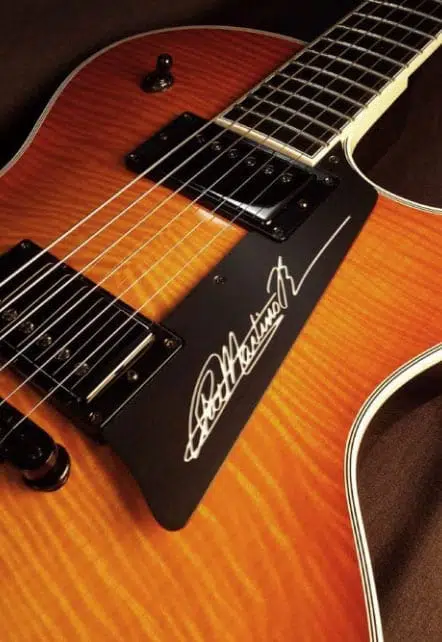
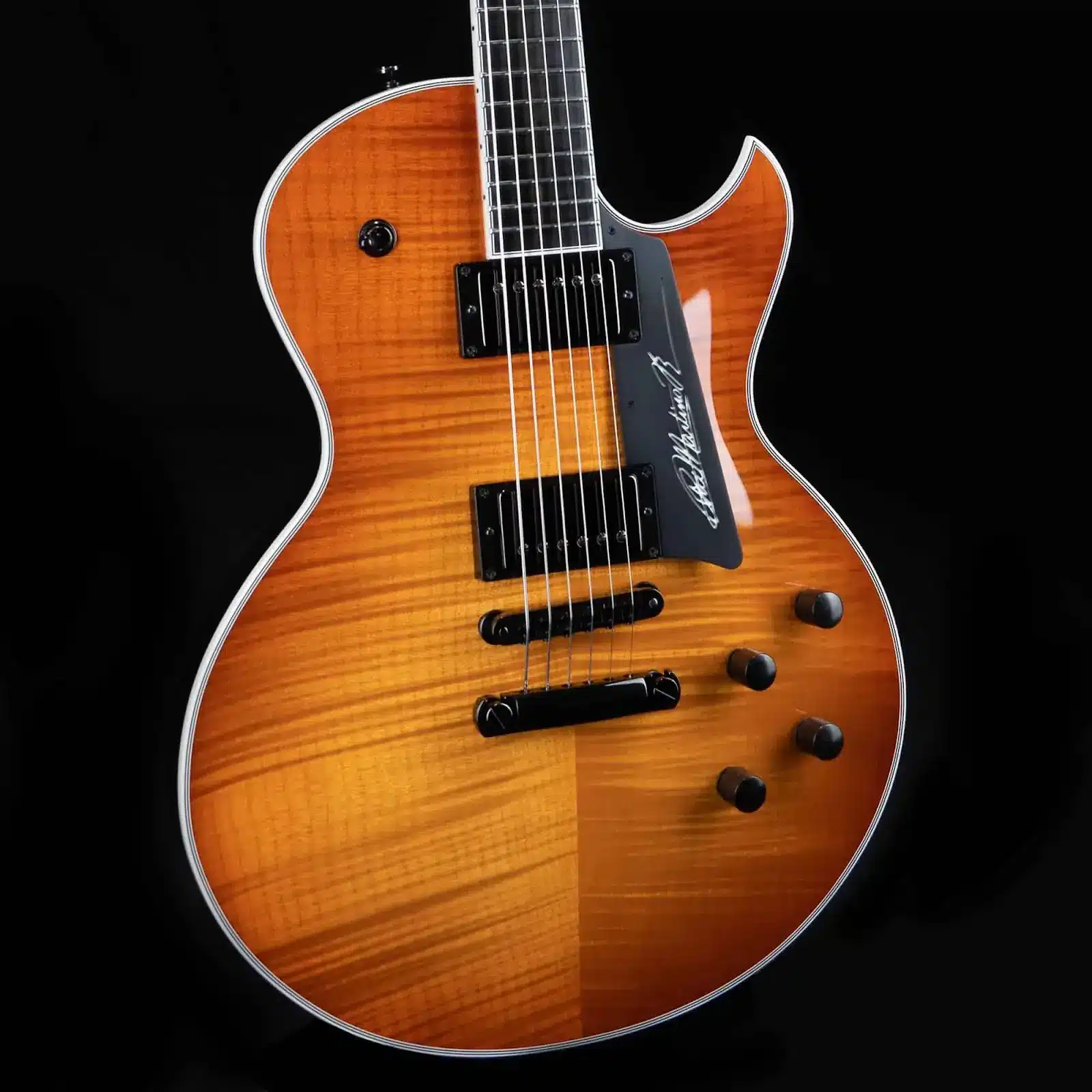
The Pat Martino Signature (Jazz Guitar Today): Reviewers highlighted the seamless neck joint and zero-flaw nitrocellulose finish, noting how the chambered body delivers a thick, traditional jazz voice with plenty of sustain without the heavy weight.
To explore these evaluations in greater depth and read extended quotes from critics, take a look at our in-depth feature on Benedetto guitar reviews, craftsmanship, and player experiences. You can also check out our roster of touring pros and artists on our dedicated Players Page.
Choosing a Professional Jazz Archtop for Your Gig Environment
No single archtop guitar configuration covers every playing environment. A solo guitarist playing an unamplified concert date needs maximum acoustic projection, while a player backing an 18-piece big band needs feedback control and punch.
Matching the build style to your primary venue is the secret to long-term satisfaction. That’s why we offer two distinct pathways:
Flagship Series: Solid carved spruce tops designed for pure acoustic richness, intricate chord-melody work, and studio dates.
Professional Series: High-grade Professional Series laminate guitars engineered to resist feedback in loud rooms while retaining classic warmth and punch.
Reading real-world reviews from touring guitarists highlights how these builds hold up out on the road. You can explore the history and legacy behind our process on the history of Benedetto Guitars page.
The Verdict
The consensus across decades of professional reviews remains unwavering: a Benedetto represents a masterclass in architectural balance, acoustic projection, and refined playability. Whether you are stepping up to a professional jazz archtop for touring duties or commissioning a piece of history to carry your musical legacy, you are investing in a hand-built instrument designed to last for generations.
Frequently Asked Questions
What is the tonal difference between a floating pickup and a built-in humbucker?
A floating pickup attaches directly to the neck or pickguard without cutting into the spruce top, allowing the soundboard to vibrate freely for maximum acoustic volume. A built-in pickup mounts directly into the wood; while it dampens some acoustic resonance, it provides a deeper, warmer electric voice with vastly superior feedback resistance on loud stages.
Why does Benedetto stick strictly to single-scale geometry?
We build exclusively with traditional single-scale lengths (like our standard 25″ and 24-1/4″ configurations, or 23″ on specialized models like The Andy) because they preserve the architectural bracing and string tension ratios that define our signature voice. Multi-scale or fan-fret designs alter top loading and bridge dynamics in ways that compromise the classic archtop tone we have spent half a century refining.
Are laminate archtops inferior to solid hand-carved archtop guitars?
Not at all. They are simply built for different jobs. While a solid hand-carved top offers unmatched acoustic complexity, a high-grade arched laminate top is stiffer, making it far less prone to acoustic feedback when played at higher volumes through an amplifier. It’s a preferred choice for working musicians playing loud clubs or large ensembles.
Related Content

Understanding Tonewoods: How Wood Choices Shape Jazz Guitar Tone
How Tonewoods Shape the Sound of a Jazz Guitar Every jazz guitarist knows the importance of tone, but few elements influence that sound as much as the wood beneath your hands. From warmth and resonance to clarity and projection, tonewoods …
Read More >
How to Choose the Right Jazz Guitar for Your Playing Style
The guitar you choose defines how you sound and feel as a player. In jazz, tone and touch matter more than volume or flash. A well-chosen guitar responds to your phrasing, supports your rhythm, and inspires new ideas. Choosing the …
Read More >
Your Next Guitar?
This new Bravo is up in Bob’s Boutique and ready to go! Click on over to buy online, or contact us with any questions: info@benedettoguitars.com
Read More >