

The Artist’s Guide to Custom Guitar Wood Selection: Shaping Your Perfect Archtop

Commissioning a premier archtop is a direct investment in your creative voice. Every physical detail of that guitar will shape your performance, but among all the decisions you make during the design process, your custom guitar wood selection forms the true foundation of the instrument. It establishes the core acoustic voice, the response under your fingers, and the structural lifespan of the guitar.
At Benedetto Guitars in Savannah, Georgia, our team approaches wood selection as a beautiful balance of acoustic science and pure musical intuition. If you are getting ready to build your own Benedetto custom creation, understanding how different wood species behave under string tension is the best way to ensure the finished guitar sounds exactly like the music you hear in your mind.
What Prerequisites Do You Need Before Selecting Tonewoods?
Before making any definitive material choices, players and builders should explore how wood species directly shape audible tone. Wood is an organic material, and natural variation between species, and even between individual trees, means no two guitars sound completely identical.
Does the Species of Wood Really Change how a Guitar Sounds?
Wood type determines the baseline tonal character of a guitar. Each species resonates in its own way, emphasizing certain frequencies while softening others. Recognizing these acoustic profiles is the foundational knowledge every customer needs before specifying materials for their build.
Which Part of the Guitar Matters Most for Tone?
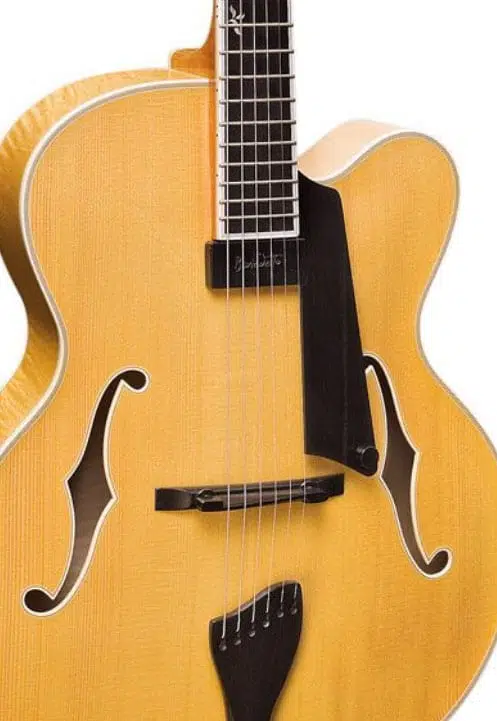
The top wood, or soundboard, carries more acoustic responsibility than any other single component on an archtop. When a string is plucked, the vibration travels through the bridge and directly drives the top plate, compressing and expanding the air inside the hollow body cavity. Back and side woods add sustain and color, but the top drives the core voice. Prioritizing aesthetics over sound at this stage can change the trajectory of the build.
Benedetto Guitars has refined this framework across more than 50 years of archtop construction since Robert Benedetto founded the company in 1968. That legacy gives customers a proven, structured starting point for wood decisions. Before finalizing your choices, we recommend completing these prerequisite steps:
[ ] Identify your tonal destination: Determine whether your goal is a warm, dark, woody acoustic response, or a cutting, highly focused electric sound.
[ ] Understand the component hierarchy: Prioritize your top soundboard selection first to establish the guitar’s core voice, then pick complementary rim and back hardwoods.
[ ] Review iconic benchmarks: Explore available options across our carved Flagship Series to understand how master-grade, hand-carved woods look and perform
How Do You Match Each Wood to Its Tonal Role?
Matching wood to its tonal role starts with understanding that every tonewood carries distinct physical properties. Hardness, density, and weight translate directly into resonant behavior, making wood selection a matter of careful calculation. Each position on the guitar body demands a wood whose physical character serves a specific acoustic function.
1. Soundboard Woods (The Acoustic Engine)
Historically, select spruce has been the industry standard for acoustic archtop soundboards. Spruce possesses an exceptional strength-to-weight ratio, which allows the carved top to remain thin and highly resonant while easily supporting the heavy downward load of the bridge. This material provides bright, clear projection, rapid transient response, and an expansive dynamic range.
2. Back and Side Woods (The Reflective Chamber)
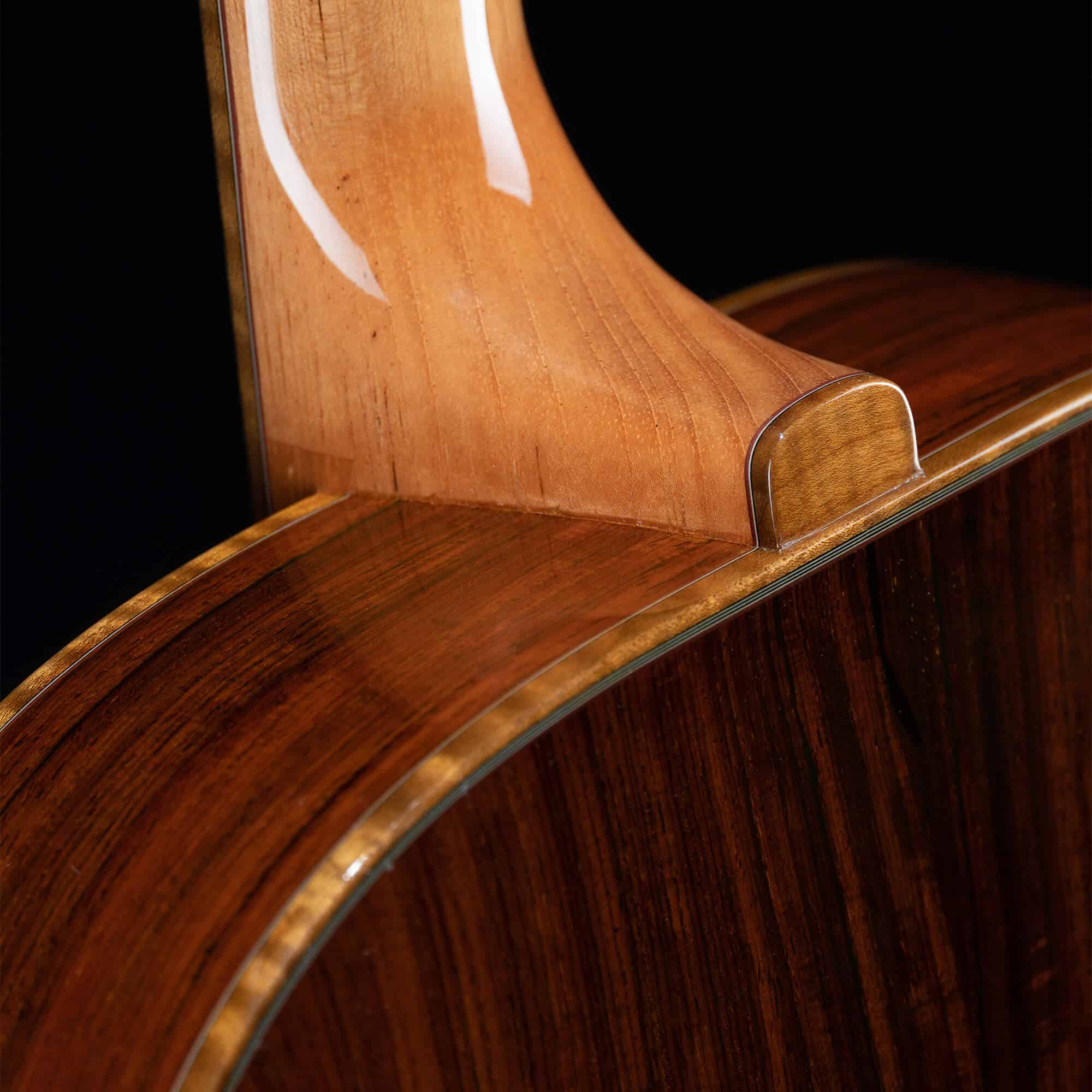
Back and side woods are the structural backbone of an archtop’s voice. Hardwoods chosen for these positions contribute rigidity and stability to the body, which generates longer sustain as notes ring out.
Figured Maple: This dense hardwood is the traditional pairing for spruce. Maple back and sides reflect sound waves quickly, contributing brightness, rapid note decay, and outstanding harmonic clarity.
Mahogany: Offering a lower density than maple, mahogany introduces a warmer, woodier midrange character with a softer high-frequency response.
3. Structural Hardwoods (The Control Interfaces)
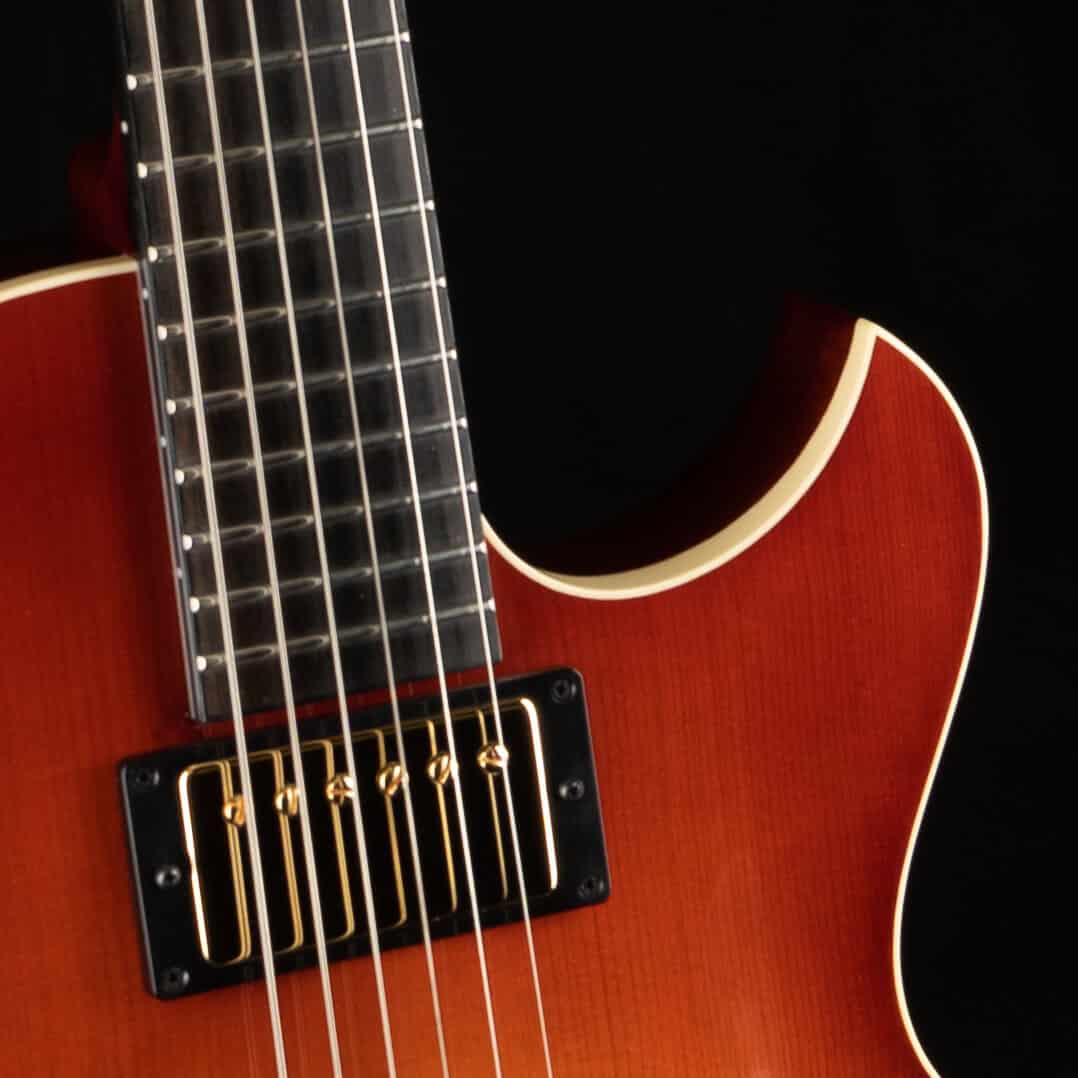
Premium Ebony: Reserved for high-wear areas like fingerboards, bridges, and tailpieces, ebony provides a smooth, glass-like playing surface, withstands heavy-gauge flatwound strings, and delivers an immediate, clean note attack.
Tonewood Performance Quick-Reference
For players who spend their lives in loud stage environments, alternative configurations can be highly beneficial. Our gig-ready Professional Series utilizes custom-pressed, multi-ply laminated configurations. This design choice provides exceptional feedback rejection and reliable climate stability on tour while maintaining essential archtop warmth.
Technical Curation: Tuning the Timber
In professional luthiery, wood selection goes way beyond just picking a species out of a catalog. You cannot rely on wood species alone to determine final sound quality, since there are massive variations in acoustic properties even within genetically identical trees based on climate, elevation, and how the wood was dried.
At our Savannah workshop, our builders inspect every single raw wood billet by hand. You can learn more about our luthiers and see how they use decades of combined bench experience to tap-tune, plane, and voice these materials. By carving micro-layers off the plates, they tune the natural resonant frequency of that specific piece of timber, ensuring the finished instrument vibrates in perfect harmony with your hands.

The Benedetto Standard: Designing for Sonic Integrity
When building a custom instrument, it is natural to want to explore unique visual avenues, including exotic woods, distinct grain patterns, or striking custom veneers. However, because every wooden surface in an archtop acts as a system to transfer sound energy from the strings down to the body, certain material combinations can have an adverse or compromised effect on the final sound.
The most common trap in custom ordering is prioritizing a dramatic visual over acoustic reality. Because we care deeply about the musical life of your instrument, our workshop maintains a strict sonic benchmark: we design for the ear first.
To ensure your investment delivers the performance you expect, our order process follows a dedicated collaborative framework:
Pre-Order Consultations: We discuss the acoustic and tonal properties of your chosen woods at length before accepting an order.
Preserving the Voice: We curate a small, highly select inventory of beautiful exotic woods and veneers that meet our strict structural and musical criteria.
Sonic Protection: To protect the integrity of your voice, we will openly advise against certain combinations. In rare cases, we may refuse an order if the requested wood selection would create an instrument that is not sonically appropriate for a world-class archtop.
This cooperative approach eliminates the guesswork from your build. A great way to see how we balance striking visual grain with pristine acoustic performance is to look at finished examples. You can check out Bob’s Boutique, our online showroom featuring a curated selection of certified pre-owned or consignment archtops that showcase these balanced material combinations in action.
Complete Your Build with a Master Luthier
Whether you prioritize warmth, acoustic projection, or sustain, the materials you choose form the foundation of your musical voice.
As an artisanal 11-employee workshop in Savannah, Georgia, we keep our production dedicated to the needs of professional and aspiring jazz guitarists. Jackson Evans or Benedetto CEO Howard Paul can guide you through every choice in the custom order process, serving as a sonic guardrail to eliminate the risk of a material mismatch. This collaborative approach ensures that your custom archtop meets your exact stylistic and acoustic requirements.
To see how these customized instruments come alive on stages worldwide, take a look at our official Players Roster for real-world inspiration. Ready to design your instrument? Build your own Benedetto custom guitar and collaborate directly with our workshop team today.
Frequently Asked Questions (FAQ)
Does wood species really change how a guitar sounds?
Yes. Each species acts as a natural equalizer for your guitar. Different types of wood filter, emphasize, or soften various frequencies, directly shaping the warmth, clarity, and projection of your acoustic or amplified tone.
Which part of the archtop guitar matters most for tone?
The soundboard, or top wood, does the heavy lifting for your core tone and acoustic projection. The back and side hardwoods act as a reflective chamber, adding sustain, structural integrity, and unique tonal colors.
Can choosing highly figured or exotic woods negatively impact an archtop’s tone?
Yes, if they are not selected carefully. Heavy exotic woods or intensely figured pieces can introduce densities and structural stiffness that compress natural acoustic vibrations or alter response. This is why our workshop pre-screens our exotic inventory and collaborates directly with you to ensure that your visual choices never compromise the acoustic soul of the instrument.
Related Content

Understanding Tonewoods: How Wood Choices Shape Jazz Guitar Tone
How Tonewoods Shape the Sound of a Jazz Guitar Every jazz guitarist knows the importance of tone, but few elements influence that sound as much as the wood beneath your hands. From warmth and resonance to clarity and projection, tonewoods …
Read More >
How to Choose the Right Jazz Guitar for Your Playing Style
The guitar you choose defines how you sound and feel as a player. In jazz, tone and touch matter more than volume or flash. A well-chosen guitar responds to your phrasing, supports your rhythm, and inspires new ideas. Choosing the …
Read More >
Your Next Guitar?
This new Bravo is up in Bob’s Boutique and ready to go! Click on over to buy online, or contact us with any questions: info@benedettoguitars.com
Read More >