

The History of Archtop Guitars: A Masterpiece of Jazz and Handcrafted Legacy

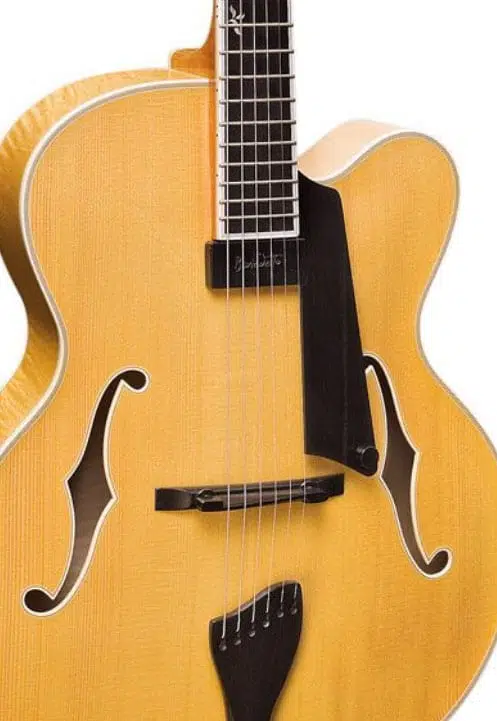
The rich history of archtop guitars is inextricably intertwined with the evolution of jazz itself. For over a century, these iconic instruments have captivated virtuosos, discerning collectors, and listeners alike with an eloquent, singular voice. Defined by their beautifully carved tops, hollow bodies, and elegant f-holes, the unique design features of these instruments yield a legendary acoustic fidelity and sophisticated resonance.
To truly understand the archtop jazz guitar is to look beyond its mechanical components and view it as a piece of functional fine art. In this article, we will delve into the true origins of the archtop, explore the meticulous artisan craftsmanship required to carve them, and analyze their enduring appeal among the jazz elite.
What is an Archtop Guitar and How Did It Originate?
An archtop is fundamentally distinguished by its gracefully curved, violin-style top and back, which are engineered to optimize acoustic sound projection, clarity, and warmth. Originating at the turn of the 20th century, the archtop acoustic was designed to solve a pressing, practical problem: volume. As American popular music transitioned from acoustic string bands to the brass-heavy big bands of the early jazz scene, the traditional flat-top acoustic guitar simply could not be heard over the horns.
The architectural solution was borrowed from classical violin making. By carving a solid block of wood into a resonant arch and replacing the traditional round soundhole with parallel f-holes, luthiers increased structural integrity and acoustic projection. This design produced a punchy, mid-range-focused sonic palette that cut through the mix with unparalleled clarity, setting the standard by which all jazz instrumentation would soon be measured.
At Benedetto Guitars, we have spent over five decades stewarding this profound legacy. Our workshop specializes in producing high-quality archtops tailored precisely to the needs of professional touring virtuosos, institutional educators, and passionate legacy collectors who appreciate the absolute apex of handcrafted artisan work.
How Did the Architecture of the Archtop Evolve?
The Traditional Flat-Top: Uses a round soundhole and thin, flat top wood, creating a soft, intimate projection best suited for small rooms.
↓
The Violin Influence: Swaps the flat plane for a carved, structural arch and introduces dual f-holes on either side of the strings.
↓
The Resulting Archtop: Projects a highly directional, punchy mid-range acoustic wave that naturally slices through the dense sonic clutter of a horn section.

Historic Milestones and Key Innovators in Archtop Design
The history of archtop guitars features several pivotal milestones, starting with Orville Gibson in the late 1890s and early 1900s, followed by the groundbreaking acoustic innovations of Lloyd Loar in the 1920s. Legendary brands like Gibson and Epiphone drove the early popularization of these instruments, transforming them into the foundational engine of the Big Band era.
The Golden Era and the “Stradivarius” of the Archtop
As the instrument solidified its role in jazz, the 1930s through the 1950s saw the rise of legendary New York luthier John D’Angelico. Widely considered the Stradivarius of the archtop world, D’Angelico’s masterfully handcrafted, ornate instruments became the ultimate prize for top players of the era. His work established an irreplaceable historical bridge between the early factory innovations of Gibson or Loar and the modern era of independent artisan luthiery.
Robert “Bob” Benedetto and the Craftsmanship Legacy
While early manufacturing proved vital to popularizing the shape, it was Robert (Bob) Benedetto who emerged in 1968 to entirely redefine the modern American archtop. Often referred to as “The Luthier’s Luthier,” Bob Benedetto elevated the instrument from a standard factory tool into an archival masterpiece.
“My roots are in jazz guitar. It’s been my love and my focus since Day One.”
— Bob Benedetto
Bob Benedetto refined archtop guitar design by demystifying the building process. Through his seminal book, instructional videos, and decades of hand-carving, he proved that a luthier could achieve acoustic warmth, responsiveness, and a magnificent “voice” by understanding how to listen to and tap-tune the wood, rather than just relying on cosmetic perfection. His meticulous attention to detail left an indelible mark on the industry, making Benedetto the definitive choice for the world’s most renowned jazz guitarists. Today, his archival methods continue to guide modern luthiers who strive to achieve this same singular quality in every instrument.
Construction Techniques: The Anatomy of an Heirloom Archtop
The construction of a high-quality, handcrafted archtop guitar dictates its performance, durability, and tonal boundaries. Unlike mass-produced alternative options, an heirloom-quality archtop is an intimate collaboration between nature and the master craftsman.

Materials and Design: The Harmony of Tonewoods
The selection of premium, aged tonewoods is crucial to defining the instrument’s final sonic character. Every element serves an acoustic purpose:
- Fine-Grained Spruce: Traditionally selected for the carved top. Spruce acts as the guitar’s soundboard; its high strength-to-weight ratio enhances resonance, acoustic fidelity, and projection.
- Exotic Curly Maple: Utilized for the back and sides. Maple is a denser wood that reflects the internal sound waves, providing brightness, note articulation, and clarity to complex jazz chords.
- Ebony: Preferred for the fretboard, bridge, and tailpiece. Ebony provides structural stability, slick playability, and a fast transient response that contributes to pristine sustain.
How Hand-Carving Shapes Your Voice
The true soul of a Benedetto lies in the technique of hand-carving and tap-tuning. A master luthier meticulously shaves down a solid block of spruce, constantly tapping the wood and listening to its pitch until it rings with a clear, fundamental note.
This individualized attention ensures that the top flexes perfectly under string tension, providing optimal responsiveness. This labor-intensive process prevents the stiff, choked sound often found in heavy, factory-made alternative options.

Choosing Your Instrument: Flagship vs. Professional Series
Every jazz artist requires an instrument that matches their lifestyle, stage, and environment. At Benedetto, we align our craftsmanship into two distinct families of instruments to address specific practical and aesthetic preferences.
1. The Professional Series
Designed primarily as reliable workhorses for institutional educators, touring musicians, and working professionals, the Professional Series offers world-class tone and durability. Models like The Bravo (utilizing a fine laminated spruce top to greatly reject feedback on loud stages) or the chambered-body Benny offer unparalleled road reliability without compromising tonal purity.
2. The Flagship Series
For those seeking an investment in history, the Flagship Series represents the absolute pinnacle of functional fine art. Models like The Cremona, La Venezia, and the legendary Sinfonietta are carved from the rarest, most visually stunning exotic woods available. These legendary instruments are bought for their peerless acoustic purity, rare provenance, and historic collectibility.
For those with a distinct creative vision, you can even explore our Build Your Own Benedetto custom-spec options to tailor an instrument to your precise requirements.
Why the Archtop Guitar Remains the Crown Jewel of Jazz
The unwavering connection between the archtop and jazz musicians stems from the instrument’s unique ability to sound both deeply sophisticated and intimately personal. Its natural mid-range emphasis highlights the complex, extended chord voicings common in bebop, swing, and modern jazz, ensuring that the bass notes remain warm while the melody lines sing with vocal clarity.
The Benedetto Players: A Living History
A guitar’s true worth is found on stage, in the hands of the artists who rely on its voice night after night.
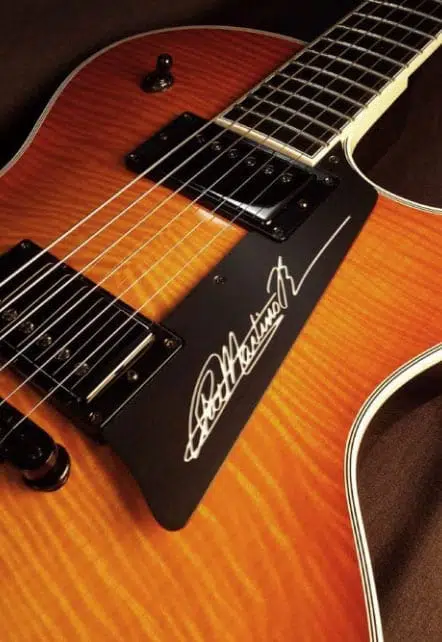
From the defining work of legends like Pat Martino, Chuck Wayne, and Bucky Pizzarelli, who cemented the archtop as the definitive voice of jazz, to modern virtuosos like Dan Wilson and Chico Pinheiro today, this instrument remains a living tradition. Our dedicated roster of Benedetto Players proudly carries this distinctive tonal lineage forward onto the world’s premier stages.

Preserving the Standard of Archtop Excellence
The archtop guitar is far more than a tool; it is a timeless piece of art that bridges generations of musical expression. At Benedetto, our small circle of elite builders continues to preserve the exact handcrafting methods passed down directly from Bob Benedetto himself.
Meet the Masters Behind the Music: Visit our About Our Luthiers page to step directly into the heart of our workshop and see how these historic instruments are built today.
Whether you are performing under the bright lights of an international jazz festival or playing for your own personal enjoyment in the quiet of your home, running your fingers across a Benedetto means holding a piece of living jazz history.
Frequently Asked Questions (FAQ)
What makes an archtop guitar different from a standard acoustic guitar?
Unlike standard flat-top acoustic guitars that utilize a round soundhole and a flat top wood plane, an archtop features a gracefully curved, violin-style top and back coupled with parallel f-holes. This specific architecture shifts the instrument’s acoustic response away from deep, sustained bass toward a punchy, mid-range-focused tone with highly directional acoustic projection.
Why do jazz musicians prefer an archtop hollowbody guitar?
Jazz musicians favor the archtop hollowbody because its acoustic dynamics emphasize note clarity, definition, and complex upper-harmonic articulation. The natural mid-range focus keeps intricate jazz chord extensions from sounding muddy, while giving solo melody lines a warm, vocal quality that cuts cleanly through live mixes.
What is the difference between a hand-carved archtop and a laminated archtop guitar?
A hand-carved archtop (such as our Flagship Series) is sculpted out of solid blocks of aged tonewood and tap-tuned by a master luthier for maximum acoustic richness and purity. A laminated archtop (such as models in our Professional Series) utilizes layered wood, which offers enhanced structural rigidity and superb feedback rejection at higher stage volumes, making it an ideal choice for the working touring professional.
Who invented the modern archtop guitar?
While Orville Gibson and Lloyd Loar pioneered the initial violin-style guitar shapes in the late 19th and early 20th centuries, it was Robert “Bob” Benedetto who redefined the modern American archtop starting in 1968. His historic methods of handcrafting, tap-tuning, and sharing his technical artistry elevated the instrument from a factory tool into an archival masterpiece.
Related Content

Understanding Tonewoods: How Wood Choices Shape Jazz Guitar Tone
How Tonewoods Shape the Sound of a Jazz Guitar Every jazz guitarist knows the importance of tone, but few elements influence that sound as much as the wood beneath your hands. From warmth and resonance to clarity and projection, tonewoods …
Read More >
How to Choose the Right Jazz Guitar for Your Playing Style
The guitar you choose defines how you sound and feel as a player. In jazz, tone and touch matter more than volume or flash. A well-chosen guitar responds to your phrasing, supports your rhythm, and inspires new ideas. Choosing the …
Read More >
Your Next Guitar?
This new Bravo is up in Bob’s Boutique and ready to go! Click on over to buy online, or contact us with any questions: info@benedettoguitars.com
Read More >