

How Scale Length Affects Jazz Guitar Tone and Playability

Understanding Scale Length on a Jazz Guitar
Scale length is one of the most important measurements in a guitar. It refers to the distance between the nut and the bridge, and it directly affects string tension, tone, and playability. For jazz musicians, scale length can shape everything from how chords feel under the fingers to how strongly the guitar projects in an ensemble.
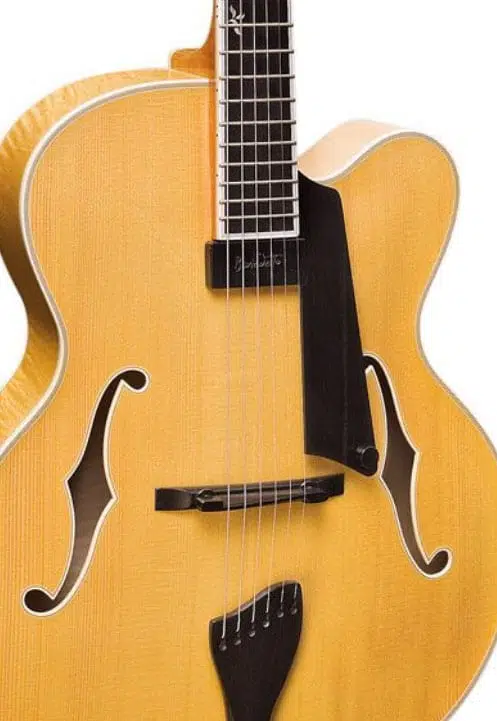
Many players assume that scale length is simply a matter of using a longer or shorter neck. In reality, the scale determines the entire layout of the instrument. The position of the bridge, the placement of the sound holes, the location of the pickup, the bracing pattern, and even the depth of the cutaway all relate to scale length. Changing it requires far more than replacing the neck. It means redesigning the instrument so that every element continues to function in balance.
At Benedetto, the standard scale length is 25 inches. This measurement reflects both musical inspiration and practical design experience. Bob Benedetto has often spoken about the influence of guitarist Johnny Smith, whose signature instruments used a 25 inch scale paired with a 1 3/4 inch nut width. Bob admired Johnny’s playing and approach to tone, and that scale became a natural reference point. If that balance worked for Johnny Smith, Bob believed it would work for many jazz musicians.
There is also a technical reason behind the choice. A 25 inch scale creates a strong balance between string tension and playability. The tension is firm enough to drive the carved top of an archtop guitar, which helps produce clear projection and a defined low end. At the same time, the length remains comfortable under the hand, allowing smooth movement across the fingerboard.
Too short a scale can reduce the tension needed to fully activate the top. Too long a scale increases tension and can make the guitar feel stiff or demanding to play. The 25 inch scale sits between these extremes, providing enough energy to support tone while still feeling relaxed during long sessions.
Most Benedetto models use this scale because it supports the tonal balance that defines the brand. Instruments such as the La Venezia and the Cremona rely on this proportion to achieve their characteristic clarity and response. When the bridge sits in the correct position relative to the carved top, the entire instrument resonates more evenly.
Of course, not every player has the same physical reach or preference. Some musicians feel more comfortable on a shorter scale. For those players, Benedetto offers the Andy model. This instrument uses a 23 inch scale with a smaller body and a 1 11/16 inch nut width. The shorter length reduces tension slightly and can feel easier for players with smaller hands while still delivering the depth and articulation expected from a carved archtop.
Scale length rarely appears in discussions about tone, yet it quietly influences how a guitar responds to the player. When the measurement is chosen carefully, it allows the instrument to project clearly, feel balanced, and respond naturally to touch.
That balance is the reason Benedetto continues to rely on the 25 inch scale across most of the lineup. It reflects both tradition and experience, giving players a design that supports tone, comfort, and expressive control in every performance.
Related Content

Understanding Tonewoods: How Wood Choices Shape Jazz Guitar Tone
How Tonewoods Shape the Sound of a Jazz Guitar Every jazz guitarist knows the importance of tone, but few elements influence that sound as much as the wood beneath your hands. From warmth and resonance to clarity and projection, tonewoods …
Read More >
How to Choose the Right Jazz Guitar for Your Playing Style
The guitar you choose defines how you sound and feel as a player. In jazz, tone and touch matter more than volume or flash. A well-chosen guitar responds to your phrasing, supports your rhythm, and inspires new ideas. Choosing the …
Read More >
Your Next Guitar?
This new Bravo is up in Bob’s Boutique and ready to go! Click on over to buy online, or contact us with any questions: info@benedettoguitars.com
Read More >