

The Evolution of the Archtop Guitar: Jazz History and Modern Benedetto Designs
The Evolution of the Archtop Guitar, From Big Band to Modern Jazz
The archtop guitar is the backbone of jazz history. From smoky clubs to concert halls, its voice has shaped the music for nearly a century. What began as a rhythm instrument evolved into one of jazz’s defining melodic voices.
Early Big Band Era
In the 1930s, big bands dominated American music. Guitarists needed an instrument that could cut through horn sections and driving drums. Large archtops with carved tops, f-holes, and deep bodies provided projection and rhythmic power.
These early guitars were almost entirely acoustic, built for volume and presence. They allowed guitarists to anchor the rhythm section, even in the loudest ensembles. While early brands established the template, the design continued to evolve in search of greater balance and projection.
The Swing Years
As swing developed, the role of the archtop became firmly established. Players like Freddie Green of the Count Basie Orchestra defined the guitar as the heartbeat of the rhythm section. His four-to-the-bar style gave the band a pulse that carried the music forward.
The acoustic power and strong midrange of archtops made them perfect for this role. They delivered clarity in chord work without overwhelming the ensemble, providing a steady backbone that supported the horns and rhythm section.
The Electric Shift
By the 1940s, amplification changed everything. The introduction of magnetic pickups allowed guitarists to step into the spotlight for the first time. Charlie Christian became a pioneer of the electric guitar, using an amplified archtop to take extended solos that rivaled saxophones and trumpets.
This moment marked a shift in the guitar’s identity. No longer limited to background rhythm, the archtop could now serve as a lead instrument with a distinct voice. Jazz guitar moved from a supporting role to a melodic presence at the front of the bandstand.
Bebop and Modern Jazz
The rise of bebop in the 1940s and 1950s brought smaller ensembles and faster tempos. Guitarists needed instruments that were more responsive and adaptable. Archtops evolved with slimmer bodies, refined tonewoods, and improved electronics.
Icons like Joe Pass and Jim Hall showed how the archtop could handle both lush chord-melody textures and intricate single-note improvisation. The guitar’s versatility made it an essential voice in modern jazz, capable of shifting between rhythm and lead seamlessly.
Benedetto’s Role Today
Benedetto Guitars continues this tradition with instruments that honor history while meeting the demands of today’s players.
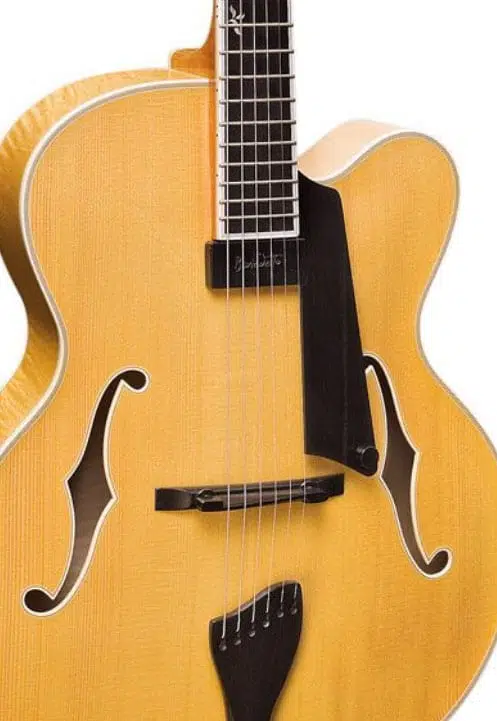
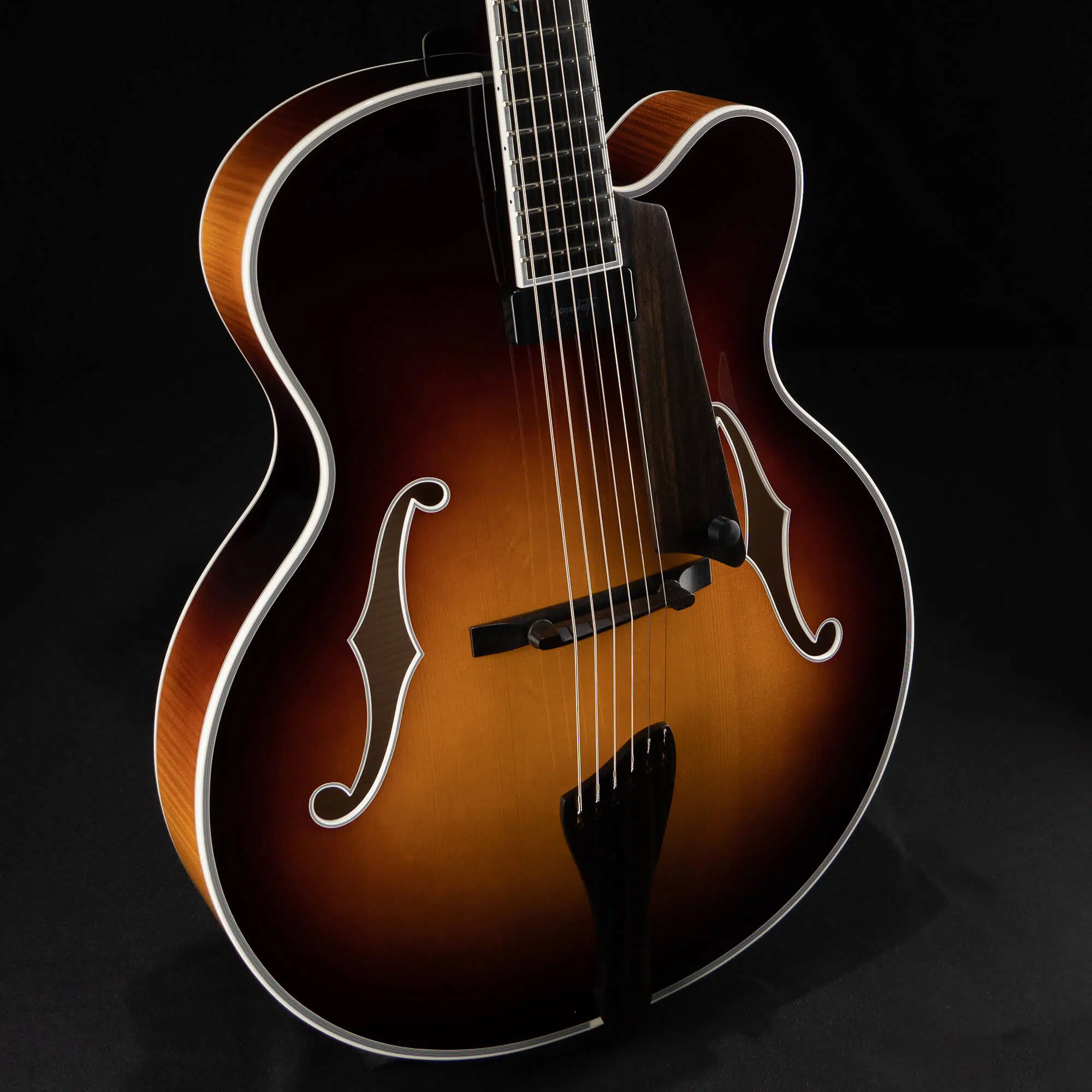
Hand-carved flagship models like the Manhattan represent the highest level of acoustic response and craftsmanship. Built from select spruce and maple, the Manhattan carries forward the heritage of the great archtops while giving modern professionals a clear and powerful voice.
For players who need durability and stage-ready reliability, laminated models like the Bravo Deluxe provide consistency and feedback resistance in louder environments.
Compact models including the Bambino Deluxe and Bambino Elite provide the sound of a Benedetto in a smaller body, ideal for travel, teaching, or intimate venues.
To see the full range of Benedetto artistry, check out our Flagship Series guitars, each designed to balance tradition and innovation in its own way.
The archtop guitar has traveled a remarkable path. From driving the rhythm of big bands to carrying the melodies of modern jazz, it has continually adapted to the needs of musicians. Each generation of players has redefined its role, and builders have refined its design in response.At Benedetto, that evolution continues. Every Benedetto guitar carries the legacy of the archtop while giving today’s jazz guitarists the tools they need to create, perform, and inspire. The story of the archtop is still being written—every time a player picks one up.
Related Content

Understanding Tonewoods: How Wood Choices Shape Jazz Guitar Tone
How Tonewoods Shape the Sound of a Jazz Guitar Every jazz guitarist knows the importance of tone, but few elements influence that sound as much as the wood beneath your hands. From warmth and resonance to clarity and projection, tonewoods …
Read More >
How to Choose the Right Jazz Guitar for Your Playing Style
The guitar you choose defines how you sound and feel as a player. In jazz, tone and touch matter more than volume or flash. A well-chosen guitar responds to your phrasing, supports your rhythm, and inspires new ideas. Choosing the …
Read More >
Your Next Guitar?
This new Bravo is up in Bob’s Boutique and ready to go! Click on over to buy online, or contact us with any questions: info@benedettoguitars.com
Read More >